TEHRAN – A delegation from Greek universities has visited Shahid Beheshti University to explore ways to expand academic ties between the two countries.
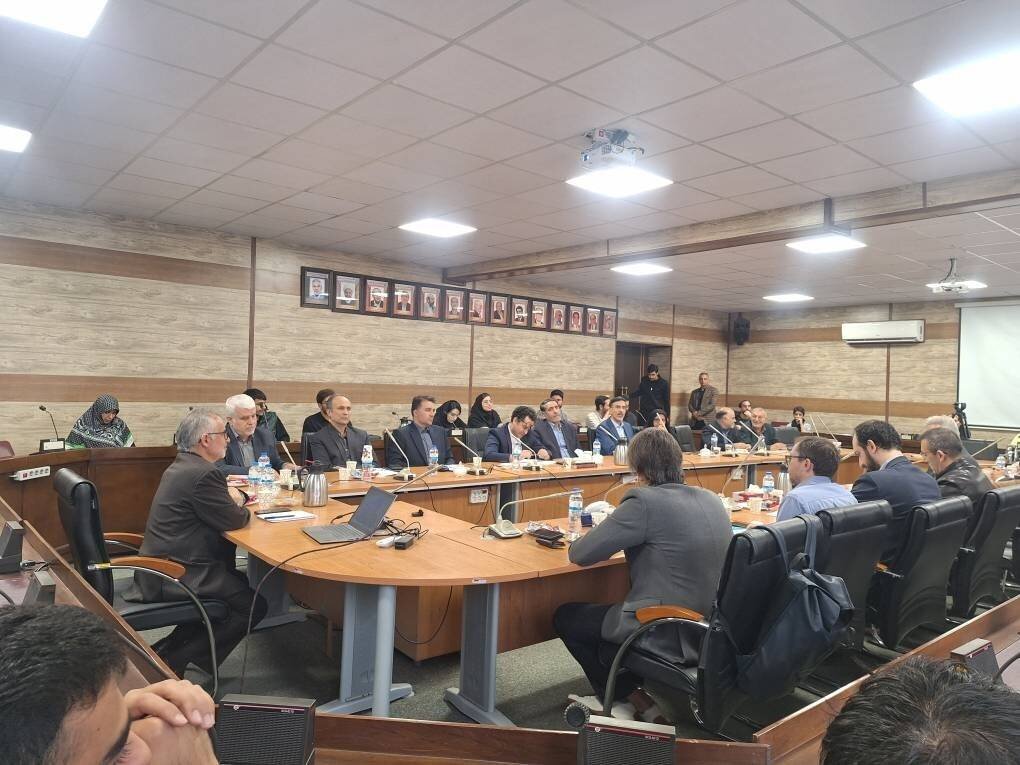
The delegation visited the university on Wednesday and attended a scientific roundtable at the Faculty of Economics and Political Sciences, where Shahid Beheshti University Chancellor Mahmoud-Reza Aqamiri and Greek academic officials emphasized the importance of strengthening scientific, research, and educational cooperation.
During the meeting, the two sides explored areas for collaboration, including exchanges of professors and researchers, sharing expertise, conducting joint research and educational projects, and attracting students.
Underscoring the need to address human and legal dimensions of the war against Iran, the Greek delegation called for the expansion of scientific, interdisciplinary, and international cooperation to strengthen social justice and confront shared challenges.
Iranian academic officials, for their part, emphasized the historical interactions between the two nations and stressed the need to address challenges, such as financial constraints, difficulties with travel, bank transactions, visa-related issues, and administrative obstacles, prior to developing joint scientific efforts.
Also, they suggested holding online meetings, publishing joint articles, promoting library cooperation, and implementing ongoing research projects as practical measures for the enhancement of academic ties between the two countries.
According to Aqamiri, Shahid Beheshti University would follow up on the implementation of the reached agreements and lay the basis for sustainable scientific interactions between the two sides.
Iran ranks first in key scientific output among Islamic countries
Iran ranks first among Islamic nations in key fields of scientific output such as quantum science, cognitive sciences, artificial intelligence, biotechnology, and advanced materials, the head of the Presidential Affairs Office at the Islamic World Science Citation Center (ISC) announced in August.
The country is in close competition with Turkey and Saudi Arabia in these fields, IRNA quoted Saeed Bakhtiari as saying.
He made the remarks in a press briefing on August 17, noting that the development of science in these fields has also been emphasized in national development plans.
Based on the reputable Web of Science database, Iran ranks first among Islamic countries in scientific output in some of these fields, while placing second or third in others. Overall, however, Iran holds the top position, he said.
Bakhtiari noted that in advanced materials—a multidisciplinary field spanning physics, chemistry, mechanics and materials science—Iran ranks second among Islamic countries and ninth worldwide.
He added that Iran ranks third in artificial intelligence, behind Saudi Arabia and Turkey, while in quantum science it ranks second, after Saudi Arabia.
The ISC official further said that Iran holds the top position among Islamic countries in scientific output in cognitive sciences and ranks first overall.
According to Web of Science (WoS) data, over a five-year period (from 2021 to 2025), Iran (with 32 documents) ranks first in cognitive sciences among Islamic countries.
Turkey, with 23 documents, and Saudi Arabia, with 22 documents, are placed second and third, respectively, IRNA reported.
From 2014 to 2023, Iran ranked either first or second in most fields of cognitive sciences among Islamic countries. Over the course of the decade, the country ranked first in cognitive neuroscience, cognitive rehabilitation, and cognitive linguistics with 387, 156, and 30 documents, respectively.
The country is placed second in quantum (with 216 documents) and advanced materials (with 5975 documents), after Saudi Arabia, with 283 and 6160 documents in quantum and advanced materials. Malaysia (with 154 documents) and Egypt (with 3151 documents) are placed third in quantum and advanced materials, respectively.
Despite illegal sanctions, Iran secures first place in cognitive sciences among Islamic nations and ranks ninth globally in advanced materials. Numerous prestigious Iranian universities and institutions are included in international rankings. These accomplishments underscore the country’s scientific capabilities, IRIB quoted Science Minister Hossein Simaei-Sarraf as saying, addressing the 7th Turkey Educational Technologies Summit (known as TETZ 2026), held in Istanbul from June 26 to 28.
Iran serves as a great opportunity to invest in higher education and modern technologies. The country has one of the largest higher education systems in the region, with more than three million students and over seventy thousand faculty members and researchers.
Highlighting that the rapid development of emerging technologies, including AI, is fundamentally transforming human relationships and higher education systems around the world at an unprecedented pace, Simaei-Sarraf said that effective use of smart technologies requires the establishment of a system based on algorithmic transparency, educational justice, accountability, protection of learners’ rights, and responsible data governance.
MT/MG
Disclaimer : This story is auto aggregated by a computer programme and has not been created or edited by DOWNTHENEWS. Publisher: tehrantimes.com