TEHRAN – Iranian Foreign Ministry Spokesman Esmaeil Baqaei has described Iran’s two-day proposal as the most logical and practical roadmap for restoring security in the Strait of Hormuz and the wider Persian Gulf, stressing that lasting security in the strategic waterway is impossible as long as the United States continues its hostile actions against Iran.
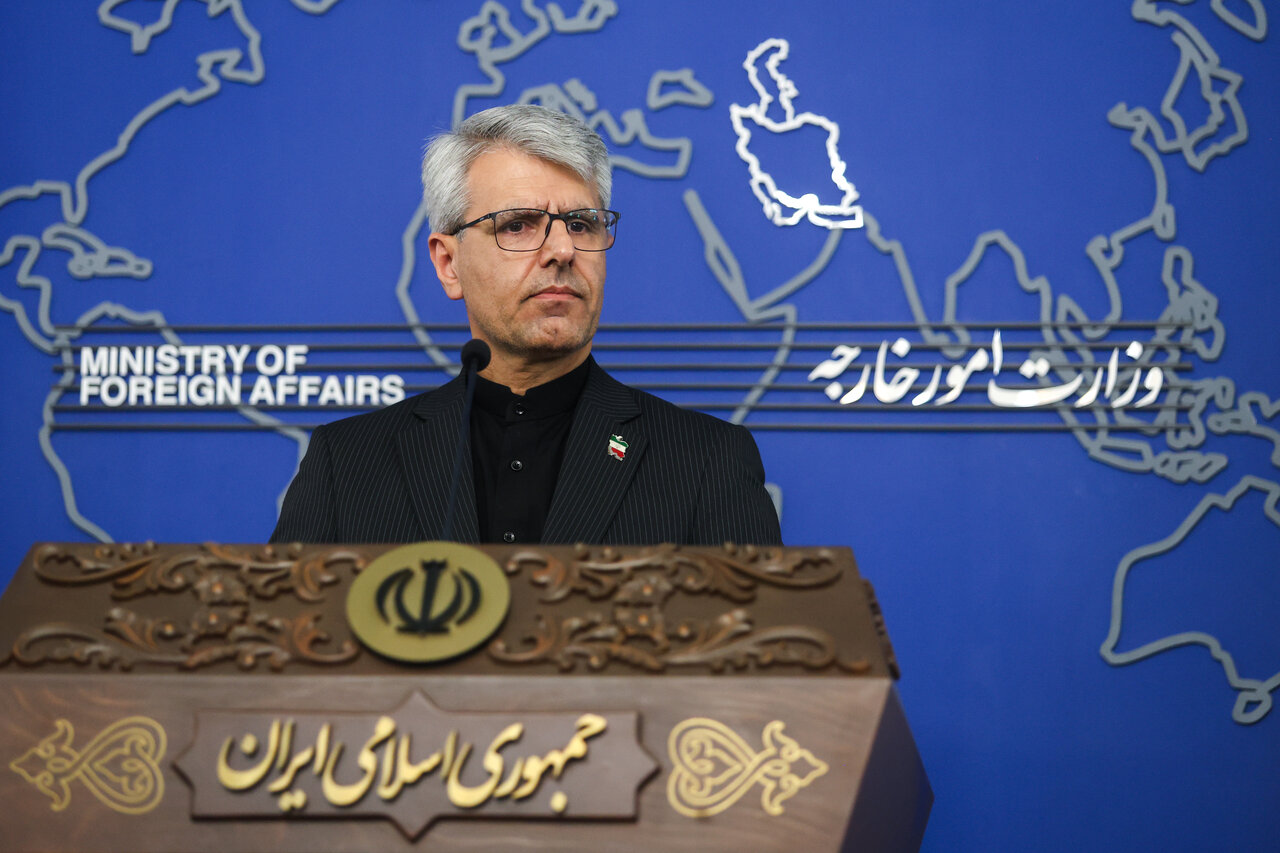
Speaking at his weekly press conference on Monday, Baqaei said the Strait of Hormuz had remained open until the outbreak of the US-Israeli war of aggression against Iran on February 28, adding that the insecurity currently affecting the waterway was a direct consequence of the actions of the United States and the Israeli regime.
He stressed that vessels seeking to transit the strait must coordinate with Iran’s competent authorities, warning that ships attempting to navigate unsafe routes under US pressure had unfortunately encountered incidents.
“As long as the US continues its actions, we will not see security return to this waterway,” he said.
Two-day proposal remains on the table
Explaining the details of Tehran’s proposal, Baqaei said it incorporates all the understandings reached by Washington under the Islamabad memorandum of understanding (MoU). He emphasized that Iran’s demands, including the lifting of sanctions, were fundamental national interests that no Iranian could relinquish.
He said Washington had previously accepted its commitments but subsequently violated them, adding that Iran could not be held responsible for the United States’ failure to honor its obligations.
Describing the two-day proposal as a gesture of goodwill, Baqaei said Tehran could implement it within 48 hours if the other side demonstrated the necessary political will. He stressed that Iran’s demands were clear, reasonable and already reflected in the Islamabad understandings.
The spokesman said Iran had previously tested an achievable agreement that the other side had accepted, demonstrating its own commitment by fulfilling its obligations in good faith. However, he stressed that Tehran would accept only commitments consistent with its national interests.
He also expressed appreciation for the efforts of mediators working to resolve the situation, reiterating that Iran’s demands were neither unusual nor unreasonable.
Under the proposal, the Strait of Hormuz would be reopened to commercial shipping within 48 hours of Washington meeting Tehran’s conditions. These include lifting the naval blockade of Iranian ports, ending the war on all fronts and unfreezing Iranian assets held abroad.
Iran had initially proposed reopening the strategic waterway within one week but subsequently shortened the implementation period to two days as a further demonstration of its goodwill. Both proposals were conveyed through Qatari mediation, with Doha continuing its diplomatic efforts to help resolve the regional conflict.
Reiterating Tehran’s position on Sunday night, Foreign Minister Abbas Araghchi said the proposal remained on the table and that the White House must choose between accepting Iran’s conditions and continuing the war.
He said American voters had already made their choice, and it was now Washington’s turn to decide, warning that Iran’s alert and battle-hardened Armed Forces were fully prepared to respond if the United States opted for war.
Geopolitical changes in Caucasus
Addressing the Armenian parliament’s approval of a project concerning the so-called “Trump Route,” Baqaei reiterated Iran’s opposition to any initiative that could alter the geopolitical configuration or internationally recognized borders of the region.
“We welcome the unblocking of transportation routes and have stressed that such projects must not lead to changes in the region’s geopolitics,” he said.
Referring to the record of US involvement in the region, the spokesman warned that the presence of the United States had historically been accompanied by insecurity.
Baqaei said Tehran had conveyed its concerns to Yerevan and had received assurances that the project would not result in any changes to existing borders.
Safeguards cooperation affected by aggression
On Iran’s nuclear activities, Baqaei said the country remained committed to its obligations under the Treaty on the Non-Proliferation of Nuclear Weapons (NPT) but could not fulfill them under the current circumstances in the same manner as under normal conditions.
Responding to International Atomic Energy Agency (IAEA) Director General Rafael Grossi’s demand for access to Iran’s nuclear facilities, he said Tehran had not suspended its NPT commitments and had consistently honored its international obligations.
“Those who committed acts of aggression and disrupted the implementation of safeguards arrangements must answer for their actions,” Baqaei said, stressing that the circumstances created by the attacks had affected Iran’s ability to implement its safeguards obligations as usual.
He noted that an inspection of the Bushehr nuclear power plant had taken place several days earlier, adding that Iran’s mission in Vienna remained in professional contact with the IAEA.
Asked about reports that Qatar had presented a separate nuclear proposal, Baqaei said Iran had already submitted its own two-day initiative, which remained available for consideration.
Baqaei questions US claims about Iran’s nuclear program
The spokesman also dismissed reports that the United States was offering financial incentives to obtain and leak information about Iran’s nuclear program.
He pointed out the contradiction between Washington’s previous announcement that it had completely destroyed Iran’s nuclear program and its subsequent efforts to spend considerable sums obtaining information about the same program.
Baqaei said the objective was to perpetuate allegations against Iran’s peaceful nuclear activities and manufacture the impression that the program continued to pose a major security concern.
He expressed doubt that the international community would be misled by such US tactics.
Concluding his remarks on the Strait of Hormuz, Baqaei again described Iran’s two-day initiative as the most reasonable option available for restoring security to the Persian Gulf, asking: “Can a more logical proposal than Iran’s be found?”
He said the proposal demonstrated Tehran’s utmost goodwill and that the decision now rested with Washington.
Disclaimer : This story is auto aggregated by a computer programme and has not been created or edited by DOWNTHENEWS. Publisher: tehrantimes.com