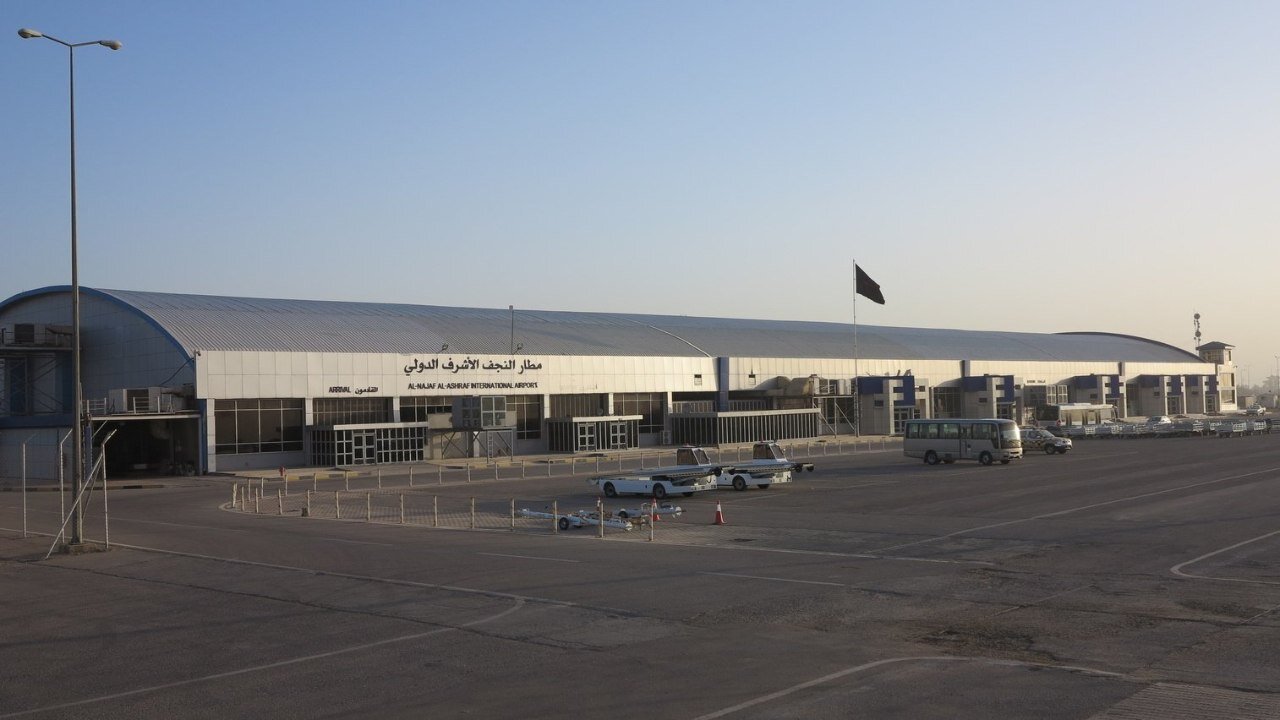
TEHRAN- Baghdad secures a US sanctions exemption allowing up to 40 daily flights to and from Najaf, following appeals from senior Iraqi political and religious figures and demonstrations demanding the restoration of air links between the two neighboring countries.
Iraq has taken a significant step towards restoring air links with Iran after securing a limited exemption from US sanctions for flights to and from Najaf International Airport, following mounting political pressure, appeals from prominent Shia religious figures and protests by Iraqis demanding an end to restrictions that disrupted travel between the two neighbors.
Under an agreement announced by the Iraqi government on Friday, October 2, Iranian airlines will be permitted to operate up to 40 flights a day to and from Najaf, with the exception of Mahan Air. The arrangement followed direct discussions between Baghdad and Washington to secure an exemption from US restrictions targeting Iran s aviation sector.
The decision marks a development in efforts to restore a vital transportation link between the two countries, whose close religious, social and economic ties sustain substantial cross-border travel. It also follows growing objections in Iraq to restrictions that affected religious pilgrims, patients, students, businesspeople and other travelers.
Iraqi Prime Minister Ali al-Zaidi welcomed the US decision, describing it as a positive response to Baghdad s diplomatic efforts. He said the resumption of flights would facilitate travel, particularly for pilgrims, patients and tourists.
Air travel does not merely represent transportation between two airports, but rather a bridge of communication between peoples, al-Zaidi said.
Iraqi Foreign Minister Fuad Hussein also welcomed the agreement, linking the resumption of flights to efforts to develop an Iraqi-US partnership based on mutual respect. He further highlighted the importance of respecting religious freedom and facilitating access to holy sites.
However, the agreement has not fully resolved the issue. While it allows Iranian carriers other than Mahan Air to operate flights to and from Najaf, the broader demand among Iraqi political figures, religious authorities and members of the public is for the restoration of regular air links between the two countries and the reopening of all Iraqi airports to Iranian flights.
Senior Iraqi cleric calls for all airports to reopen
Among the prominent voices calling for a broader restoration of air links is Ammar al-Hakim, the leader of Iraq s National Wisdom Movement and a senior Shia religious and political figure.
Welcoming the agreement, al-Hakim thanked Prime Minister al-Zaidi for the diplomatic efforts that led to the exemption, describing the decision as an important step towards facilitating transportation and communication between the peoples of Iran and Iraq.
He said the development demonstrated that dialogue and constructive diplomacy could resolve outstanding issues and overcome obstacles in the interests of Iraq and its people.
Al-Hakim also expressed solidarity with Iran and its people in the face of unilateral US sanctions, emphasizing the humanitarian importance of restoring air travel between the two neighboring Muslim countries.
Going beyond the limited arrangement for Najaf, he called on Iraq s civil aviation authorities to reopen all airports across the country to flights between Iran and Iraq.
His appeal reflects the wider concern that restrictions imposed in response to US sanctions could continue to disrupt travel even if a limited exemption allows some services to resume.
Najaf is a particularly important destination because of its religious significance to Shia Muslims. The city is home to the Imam Ali shrine and serves as a major gateway for Iranian pilgrims visiting Iraq s holy sites. Air links also facilitate travel by Iraqi pilgrims and other visitors heading to Iran s religious centers, including Mashhad and Qom.
For many travelers, direct flights offer a practical alternative to lengthy overland journeys. Interruptions to these services can therefore impose additional costs and logistical difficulties, particularly on patients and elderly pilgrims.
Iraqi political leadership had called for an exemption
The push to restore flights had extended beyond individual political and religious figures.
In an earlier joint statement, Iraq s senior political leadership called for Najaf International Airport to be exempted from US sanctions targeting Iran. The statement was issued by Prime Minister Ali Faleh al-Zaidi, President Nizar Amedi, Parliament Speaker Haibat al-Halbousi and Supreme Judicial Council President Faiq Zaidan.
The officials opposed the application of US restrictions to Najaf airport, emphasizing its distinctive religious status and its role in receiving millions of pilgrims.
They argued that the airport s importance to religious travel warranted an exemption from measures directed at Iran s aviation sector.
The joint appeal underscored the issue s significance within Iraq, where the consequences of sanctions extend beyond commercial aviation to religious tourism, family ties and humanitarian travel.
The subsequent agreement allowing up to 40 daily flights to and from Najaf represents a partial response to those concerns, although it falls short of the broader demand for access to all Iraqi airports.
Nujaba warns of renewed protests if restrictions continue
The campaign to restore flights has also drawn support from Iraq s resistance groups, which have strongly criticised the suspension of air links with Iran.
Akram al-Kaabi, secretary-general of Harakat Hezbollah al-Nujaba, previously warned that the group would organize sit-ins at Iraqi airports nationwide unless normal air traffic between the two neighboring countries resumed.
The group s position was reinforced by Sheikh Nazim al-Saidi, head of Nujaba s executive council, who praised participants in a sit-in at Najaf International Airport and described their actions as an expression of commitment to Iraq s national sovereignty.
Al-Saidi said the demonstrators had shown a sense of responsibility and solidarity with those affected by the restrictions, framing support for the Iranian people as a moral, religious and humanitarian obligation.
Following the reopening of Najaf airport to eligible Iranian flights, the planned indefinite sit-in was called off. Al-Saidi nevertheless warned that continued US sanctions against Iraqi airports would provoke a renewed and potentially larger public response.
He stressed that Iraq s decisions should not be subject to external tutelage and that national sovereignty remained a fundamental principle.
The warning highlights the possibility that further restrictions on Iranian flights could reignite public opposition, particularly if travelers and religious communities conclude that the limited exemption has failed to restore normal services.
Public demonstrations add pressure on Baghdad
Public opposition has been another important element in the campaign to resume flights.
On Monday, Iraqis from different walks of life held demonstrations across the country to condemn the government s decision to suspend flights to and from Iran, according to Press TV.
The protests reflected concerns that restrictions introduced under US sanctions were directly affecting ordinary people, including pilgrims, patients, students, traders and families travelling between the two countries.
The demonstrations, alongside appeals from political leaders and religious figures, increased pressure on Baghdad to seek an arrangement that would allow air services to resume without exposing Iraqi airports and aviation service providers to US penalties.
Former Iraqi Prime Minister Adel Abdul Mahdi also criticized the suspension, describing Iran as Iraq s neighbor, ally and friend and urging the authorities to reverse the decision. He characterized the closure of air links as a major mistake.
Taken together, these reactions showed that the issue had developed beyond a dispute over airline operations into a broader debate about Iraq s sovereignty, its relations with Iran and the consequences of complying with US sanctions.
US sanctions disrupted a major regional travel corridor
The restrictions followed a new round of US measures targeting Iran s aviation sector in September. Washington threatened sanctions against companies and service providers that fueled, maintained, or otherwise assisted Iranian aircraft, including those operating outside the United States.
The measures created risks for airports, ground-handling companies, fuel suppliers and other businesses serving Iranian carriers. Concern over potential US penalties contributed to the suspension of Iranian flights at several Iraqi airports.
Najaf International Airport, a principal gateway for Iranian visitors to Iraq s holy cities, halted Iranian flights in late September after initially continuing to receive them. Erbil and Sulaymaniyah airports also took restrictive measures, while Kirkuk International Airport reported that it had no flights to Iran.
Iran s Foreign Ministry condemned the extraterritorial enforcement of US sanctions, arguing that the restrictions harmed ordinary travelers and interfered with legitimate economic and transport links.
Iran had also urged Baghdad to take steps to restore regular air connections, citing the difficulties faced by pilgrims, patients, students and businesspeople.
The dispute highlighted the pressure facing third countries and commercial operators whose dealings with Iranian airlines could expose them to US secondary sanctions, even when their activities take place outside American territory.
Thousands of passengers affected by the suspension
The scale of the disruption was reflected in figures previously provided by Iran s ambassador to Baghdad, Mohammad Kazem al-Sadegh.
Before the restrictions, approximately 25 Iranian flights a day arrived at Najaf and around 15 at Baghdad, according to the ambassador. He also estimated that between 12,000 and 13,000 people travelled between Iran and Iraq each day on Iranian airlines.
Those figures illustrate the importance of air links to the movement of people between the two countries and the potential consequences of prolonged interruptions.
For religious travelers, the effects are particularly significant. Najaf and Karbala are among the most important pilgrimage destinations for Shia Muslims, while Iran attracts visitors to its own major religious centers. The two countries also maintain extensive family, educational, commercial and cultural connections that generate demand for regular travel.
A limited exemption, with broader demands still outstanding
The agreement announced on October 2 offers a route towards restoring part of the disrupted air traffic, allowing eligible Iranian airlines to operate up to 40 daily flights to and from Najaf International Airport. The exclusion of Mahan Air, however, means that the arrangement does not restore access for all Iranian carriers.
Nor does the agreement, as announced, establish a blanket exemption for Iranian flights at every Iraqi airport.
Ammar al-Hakim s call for all Iraqi airports to reopen, the earlier appeal by Iraq s senior political leadership, and warnings from Nujaba indicate that pressure for a more comprehensive settlement is likely to remain an important part of the debate.
The immediate outcome is a partial restoration of air links following negotiations between Baghdad and Washington. The wider question is whether Iraq can secure arrangements that protect the operation of its airports while restoring reliable air travel with Iran.
For Baghdad, the challenge is to reconcile its diplomatic relationship with Washington with the practical needs of its own citizens and the country s longstanding connections with its eastern neighbor. For travelers, airlines and businesses, the central concern is whether the latest exemption will translate into stable, accessible and predictable services.
The resumption of eligible flights to Najaf is therefore an important step, but the broader demand voiced by Iraqi political figures, religious leaders and demonstrators remains clear: air links between Iran and Iraq should be restored on a more comprehensive and sustainable basis.
Disclaimer : This story is auto aggregated by a computer programme and has not been created or edited by DOWNTHENEWS. Publisher: tehrantimes.com