
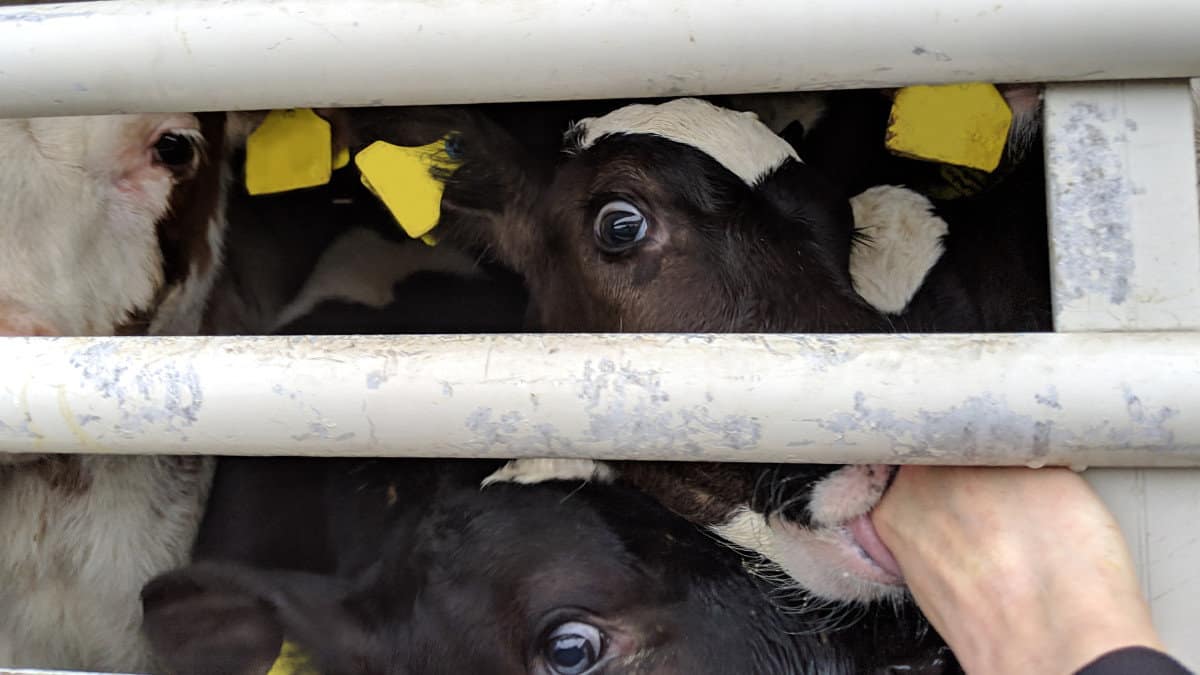
The transport of young male calves from Ireland to the Netherlands is still ongoing, despite earlier promises by the calf industry to stop.
New reporting by Dutch news media NOS shows that more than 10,000 male calves were transported in recent months. Many of them were only a few weeks old when they began the journey.
The trade in young calves is linked to the dairy industry. In the dairy industry, cows must give birth to produce milk.
Female calves can grow into future dairy cows, but male calves cannot produce milk and usually have low economic value within the system.
Long journeys without milk
The trip from Ireland to the Netherlands can take between 50 and 80 hours. During this time, calves are supposed to rest and drink regularly.
However, during the sea crossing from Rosslare Europort in Ireland to the Port of Cherbourg in France, which lasts about 19 hours, calves cannot be fed. The animals are transported in trucks on board ships, where there is no system to give them milk.
According to the European Commission, animals should be fed at least every 12 hours. This means the current transport conditions do not meet EU welfare standards.
Irish authorities disagree. They say feeding is only required when it is “necessary”, and argue there is no clear proof that calves suffer harm during the journey.
“They survive, but that does not mean their welfare is good,” researcher Luca van Dijk said.
Many calves are transported at a very young age, sometimes just two weeks old. At this stage, their immune system is still developing, and regular feeding is important.
Very young animals
Calves are usually transported young because they are smaller and take up less space. This makes the transport cheaper and more efficient for companies.
The Dutch veal industry had said it wanted to stop importing calves from Ireland by 2026. But the latest data shows that the trade is still continuing.
VanDrie Group, the largest company in the sector, has previously announced plans to end imports, but has not confirmed whether it has actually ended the trade.
Industry groups argue that if Dutch companies stop importing, the calves will simply be sent to other countries.
Animal welfare organisations Eyes on Animals and Ethical Farming Ireland have repeatedly documented the suffering of young calves during transport from Ireland to France. They have long called for stricter enforcement of the rules.
Disclaimer : This story is auto aggregated by a computer programme and has not been created or edited by DOWNTHENEWS. Publisher: theanimalreader.com



