Hopes are high for Labour’s ‘King of the North’ after this week’s Westminster love-in. Now the party needs Burnham’s ‘good vibes’ energy to win back angry, frustrated voters.
If dreams come true for the shattered ranks of Britain’s ruling Labour Party, a conquering hero is about to rescue them and their government from two years of astonishing political decline. Their champion, Andy Burnham, is due to ascend to the prime minister’s office within weeks in the hope that he can halt a conservative onslaught that has overturned British politics.
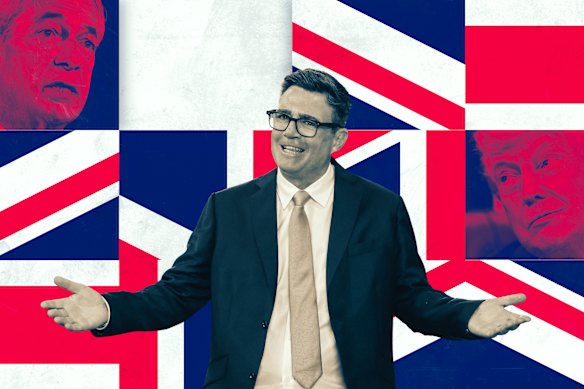
Burnham, known for talking (and dressing) like a man of the people, is seen as a popular leader who can defeat traditional conservatives and, much more importantly, demolish the rising force in Britain: the right-wing populist Nigel Farage and his Reform UK movement.
This Labour mission is essential for the party’s survival, given the existential shock of its drubbing in local government elections in early May, but it will not be watched by the British alone. If Burnham can slay the hard right, he will set a magnetic example for Labor in Australia at a time when it must stop the rise of Pauline Hanson’s One Nation.
Hopes are high for Burnham after he received a hero’s welcome from Labour colleagues in the House of Commons on Monday. The assembled MPs put on a show of sadness for Keir Starmer, who had announced earlier that day that he would soon step down as prime minister, but they rejoiced at Burnham’s arrival. They smiled and took selfies with him as soon as he entered the building.
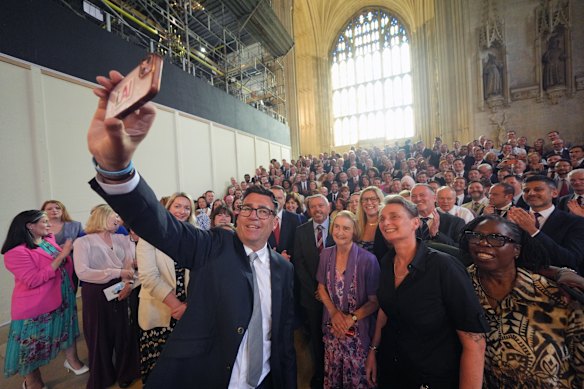
Burnham, 56, has the look of a cool hero when he appears in jeans, a jacket and T-shirt to speak to the Labour faithful. His direct manner has made him immensely popular with party members and made him stand out as the mayor of Greater Manchester, the post he held for nine years before returning to parliament this week.
The legend of Burnham, who was called “the king of the north” so often by his admirers that the press ended up spreading the term, was essential to his appeal when he chose to unseat Starmer, 63.
One voice cut through the hype. Conservative Party leader Kemi Badenoch told Labour MPs that their prime minister was resigning due to their weakness, not just because of his own mistakes.
She also blamed ministers such as the chancellor of the exchequer, Rachel Reeves, and the energy secretary, Ed Miliband. And she reminded Labour MPs that they had so often forced Starmer to retreat on his policies because they would not support them.
“He’s the one who is resigning because of his MPs,” Badenoch shot across the table during questions in the Commons. “There’s no point trying to distract from it. And let’s be honest, Mr Speaker, the prime minister has made many mistakes. Otherwise, he wouldn’t be going. But he has also been let down. I’m only saying what his staff have been briefing.
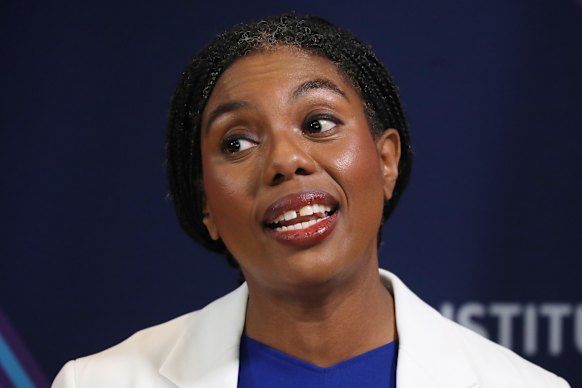
“He’s been let down by an energy secretary who is killing industry, let down by a chancellor who is killing jobs, let down by backbenchers who don’t understand that government is about tough choices. He U-turned again, and again, and again, to appease them. And now they’ve abandoned him.
“And what for? A pair of eyelashes and a black T-shirt.”
So far, Burnham is all about the promise of renewal. This is a common phase in leadership spills, when the probable winner spreads wishful thinking about what comes next without being pinned down on anything too significant. Flowery profiles in the media help. In Burnham’s case, however, it is all looking a little casual.
One of Burnham’s social media posts gave this away. “Heading home after a big week in Westminster,” he posted on X from outside parliament. It was only Wednesday. He had been sworn in on Monday. His line echoed a joke from Tina Fey’s sitcom 30 Rock, but he seemed in earnest, not ironic. In his defence, he had won the Makerfield byelection six days earlier, returning him to parliament after nine years out of the Commons.
Social media and the mainstream media are doing Burnham’s work for him by spreading hope without commitment. His advisers brief journalists on what he might do – such as the ministers he might appoint – but he says nothing that might be held against him later. He has not held a press conference that might subject him to scrutiny. He has not delivered a speech.
Burnham, in fact, has made no public remarks that offer anything of substance at the very time his ascension to Number 10 Downing Street has become so certain.
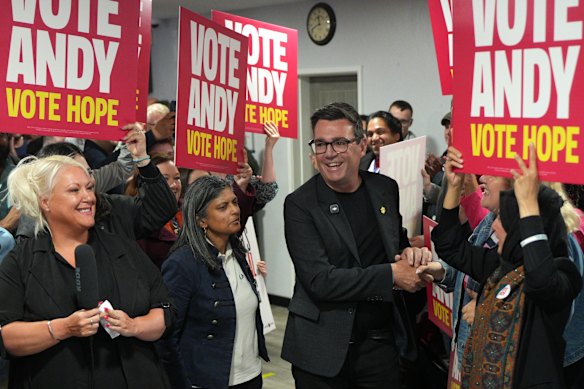
This means that the adulation is all about his past performance and the widespread assumption that he knows how to beat Farage and Reform. The strongest evidence is his popularity as mayor of Greater Manchester, showing that he can connect with the ordinary voters Farage thinks are on his side. Then there is the result in Makerfield, where Burnham crushed the Reform candidate.
On paper, Makerfield looks like compelling evidence that Burnham has what it takes to beat the right. He won with 54.8 per cent of the votes cast, while Reform candidate Rob Kenyon won 34.5 per cent. The problem for Labour is that Makerfield is not an indicator of broader sentiment at a future national election.
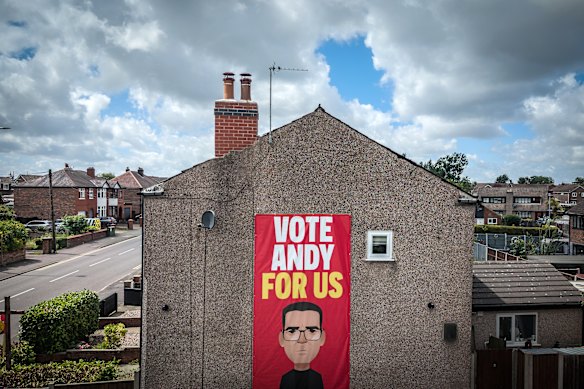
There is always an element of protest voting in a byelection, and this shaped Makerfield. Everybody knew, thanks to months of coverage of the leadership question, that Burnham was running for the seat in order to return to parliament and challenge the prime minister. Voters knew that by choosing Burnham, they could wound or remove Starmer.
Burnham should enjoy that while he can. The next time Labour faces voters, either at a byelection or a general election, he will be the incumbent. Only then will the tally be a reliable guide to voter sentiment about his leadership qualities against Reform.
If there is a deeper lesson, however, it is about the local campaign against Reform. This was not so much about Farage as about the candidate, Kenyon. A campaign group, Hope Not Hate, published social media posts it said were from Kenyon that used graphic, sexual and sexist language about women, including well-known television presenters. (It also said some posts compared Australia’s COVID vaccination policies to Nazism.)
When the BBC held a television event with a live audience in Makerfield, one woman in the audience stood and said: “I’d rather have a career politician than a plumber who’s a sexist.” Labour volunteers narrowcast this message about their opponent when they knocked on doors to talk to voters.
Damaged and divided
If Burnham is to take on Reform at a national level, he will need more than this. Britain is damaged and divided after a decade of Brexit. The nation’s problems are not all about the referendum a decade ago to leave the European Union, but the vote in June 2016 did not deliver the bright future that so many promised.
An estimate from Stanford University last November found that it had cut the UK’s economic output by 6 to 8 per cent. The National Institute of Economic and Social Research issued a report on June 19 saying the hit to GDP ranged from 4 to 10 per cent compared with the trend before the referendum.
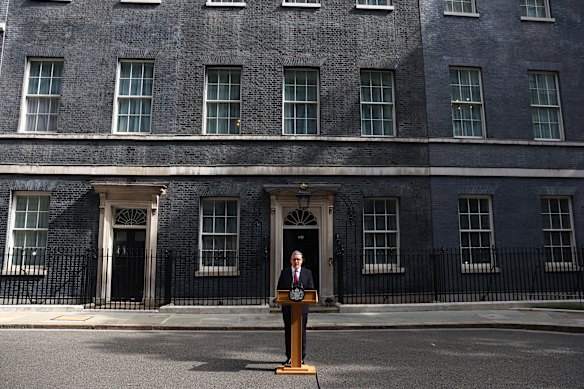
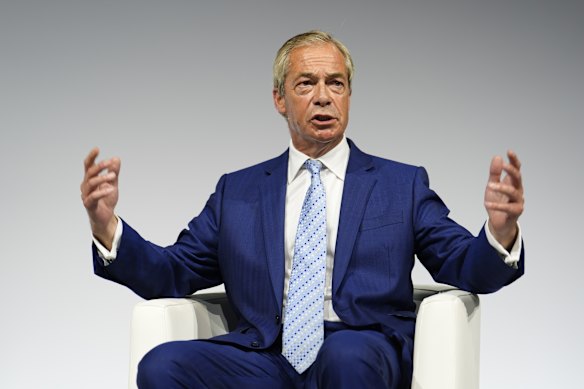
The British public did not get what they were promised by the Brexit campaigners. And one of those campaigners, Farage, has prospered anyway. He blames the Conservatives, the party in power from 2010 to 2024, for squandering Brexit and driving up migration, tapping into distrust of the major parties. His core proposition is that only he can put right what the two big parties have got wrong.
Reform has 25 per cent of the vote, the Conservative Party has 20 per cent, Labour has 18 per cent, and the Greens have 15 per cent, according to the latest YouGov opinion poll earlier this week. The Liberal Democrats, the centrist party that partnered the Conservatives in coalition from 2010 to 2015, have 14 per cent.
This means almost just under half the electorate might be described as having conservative views. Labour can win, however, by lifting its core vote by taking votes from the Greens and the Liberal Democrats, and possibly more conservative camps.
In an electoral system that hands victory to the candidate who is first past the post, nobody can count on preferences. As the leader of the biggest single party, Farage has the edge. And Burnham is yet to set out a compelling plan to surpass him.
Another conservative challenge also disrupts the Labour dream. US President Donald Trump fell out with Starmer over the war in Iran, and he bid him farewell on social media last Sunday by telling the world he would resign a day before he did. The special relationship between America and Britain is in trouble.
How will Trump treat Burnham? So far, he has barely noticed him.
“I think I see that he was, I guess, the mayor of a town,” Trump said on Wednesday at the White House. “I hear he’s extremely liberal, extremely.” He suggested Burnham should open up oil reserves in the North Sea, but probably would not. (This is a fair guess: Burnham is close to ministers such as Miliband, who has stopped new fields being explored even while Norway is developing the same basin.)
Burnham is being vaulted to the top with the support of the progressive wing of the Labour Party, and this guarantees friction if and when he has to play nice with Trump. This problem bedevilled Starmer, a centrist, and it is a recurring challenge for other Western leaders, including Anthony Albanese. One moment, they are accused of fawning over the American president, the next, they are vilified for offending him and putting the US alliance in danger.
When the mob from Trump’s political base trashed the US Capitol in January 2021, there was sharp derision from Burnham. “Any UK politician who gave Trump the time of day should be ashamed right now,” he tweeted. (As of this week, his tweet on X was still online.)
This does not prevent Burnham from getting along with Trump. Albanese, as opposition leader at the time of the Capitol riot, called it a “violent insurrection” and said that Trump had encouraged the assault. Once in office, Albanese smoothed over the differences. Perhaps Burnham can as well. There is, however, a real prospect that Burnham and his base within the Labour parliamentary party will want to speak out against the tweets and edicts from Washington.
Alarm bells for Albanese?
Is the rupture in Britain a warning sign for Albanese? Is he facing the same fate as Starmer? Some of the debate in Australia shows that Hanson and her admirers would love to think so, but they base their complaints about Labor in Australia on a mistaken view of Labour in Britain.
The UK has just lost its sixth prime minister in a decade; Burnham will be the seventh since the Brexit referendum. The country is stuck in the spill cycle that Australia experienced in the last decade. But Australia found a way to stop the cycle. And it did it in 2022 when Albanese took power.
Albanese and Labor brought the leadership spills to an end with a cautious approach to policy, an element of cunning in their politics, and a serious discipline in their performance. This has helped them to get through the kind of turmoil that Starmer could not survive.
Not so long ago, Liberal leader Peter Dutton was riding high in the polls after Labor lost the referendum on the Voice, a personal defeat for Albanese. Dutton was hailed by conservatives as the next prime minister. But his support was soft, and it became softer and thinner as the election neared and voters took a closer look at him.
How to beat the right? There will be lessons in Australia, not just in Britain. Albanese saw off Dutton with a mixture of caution and cunning. He brought stability to the government, and he disappointed the left by being slow on policy, but he has also had the benefit of stable cabinet ministers who haven’t panicked, and he has a government with a disciplined caucus.
Britain has sorely lacked these basic features. Under Labour, over the past year in particular, it has suffered from cabinet ministers complaining to the media about their prime minister to talk themselves up, thereby talking the government down. They have also had panicked MPs, many of them new to parliament, who have rebelled against policy decisions and then wondered why the government looked dysfunctional.
Burnham is all about the promise of a progressive assault that can tear down Farage and reclaim the centre for Labour. But everyone knows that this sense of promise in a new leader evaporates quickly. While some members of the Burnham camp are briefing the media on policy ideas: he wants to spend more on infrastructure, devolve power to the regions, set up a “Downing Street in the North” to move key tasks out of London. The overwhelming sense is that the agenda is a work in progress, and Burnham seems unready for power. A little like Starmer two years ago.
Get a note directly from our foreign correspondents on what’s making headlines around the world. Sign up for our weekly What in the World newsletter.
Disclaimer : This story is auto aggregated by a computer programme and has not been created or edited by DOWNTHENEWS. Publisher: www.smh.com.au