
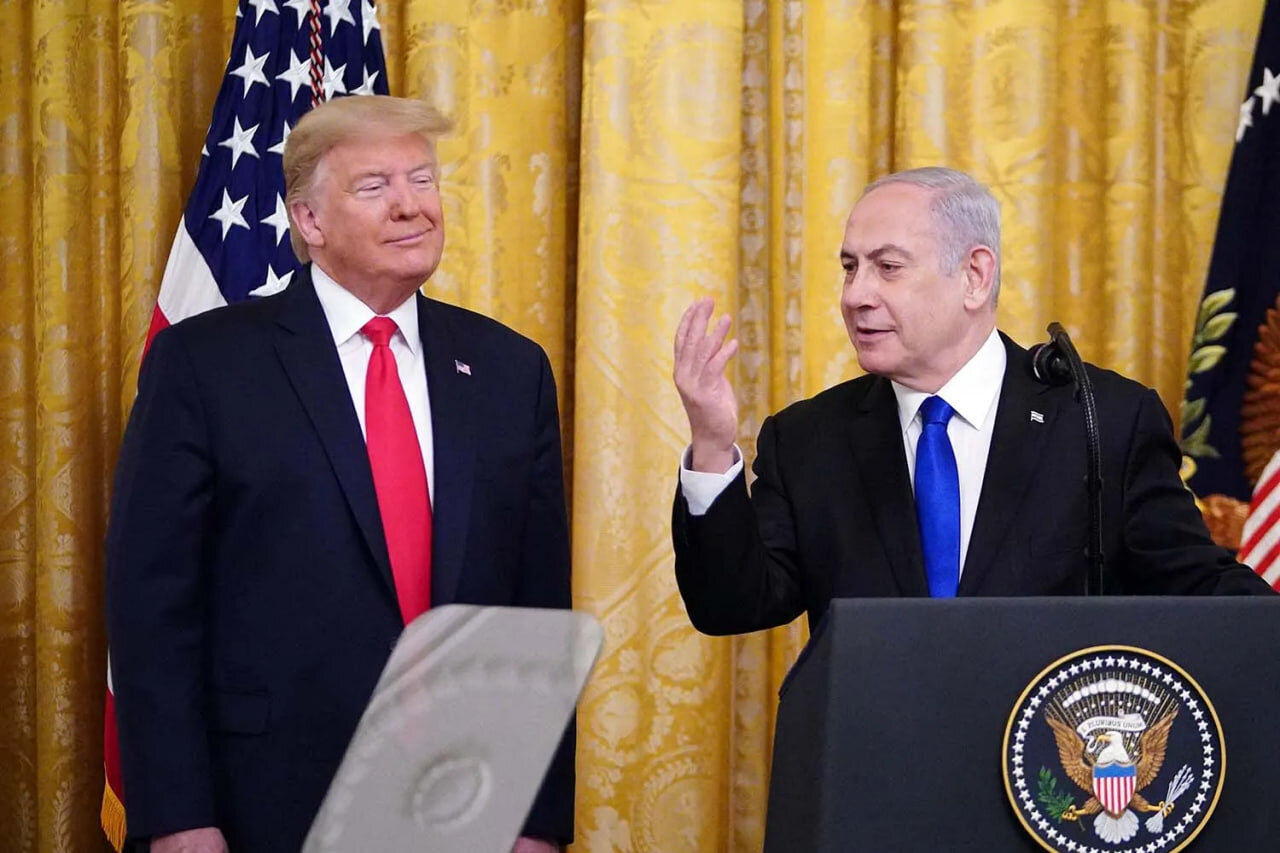
LONDON – Alongside military and economic calculations, the Knesset elections in Israel and midterm congressional elections in the U.S. are emerging as factors influencing the duration of the U.S.-Israeli war on Iran and the terms under which it might end. These electoral considerations also shape the relationship between Benjamin Netanyahu’s political future and Donald Trump’s decisions.
Netanyahu’s political future may be linked to the future of the confrontation with Iran. If Netanyahu loses the Israeli elections, Trump may have a greater opportunity to withdraw from the war while declaring that the United States has achieved its objectives.
Under this scenario, the withdrawal could be presented to the American public as a victory, even if the actual outcome more closely resembles Iran’s success in enduring the confrontation and maintaining its ability to shape the future of the region and beyond. In this way, Trump could end America’s direct military commitments while attempting to avoid admitting that the war failed to achieve its stated objectives.
However, if Netanyahu wins the elections, the confrontation could be prolonged, increasing the likelihood that it would continue for the remainder of Trump’s term. This would result from Israeli calculations favoring the continuation of the war and an attempt to avoid ending it before achieving results that could be presented domestically as an accomplishment.
Nevertheless, if Netanyahu remains in power, it does not necessarily mean that Washington will be able to continue the war indefinitely. American decision-making will remain subject to the costs of mobilization, attrition, the global economy and relations with allies. Elections, therefore, are not the sole factor determining the end of the war, but they could accelerate or delay the decision to withdraw.
What if Netanyahu and the Republicans in the U.S. lose the elections? In that case, political pressure to end the war could intensify, whether through an agreement or through an American withdrawal without an agreement. The ultimate outcome would depend on the nature of the settlement, the conditions of withdrawal and the ability to translate military results into political gains.
In either case, the central argument remains that electoral changes could politically provide the American administration with an exit from the confrontation. However, they would not guarantee that the strategic consequences of withdrawal would match the narrative presented to the public.
The United States, particularly the Trump administration, faces a dilemma that extends beyond achieving an immediate military gain. The American objective is not simply to leave the war, but to do so in a way that allows the outcome to be presented to the American public and allies as a victory.
The problem, however, is that Washington’s available options are now constrained by substantial strategic costs, meaning that none appears to be free of losses. These options can be summarized in three main scenarios: maintaining a state of neither war nor peace, withdrawing without an agreement, or withdrawing under an agreement.
Maintaining a state of neither war nor peace
This scenario involves maintaining the current situation without reaching a final settlement and without returning to open warfare at the same intensity. At first glance, this option may appear to offer a way to postpone a decisive outcome while keeping pressure on Iran. However, it raises a fundamental question: how long can the United States maintain this situation?
Keeping forces mobilized and on continuous standby, rotating units, securing supplies and covering military and logistical expenses all impose accumulating burdens. These burdens increase when troops are deployed far from American territory, particularly in a region of critical importance to energy security and global trade.
Withdrawal without an agreement
The United States may withdraw without reaching a comprehensive agreement, while maintaining its policy of sanctions on Iran.
Under this scenario, the Trump administration might attempt to construct a narrative of victory by launching a rapid military strike against Iranian targets, such as nuclear facilities and then claiming that the mission had been accomplished and Iran’s capabilities had suffered decisive damage.
However, such a declaration could be an attempt to disguise the withdrawal rather than a genuine indication that the confrontation had been decisively resolved.
Withdrawal under an agreement
The third option involves reaching an agreement that would allow the United States to end the confrontation on the basis of a memorandum of understanding containing 14 clauses. The memorandum itself calls the objectives of the war into question and grants Iran some of its rights. However, such an agreement would present Washington with a different strategic problem.
If the agreement leads to the lifting or easing of sanctions, the opening of economic and financial ties with Iran, and its reintegration into the regional and international systems, Tehran could transform its resources and capabilities into those of a major regional economic power.
Here lies one of the greatest concerns reflected in the agreement: the United States would appear to have been defeated and to have achieved nothing, while Iran, benefiting from economic openness, could become a regional economic giant—or what might be described as the “economic China of West Asia.”
Iran has demonstrated, through its development of national strength under sanctions, that it can mobilize its natural and human resources, geographical position and trade relationships. Without the restrictions imposed on it, Iran could become a major regional power and contribute to the establishment of a new world order.
An agreement that opens these doors could therefore alter the regional balance of power in ways that extend beyond the military results of the war itself.
Disclaimer : This story is auto aggregated by a computer programme and has not been created or edited by DOWNTHENEWS. Publisher: tehrantimes.com




