
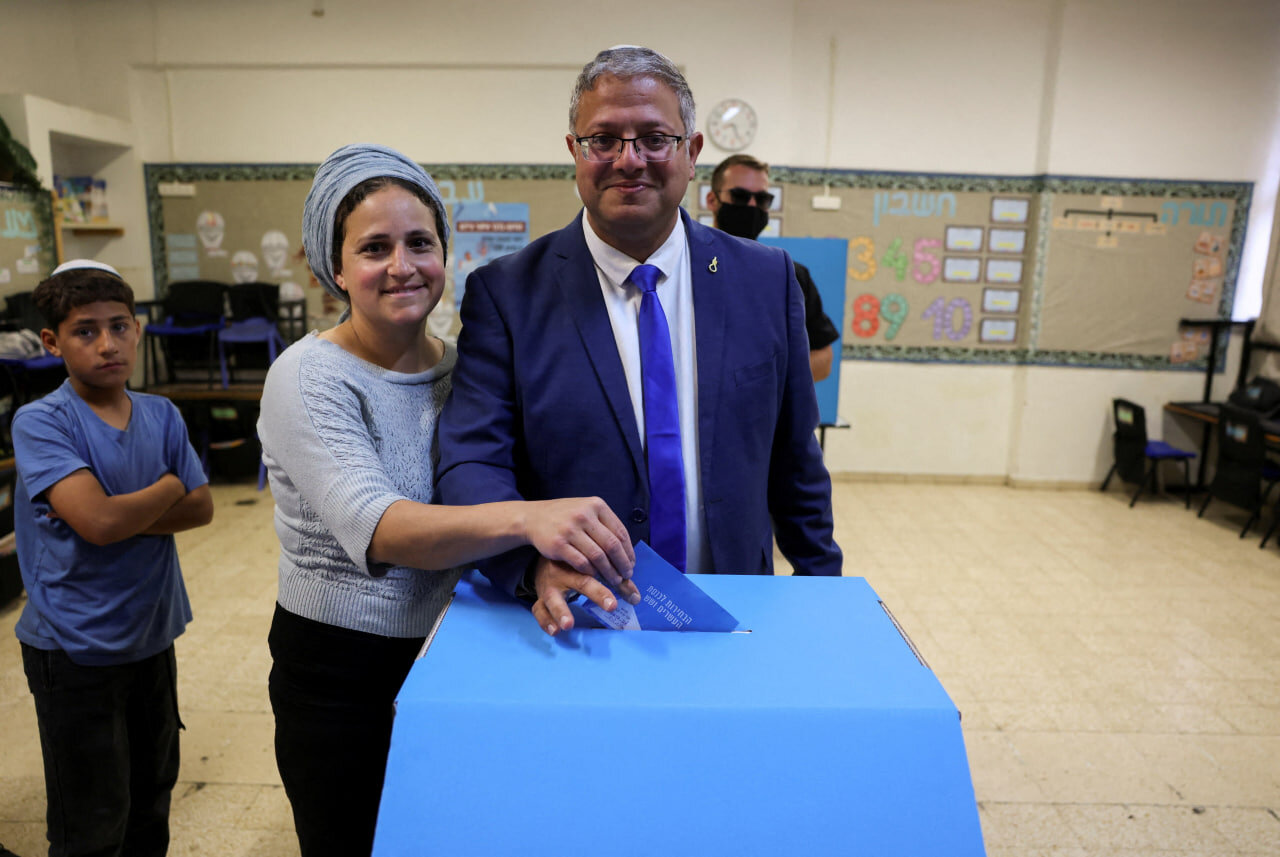
TEHRAN — Israelis queued in numbers not seen in half a century on Tuesday, and Benjamin Netanyahu spent the afternoon begging his own voters to match them.
Turnout reached 44.9 percent by 2 p.m., the fastest pace since 1973, the elections committee said. Polls were due to close at 10 p.m. local time, and no final survey had promised a winner.
Channel 13’s last poll gave Gadi Eisenkot’s Yashar 22 seats, Likud 19, Naftali Bennett’s Together alliance about 14.5, and Avigdor Liberman’s Yisrael Beiteinu 8. It put Netanyahu’s bloc on 50 and the opposition on 54, both short of the 61 needed in the 120-seat Knesset.
Arab-led parties, projected at 14 to 16 seats, may hold the balance, and Eisenkot claimed he ruled them out. This is the sixth general election since 2019.
The day was ugly. Netanyahu filled X with emergency appeals, complaining that left-wing activists were “storming” the polling stations and that Arab parties were heading to the polls “in unprecedented numbers.” Itamar Ben-Gvir urged right-wing voters to respond to the “crazy voting rate” in Palestinian towns.
Haaretz reported that Likud had paid crews to film Arab voters outside polling places. Adalah, the Haifa legal center, described stalled admissions and missing Arabic ballot slips.
In Kafr Qara, one person had voted by 10 a.m. In Segev Shalom, 150 people stood outside a closed station. Ahmad Tibi blamed settlers for deliberate delays.
Those Netanyahu warned about make up a fifth of Israeli citizens. Roughly three million adult Palestinians, in Gaza, the West Bank and East al-Quds (Jerusalem), have no vote in the government that controls their borders and legal status.
The military closed every West Bank crossing for the day. Near Nablus, settlers beat a man in the town of Burqa as Israelis voted.
Same pack, different coats
On September 26, five opposition leaders signed a pact pledging a “Zionist, statesmanlike government.” None accepts that Gaza is a genocide, and none has challenged Israeli strikes on Lebanon, Syria, Yemen, or Iran.
Their quarrel with Netanyahu is about management, corruption, and who failed on October 7. Daniel Levy, a former Israeli government adviser, says the treatment of Palestinians “is a consensus among Zionist parties.” Sociologist Yehouda Shenhav-Shahrabani sums up the field as “same lady, different dress.”
Iranians have a saying for similar situations: “Sage zard baradare shogqal ast.” (The yellow dog is the jackal’s brother.) The candidates amount to rabid yellow dogs and ravenous jackals.
Iran, Lebanon and Gaza get the same offer
There is precedent. In 2021, Bennett and Lapid ended Netanyahu’s twelve-year tenure. By August 2022, Israel was intensifying its campaign of terror and covert aggression against Iran while simultaneously bombing Gaza, killing dozens of Palestinians, including children, while illegal settlement expansion continued without interruption.
Iran shows it best. The United States and Israel attacked on February 28 in the middle of negotiations, and Trump has since urged Netanyahu to “finish the job.”
Eisenkot calls the war unfinished and mocks the U.S.-Iran talks as “a deal taking shape far from Israeli interests.” Yair Lapid wants “every Iranian energy facility bombed, Kharg Island first.” Bennett calls regime change “a must.”
Netanyahu posted an image of a mushroom cloud over an Israeli city and warned Tehran of “a devastating blow.”
The recent phase of the war on Lebanon began March 2, and by mid-August the health ministry counted more than 4,335 dead and nearly a million displaced.
Eisenkot wants troops to stay in the south, Bennett has said he would answer Hezbollah “by striking Iran,” and Liberman had described supposed limited operations as “complete madness.”
Israel holds about two-thirds of Gaza. 1,493 people have been killed since the so-called ceasefire, and Eisenkot promises “to destroy Hamas within 18 months.”
The records behind the slogans
Israeli and Western media have ludicrously tried to sell Eisenkot as the sober general and a loving father. In 2008 he outlined “the Dahiyeh Doctrine,” promising that any village used to fire on Israel would suffer what Beirut’s southern suburb did in 2006: “This is not a recommendation. This is a plan. And it has been approved.”
The Goldstone report described the doctrine as civilian destruction for deterrence. This year he told a conference he had applied it through “disproportionate strikes,” and in March he said it had never been more relevant for Lebanon.
Bennett’s “Octopus Doctrine” claims Iran is the head and Hezbollah, Hamas and the rest are “tentacles.” He once urged shooting Palestinians who cross into Israel, and he cheered the 2025 strike on Doha.
Liberman said there were “no innocents in Gaza,” proposed transferring some 300,000 Arab citizens to a future Palestinian state, and backs cutting Gaza’s water and electricity. Smotrich, who voted vowing to “Judaize” Hebron, wants Israel to “go to war” in the West Bank.
Analyst Ahron Bregman expects a new prime minister to calm the mood and little more, since any government will mirror Israel’s sharp turn to the right. Some analysts see room for E1 and settler violence.
Palestinians, Lebanese and Iranians have heard these men speak for years. They know what to expect. The yellow dog and the jackal wear different coats, but the governing machinery grinds forward with identical malice.
Disclaimer : This story is auto aggregated by a computer programme and has not been created or edited by DOWNTHENEWS. Publisher: tehrantimes.com




