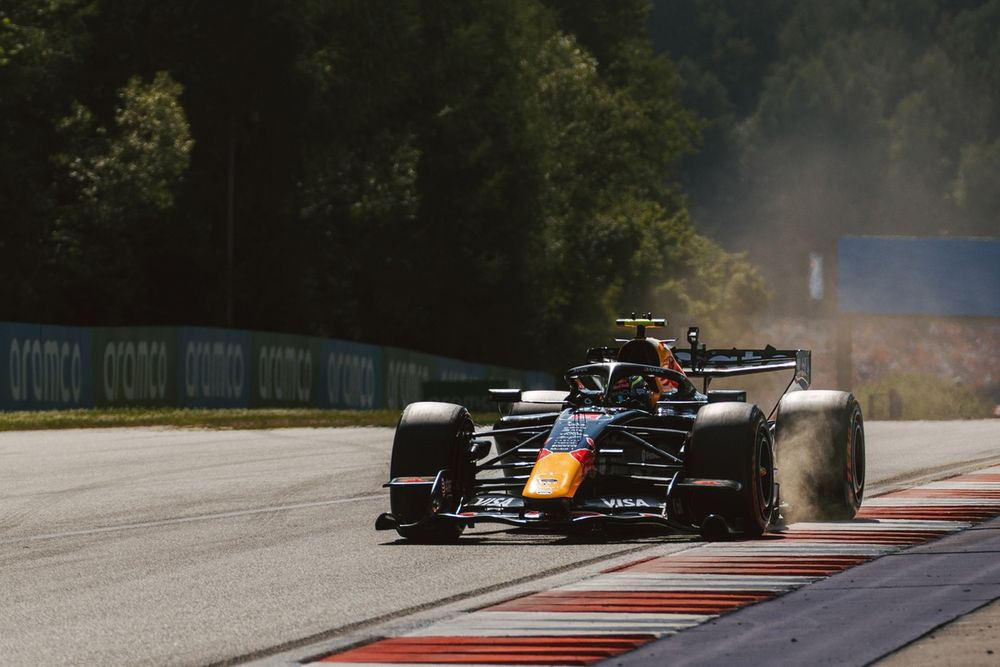
F1 drivers are split over the use and importance of cooling vests as the series is set for its fourth “heat hazard” race of 2026.
Driver comfort in hot climates has been a point of conversation since the 2023 Qatar Grand Prix, when several drivers experienced heat exhaustion symptoms. In response, the FIA and all F1 teams commissioned extensive research, ending up with a standard cooling vest that circulates water through a tube system. When temperatures are expected to exceed 31C, the FIA declared a “heat hazard” forcing drivers to either use the vest or add 0.5kg of corresponding ballast to the car.
With the original design not particularly popular with drivers because of its limited effectiveness beyond a handful of laps and a lack of comfort inside the cockpit, the FIA has provided a cost cap allowance for teams wishing to improve the design. They were offered a 50,000 USD cost cap exemption if they could come up with a cooling system that was proven to work for the entire race duration, as well as a 75,000 USD allowance for improving the comfort and effectiveness of the cooling vest itself.
Mercedes driver George Russell triggered debate with an interview in The Times, calling on the governing body to step in and do more to improve the regulatory framework. Mercedes is one of the teams that decided not to pursue a bespoke system because it felt the cost cap allowance wasn’t sufficient and because it would rather spend the engineering resources on making its car quicker than devote them to a comfort issue.
As Russell mentioned in his explanation, any extra human resources poured into sporadically used vests would not be spent on improving the performance of his W17 car.
So, as Mercedes battles to stay ahead of the pack against advances from McLaren, Red Bull and Ferrari, and the issue revolves around comfort rather than outright safety concerns at this stage, it is clear where the priority is.
Few drivers appear to agree with Russell, with some feeling the current systems are good enough to cover the most extreme cases and others outright declaring the system shouldn’t exist in the first place, like Red Bull’s Max Verstappen and Isack Hadjar.
Isack Hadjar, Red Bull Racing
Photo by: James Sutton / Formula 1 / Formula Motorsport Ltd via Getty Images
“I think it should be banned, because it’s supposed to be tough,” Hadjar said in Singapore, the fourth heat hazard event of 2026.
Verstappen added: “For me it’s not needed. Yes it’s hot, but it’s not a sauna, and with this cooling vest you have these stupid cables in your car, so it’s just limiting your movement as well. Even if it would work for one and a half hours, like cool cool, I don’t need it. But it doesn’t work anyway for one and a half hours.”
Alpine driver Franco Colapinto was equally dismissive. “Yes, I think it’s hot, but it’s been hot for the history of the sport. It’s good to have it as an option. Personally, I don’t like it. I don’t feel it’s comfortable.”
Russell’s teammate Kimi Antonelli said he didn’t use the standard system because of “two very bad experiences” in his debut campaign last year. And while he would welcome an improved solution, he is happy to just focus on work he can do while training to aid his heat acclimatisation.
“When I wore it last year, I had two very bad experiences,” Antonelli said. “The first time it didn’t work as long as we hoped for. The second time, the pump system failed and I did the whole session with the system pumping the water at 50 degrees. I suffered a heat stroke after the session, so it wasn’t very pleasant.
“Ever since, I was like: ‘You know what, I’m going to train hard so I don’t have to use it for the weekends. If we get to a point where it’s developed and we have the confidence that it’s going to work every time and for the time that we need to, I think it’s very nice because it definitely keeps you cool. But now there’s so much uncertainty.”

Andrea Kimi Antonelli, Mercedes
Photo by: Mark Sutton / Formula 1 via Getty Images
Ferrari’s Charles Leclerc said he would take an imperfect system over one that doesn’t exist, even if it only works for half an hour. “Ideally, if I can have an even better cooling vest, I will always take it,” he said. “Let’s say that for 15, 20 laps it works pretty well. Then after, for the rest of the race you are quite warm, just like you are with other cooling vests. At least I’m getting 15, 20 laps, and I’m already grateful for that.”
“Some drivers don’t even want to hear about the cooling vest, but that’s the preference of each single driver.”
There are also some unequivocal proponents of the system, such as Williams driver Carlos Sainz. “If there’s one thing as a team we’ve done well on development this year, it’s the cooling vest, which has definitely given Alex and me a good time inside the car. We’re very happy to have it. I see Mercedes’ point. At the same time, we’ve prioritised it more than Mercedes, and that’s why we have it going and working better.”
Haas driver Esteban Ocon even felt the system helped his personal performance, even if just for a limited amount of time. “I think it’s been a massive performance gain for the physical aspect of things,” the Frenchman said.
“Of course, it hasn’t worked the whole race since we introduced the system. It lasts for like 40 minutes, and then it’s just hot fluid that keeps going on because it’s so hot in the car. But it’s already good that we have something, because I’ve raced my whole career before that without.”
“I don’t think everybody realises how much better it is for an athlete to be at the right temperature to perform.”
We want your opinion!
What would you like to see on Motorsport.com?
– The Motorsport.com Team
Disclaimer : This story is auto aggregated by a computer programme and has not been created or edited by DOWNTHENEWS. Publisher: motorsport.com