Two Italian technicians have been killed in a drone attack on a military site in Kuwait on Thursday, the first European civilians to die amid the United States-Israel war on Iran.
Kuwait and Italy have both blamed Iran. Tehran, which has for the most part not denied, outright, strikes on US military assets hosted by its Gulf neighbours and described those attacks as self-defence, has this time denied any role and has suggested the strike was a “false-flag” operation.
Recommended Stories
list of 3 itemsend of list
The denial has raised two questions: Who was behind the attack and, if it was Iran, why is it not taking responsibility?
Here’s what we know:
What happened in Kuwait?
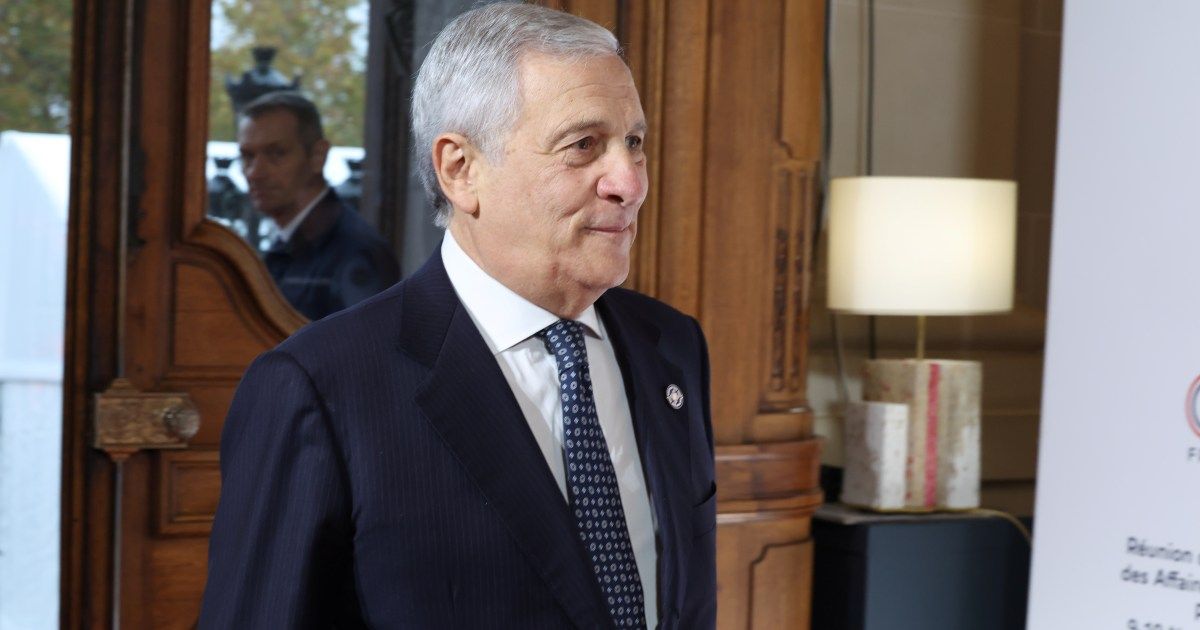
On Thursday, several drones targeted military installations in Kuwait, according to Italy’s Foreign Minister Antonio Tajani.
Kuwait’s army initially described the target only as a “vital site”. Tajani later told the Italian Senate that it included an air-defence detection station where two technicians from Rheinmetall Italia, the Italian arm of the German defence company, were working.
The men were named by Italian media as Antonio Saccoccio, 65, from Formia, and Emanuele Lo Russo, 36, from Rome. They were maintaining detection antennae for the Skyguard air defence system used by Kuwait’s armed forces.
They were killed by falling shrapnel after the drones were intercepted, according to Kuwaiti and Italian reports. A Kuwaiti and a Pakistani national were injured.
The two dead men are the first European civilians to be killed as a result of the US-Israel war on Iran since it began in late February. A French soldier was killed in a drone attack in Iraq in March.
Advertisement
This was the first fatal strike on Kuwait in several months, although the country has been one of the hardest-hit Gulf states during the war. Its oil facilities, power infrastructure and airport have all been targeted at various points in the conflict. An Indian traveller was killed and 63 people were injured when drones hit Kuwait international airport on June 3 .
Iran said it last struck Kuwait on November 18 .
What have Kuwait and Italy said about the latest incident?
Both countries have blamed Iran for Thursday’s drone strike.
Kuwait’s Foreign Ministry condemned what it called a “sinful” attack and said the country reserved its right to take all measures to protect its sovereignty and the security of its citizens and residents.
After a call between Kuwait’s foreign minister and Tajani, the Kuwaiti ministry said the two had jointly condemned the strike.
Tajani told the Italian parliament the drones were “of Iranian origin”. The Gulf Cooperation Council’s secretary-general, Jasem Albudaiwi, also condemned what he called a “brutal attack”.
What has Iran said?
Iran has denied any involvement.
“The incident is suspicious and looks like a pre-cooked recipe for war,” Foreign Minister Abbas Araghchi wrote on X.
Araghchi called both his Kuwaiti and Italian counterparts to deny Iranian involvement and offered to mount a joint investigation, according to Iran’s foreign ministry. As of Thursday evening, Kuwait had not publicly commented on the call with Araghchi.
Armed forces spokesman Abolfazl Shekarchi, speaking for both the Islamic Revolutionary Guard Corps (IRGC) and the regular army, said Iranian forces had conducted “no military or offensive operations whatsoever” in the region. He called the attack a “false flag” operation, while a military statement accused the US and Israel of using it as cover for continued aggression.
The Iranian embassy in Rome said it “categorically rejects the allegation”, suggesting the attack could have been staged to drag Europe into the Iran war.
The denial stands out because Iran has rarely disowned its attacks since US-Israeli strikes began in February. In November alone, it issued five statements claiming strikes on neighbouring states, four of them on Bahrain and Kuwait.
Tehran usually tries to justify those strikes as self-defence, arguing that it targets US bases from which Iran is attacked, not the countries that host them.
This is not the first time Iran has denied an attack on Kuwait, however. When a power and desalination plant was hit on March 30 , killing an Indian worker, Iran also claimed that Israel was responsible.
Advertisement
What do we know about who launched the drones?
Hassan Ahmadian, a professor of Middle East studies at the University of Tehran, said Iran’s record of claiming its strikes should be taken seriously.
“Whenever the Iranians do something, they announce it,” he told Al Jazeera. “This time, as on three or four occasions during the war, they said, ‘This wasn’t us.’”
He argued that Iran would have little reason to hide this attack. “They’ve struck the Americans,” he said. “Would they be afraid to announce they’d hit Italians?”
Ahmadian said other parties in the region, such as Israel, might want to “complicate the situation” by blaming Iran, which he called “the ready-made party to blame”. He added that some in Iran also suspect Ukraine, which he argued has been trying to raise its strategic value to Washington.
As the US ran down its stock of expensive Patriot missile interceptor systems against a barrage of cheap, mass-produced Iranian Shahed drones, Ukraine offered its expertise to the US in March on how to combat the drones, which are also used by Russia.
Ahmadian said US involvement could not be ruled out either. Iran has previously told regional governments that the US was behind strikes on two sites during the war, he said.
“We’re looking at someone fishing in troubled waters. Otherwise, if it were the Iranians, they would have announced it,” he added.
Paolo von Schirach, president of the Global Policy Institute and a professor of political science at Bay Atlantic University in Washington, dismissed the idea of US involvement.
“It’s bizarre to suggest the United States would coordinate this attack on Kuwait, an ally in the Gulf, just to stir up feelings,” he said.
Von Schirach noted that Italy has refused to join the US war on Iran and does not support it. “Italy isn’t on America’s side in this conflict,” he said. “So we shouldn’t take this seriously.”
Muhanad Seloom, a senior non-resident fellow at the Middle East Council on Global Affairs, said it was important to “separate Iranian-made from Iranian-launched and Iranian-ordered”.
Tajani described the drone as Iranian-built, of a type also used by Iran-backed militias. Seloom said that makes an Iraqi armed faction the leading alternative suspect. Such groups have claimed attacks on US forces in Gulf states since the war began.
He called Yemen’s Houthis “a distant second” and said Tehran’s own suspects, the US, Israel and Ukraine, “come with no evidence”.
“Only debris, radar tracks and a launch point can settle it,” he told Al Jazeera.
Have ‘false flags’ happened before?
Iran’s “false-flag” defence is not new.
Seloom said Tehran first used it in March over strikes on Turkiye, Cyprus and Azerbaijan. However, he said that The Soufan Center, a US-based security think tank, found that it failed to convince Baku.
Claims have run the other way, too. The best known was the reported arrest of Mossad agents plotting bombings in Qatar and Saudi Arabia, which came to nothing, Seloom said, because neither of those governments stood behind it.
Advertisement
“Alleged often, verified never, as far as I can establish,” he said. “What this war has is deniable action. Hiding the author is common. Framing someone else has yet to be shown.”
In the case of Thursday’s attack, he said, Iran’s false-flag claim “stands without evidence so far”.
If it was Iran, why deny it?
Abdullah al-Shayji, a professor of political science at Kuwait University, said Iran’s narrative “doesn’t come close to being rational or acceptable”.
“Iran bombed us eight days ago, on the 18th of this month, and didn’t deny it,” he said. He said Iran had fired 925 missiles and drones at Kuwait since the start of the war, and more projectiles at Gulf states and Jordan than at Israel. “This doesn’t fool anyone,” he said.
Al-Shayji said the denial comes down to who was killed and where. “Italian technicians were killed, and not at a US base,” he said.
That undermines Iran’s longstanding argument that it hits only US military targets, he said, an argument he believes had already collapsed because the US has now evacuated 16 bases in the region.
“The justification Iran has always used, ‘we don’t target countries, we target US military bases’, no longer exists,” he said.
Seloom offered two possible explanations. “Either it did not order it, or it cannot afford to own it,” he said.
He noted that Iran’s army openly claimed a strike on Kuwait’s Ali Al Salem airbase last week. “This one hit a Kuwaiti site and killed European civilians, which risks turning Europe and the Gulf hosts against it,” he said.
Kuwaiti officials who spoke to Al Jazeera’s Kuwait bureau on condition of anonymity noted that Iran had not sought a joint investigation after earlier deadly attacks on Kuwait, including the drone strike on the airport.
Some Kuwaiti analysts said the denial appeared to be prompted by the victims’ nationality rather than the attack itself, and Al Jazeera’s bureau chief, Saad al-Saidi, said the Iranian statements had caused resentment in Kuwait.
Von Schirach linked the denial to the pressure Iran is under at home. “All the media reports say the economic situation in Iran is extremely bad,” he said, pointing to protests over the rising cost of living.
“I’m not saying the regime will fall, but it is feeling the heat of pressure from the street,” he said. “Iran is in a very difficult position.”
Could this pull Europe into the war?
Not in a combat role, according to Seloom. “Europe’s reflex is pressure,” he said.
He pointed to European Commission President Ursula von der Leyen, who called for more pressure on Tehran, and to Rome, which lodged a complaint with Iran’s embassy while urging caution.
But Seloom said the deaths showed how far Europe is already involved. “The two men were maintaining a Gulf air defence system, so Europe is already in this war as a supplier, and its people are now exposed,” he said.
“Expect sanctions and more defensive support for the Gulf, not European strikes.”
What does this mean for diplomatic efforts to end the war?
The Italian deaths come at a sensitive moment. US President Donald Trump has said he will not consider returning to military action until early next year. That leaves mediators with a few weeks to find terms Washington will accept, chiefly a tangible Iranian concession on its nuclear programme.
Iran has so far stated that it will not discuss its nuclear programme until seven conditions, including the lifting of sanctions and a guaranteed end to US strikes, are met.
Seloom said the drone attack on Kuwait “narrows the track without closing it”. The indirect channel was still running on the day of the strike, he said, with proposals moving through Qatar and Pakistan, according to Araghchi’s own account.
Advertisement
But talks have already stalled and the public position of Qatar, one of the main mediators, is that continued attacks on Kuwait put diplomacy at risk, Seloom said.
He added that the strike strengthens the case for military force, just as the option of targeting Iran’s leadership is being discussed in Washington, according to NBC News. “Washington’s reaction matters more than Kuwait’s,” he said.
Al-Shayji said that whoever is responsible for the drone strikes on Kuwait, Iran’s attacks on Gulf states generally risk lasting damage. “Iran needs to understand that taking revenge on America this way creates enmity with a whole generation” in the Gulf, he said. He added that Kuwait is documenting every Iranian attack and will likely seek compensation.
Ahmadian said confidence building has to go both ways. “Iran didn’t start the war,” he said. “Both sides need to talk about reality, not deny it.”
Disclaimer : This story is auto aggregated by a computer programme and has not been created or edited by DOWNTHENEWS. Publisher: aljazeera.com