Germany’s citizenship test has been criticised by certain politicians for being too easy whilst others say it does nothing to help integration. So we asked our readers for their views.
More than half the respondents to a Local survey said Germany’s citizenship test was too easy. But many of the same people also said that preparing for the exam taught them something valuable about German history, politics and everyday life.
Germany’s citizenship test has come under renewed scrutiny in recent months, with some politicians arguing it should be made more demanding.
When we asked readers about their experiences, the headline result appeared to support some of those criticisms. In total, 55 percent of respondents said the test was too easy, while 42 percent described it as well balanced and only one said it was difficult.
But judging by the written responses, the statistics only tell part of the story.
Many people who felt the test was too easy still said it had helped them learn more about Germany, its political system and its democratic institutions. Others said that the preparation process encouraged them to engage with topics they might otherwise never have explored.
We’ll look at readers’ criticisms of the test – and their advice for people preparing for it – in future articles.
But for now, we wanted to focus on something that genuinely surprised us – just how many respondents saw benefits from the process, even while arguing the exam itself could be improved.
Learning more about Germany
For some readers, the citizenship test served as a gateway into learning more about their adopted country.
Kunle, originally from Nigeria, said he approached the exam as more than just a bureaucratic requirement, an approach which paid off.
“I took it not only to get a permanent residency but also to learn about German history and its laws. It was a great place to start and it motivated me to follow the news in and about Germany’s politics,” he said.
Others echoed that sentiment.
Richard, a 70-year-old respondent living in North Rhine-Westphalia, said the test helped him understand Germany’s constitutional framework better.
“It definitely helped me learn more about the history of Germany and why the constitution is the way it is,” he said.
READ ALSO: ‘Mix of joy and relief’ – What it’s really like to get German citizenship
William Trimmer, originally from New York City and now living in Burgwedel, also described the test as a starting point for further learning. “It led me to do some more research into German history and politics,” he said.
Even a memory test can teach people things
One of the most striking themes running through the responses was how many readers accepted the criticism that the exam relies heavily on memorisation, while simultaneously arguing that this didn’t make it pointless.
Sama Beheshti, a 37-year-old Berliner originally from Iran and Australia, summed up this view neatly.
“Even if it is just a memory test, just going through the questions already teaches some facts to the person memorising it,” she said.
“It’s just a memory test,” wrote another respondent in Berlin. “However, I did learn things that are important.”
Understanding politics and democracy
A number of readers pointed specifically to questions about German democracy and elections as among the most worthwhile aspects of the exam.
An anonymous respondent from Mexico who has lived in Germany for ten years said studying for the test improved her understanding of the electoral system.
“I was able to understand the voting system much better after studying for the test,” she said.
Helen, who lives in Stuttgart, also argued that not all questions should be treated equally.
“The history ones and political system/voting ones are really important,” she said.
K from India, who now lives in Munich, added that the knowledge gained from preparing for the test continues to be useful. “It does provide context when I talk about certain topics.”
Even readers who criticised elements of the exam often made exceptions for questions dealing with Germany’s democratic institutions.
READ ALSO: ‘Are you ready to be German?’ – A first-hand account of the final interview for citizenship
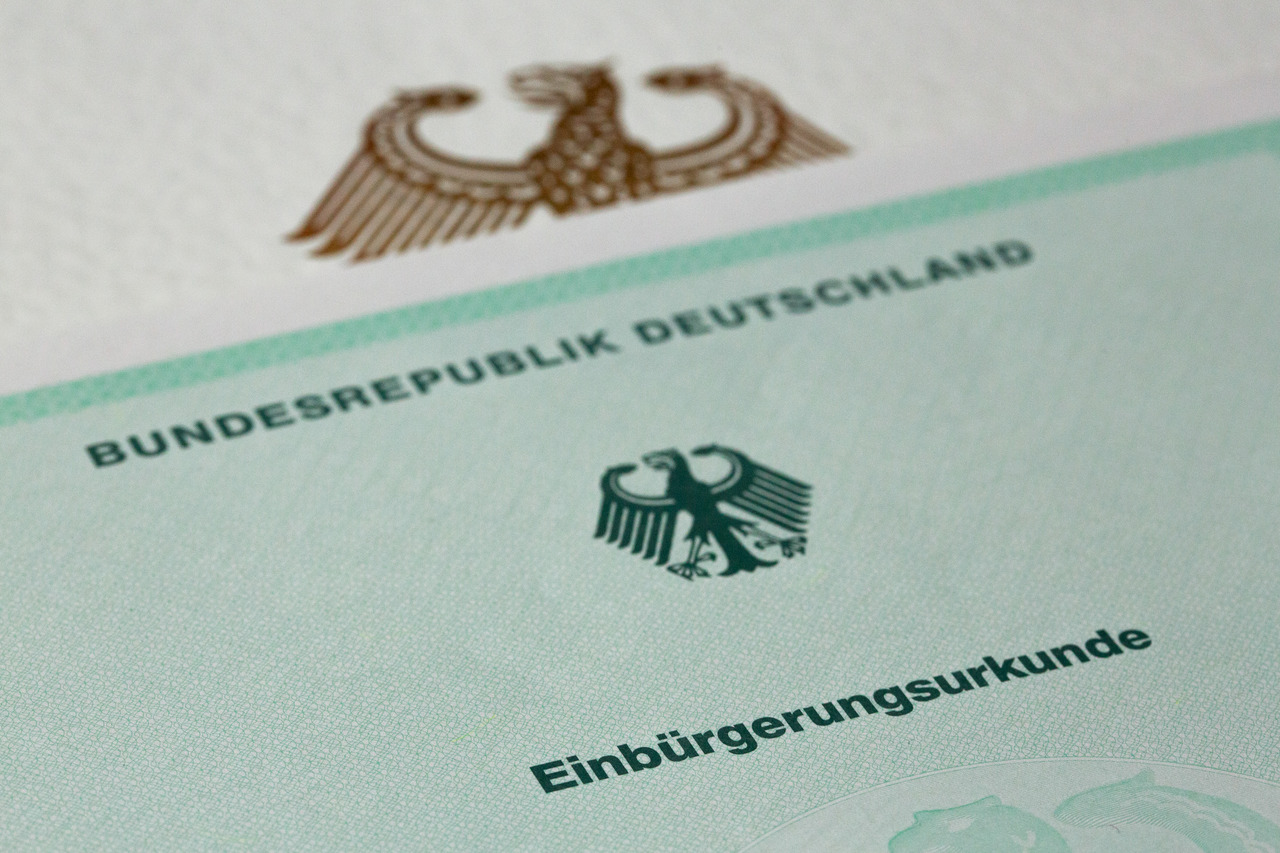
A certificate of naturalisation from the Federal Republic of Germany. Photo: picture alliance/dpa/dpa-Zentralbild | Fernando Gutierrez-Juarez
Integration can’t be measured in a test
That said, many respondents cautioned against exaggerating what any citizenship exam can realistically achieve.
Steve, who lives in Cologne and is originally from the UK, argued that integration is ultimately something that happens through everyday life.
“Integration is a lived experience and evolving process,” he said. “You can’t integrate via a piece of paper or a ‘one-time and forget about it’ test.”
An anonymous respondent made a similar point, arguing the exam should be seen as a foundation rather than a definitive measure of belonging.
“Integration is a continuing process, not something that can be neatly placed in a box or conclusively measured in one examination,” the reader wrote.
International comparisons
Some respondents also put Germany’s citizenship test into a broader international context, arguing that while the exam has flaws, it compares reasonably well with similar tests elsewhere.
One reader from the UK, now living in Trier, described the German test as “fair” and suggested critics should “compare it with the British one”.
Helen, who lives in Stuttgart, also drew comparisons with citizenship tests in other countries. While she felt some questions could be improved, she noted that similar issues exist elsewhere.
“I checked out the UK test and there the same issue exists,” she said, referring to what she saw as an overreliance on factual knowledge rather than practical information newcomers need in everyday life.
Others were unconvinced that some of the proposed alternatives would represent an improvement.
Jim, originally from Massachusetts and now living in Berlin, took a pragmatic view. While agreeing that the exam can become a memorisation exercise, he struggled to identify an obviously better alternative.
“If you practice enough you can memorise answers you didn’t know, and then after the test let them float out of your brain. That’s true for a lot of assessments though, so I don’t know of a better method and I think it’s better than nothing,” he said.
READ ALSO: Which residence permits qualify you for German citizenship?
An unexpected lesson in German bureaucracy
One of the most memorable responses suggested that the greatest educational value of the citizenship process lies somewhere completely different.
The 45-year-old respondent, originally from the US and living in Berlin said the exam questions themselves presented little challenge. But that didn’t mean the process lacked educational value.
“I think the REAL test is the process: can you navigate the bureaucracy of booking an incredibly hard to find appointment? Can you show up on time and with the documents they have requested? Can you follow the instructions? If you can make it through these hurdles, you have demonstrated an understanding of the German bureaucratic system that you will need to be able to get by here.”
It’s difficult to imagine a more Germany-specific answer to a question about integration.
And it captures the central contradiction running through many of the responses we received. While a majority of readers described the citizenship test itself as too easy, many also felt they had come away from the experience knowing more about Germany than when they started.
READ ALSO: Why is the AfD pushing for a harder German citizenship test?
Disclaimer : This story is auto aggregated by a computer programme and has not been created or edited by DOWNTHENEWS. Publisher: thelocal.de