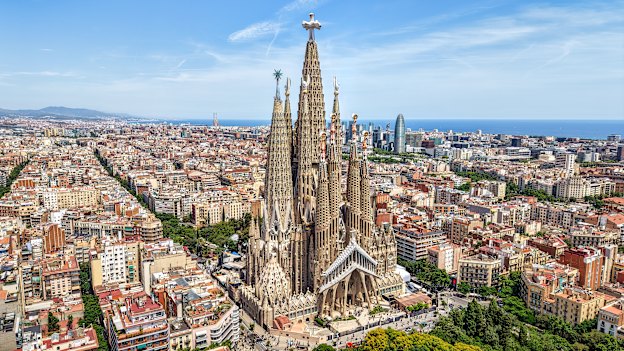
It often felt like La Sagrada Familia would never be completed. The basilica’s unfinished nature was a part of its DNA, as vital to its identity in the public eye as any spires or naves.
For more than 140 years, Catalan architect Antoni Gaudi’s masterpiece was a work in progress, a timeline that is testament to the sheer scale of the idea, the expense of bringing it to life, the unlikely nature of a project so bold and ambitious ever coming to fruition.
For regular visitors to Barcelona this structure became a marker of time, its outline subtly altered every time you were in the city – an extra tower here, another facade there.

But in February this year, a 100-tonne cross was erected atop the Tower of Jesus Christ, the basilica’s soaring central spire. Thus, La Sagrada Familia became the tallest church in the world, at 172.5 metres. And it was finished.
Works will continue well into the 2030s – refinement of the Glory Facade, which will become the main entrance; ornamental tinkering on other exteriors; detailed interior work – but officially, the world’s most famous unfinished masterpiece no longer qualifies for that title.
Sign up for the Traveller Deals newsletter
Get exclusive travel deals delivered straight to your inbox. Sign up now.
It’s an exciting time for potential visitors to the Catalan capital, particularly those who have been before and have witnessed La Sagrada Familia in its various states of construction. Now, as Barcelona marks the 100th anniversary of Antoni Gaudi’s death, you get to see the basilica in all its glory. Now, you get to see Barcelona, too, at its best.
Because although the city has been through its share of problems in the recent past, from unrest caused by overtourism to a campaign for Catalan independence, Barcelona is still undeniably one of the world’s great destinations, and there are so many reasons to revisit.
LA SAGRADA FAMILIA
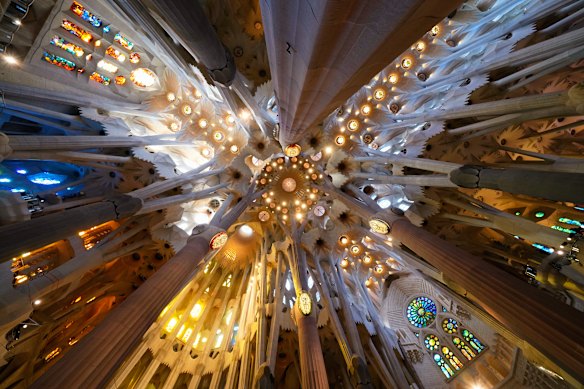
This is truly one of the world’s most spectacular buildings, one of its most beautiful and inspiring. Though Gaudi’s masterpiece is stunning from the outside, with its intricately decorated facades and 14 spires, on the inside it’s perhaps even more impressive. La Sagrada Familia’s soaring, 75-metre-high ceiling appears like the canopy of a Technicolor forest; the basilica’s columns branch out into what looks like concrete foliage, and stained-glass windows cast multi-hued light into every niche.
Even with the large crowds, which are inevitable, a visit to La Sagrada Familia is a moving, spiritual experience. To see it finished is a wonder. Book tickets in advance and book them for as early in the morning as you can manage, to get in before the bulk of the visitors and enjoy the building at its most peaceful. Later, stroll around the perimeter and view the various facades and towers. See sagradafamilia.org
MORE GAUDI

Plenty of other architectural works by Antoni Gaudi have been finished for some time, and are easy to access. The most famous is probably Park Guell, a 17-hectare complex of public parks and gardens on the slopes of Turo del Carmel hill on the north-west edge of the city. This UNESCO heritage-listed site is more than 100 years old, and features numerous structures built in Gaudi’s signature style, a blend of geometric shapes and those reflecting organic forms.
Elsewhere in Barcelona, Casa Batllo is a surrealist apartment block inspired by the ocean, La Predrera – Casa Mila is an apartment building that features warrior-shaped chimneys, and Casa Vicens is Gaudi’s first major housing project. All are impressive from the outside and free to view from the street. See gaudi-foundation.org
SUPERBLOCKS
As Barcelona has grown and strained at its boundaries, local authorities tinker with way to improve the city. Superblocks are perhaps the most interesting and enjoyable. This is the idea of sectioning off three-by-three squares of city blocks and transforming street spaces into public amenities. Cars are pushed to perimeter roads and inside the superblocks streets are reclaimed as recreational spaces with space for pedestrians, cyclists and residents to relax in a vehicle-free zone.
Not all locals are happy with superblocks – known in Catalan as “superilles” – but as a visitor, these spaces allow you to mix with residents in a leisurely environment away from the touristy crush of the likes of the Gothic Quarter. Find superblocks in Sant Antoni and L’Eixample in central Barcelona, and beachside Poblenou to the north. See ajuntament.barcelona.cat
TRADITIONAL RESTAURANTS
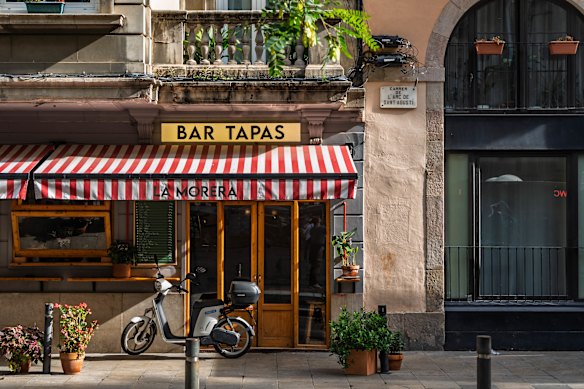
There’s an exciting, ultra-modern dining scene in Barcelona, which we will get to. First though, let’s talk about traditional restaurants and the dining culture that has developed over hundreds of years, and which remains strong today. Begin with tapas, a style of eating so well-known around the world: Bar La Plata has been around since 1945, serving the same four dishes, though the small plates of fried anchovies are most popular; Quimet y Quimet has served open sandwiches utilising tinned seafood since 1914; and Cova Fumada, opened in 1944, is famous for its potato croquettes stuffed with minced beef.
Sit down for something more substantial at Can Cargolet, a down-home Catalan diner specialising in butifarra sausages and braised snails. Or book a table at Can Sole, a seafood restaurant in the port area that has been around since 1903. Or call in to Colmado Murria, a stockist of high-end cheese and wine, which opened in 1898.
CUTTING-EDGE CUISINE
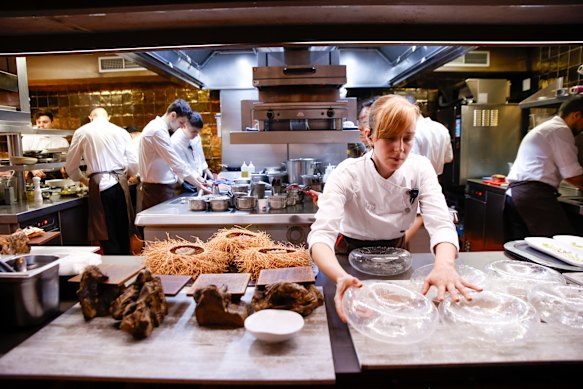
If you love food, and you find experimentation and innovation thrilling, you are going to be overjoyed by the modern dining scene in the Catalan capital, which is filled with chefs doing interesting things. Barcelona is home to Disfrutar, awarded three Michelin stars and a previous No.1 on the World’s 50 Best list. But you don’t have to spend so much to experience this scene: try Ultramarinos Marin for incredible grilled seafood, Estimar for elevated tradition, Berbena for small plates that push the envelope, and Masa Vins for natural wines and imaginative snacks.
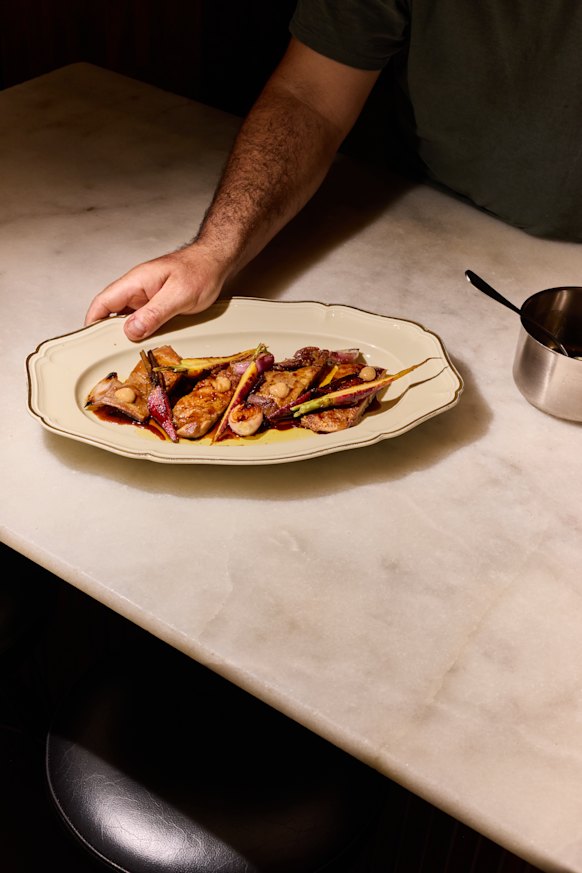
Barcelona is also an excellent place to sample the cuisines of the world: there’s a thriving Mexican scene here (Xuba Tacos), high-quality Japanese (Shoronpo), not to mention Italian, North African and more. There is a vibrant, ever-changing dining scene, concentrated in neighbourhoods such as L’Eixample, Passeig de Gracia and Sant Antoni.
BOUTIQUE SHOPPING
Come for the big brands, if that’s what you like: Mango, Zara, H&M, El Corte Ingles. They’re all here, with major outlets on busy streets. But they’re everywhere else as well. If you want to do some shopping in Barcelona, check out the new wave of boutiques and galleries that sell unique pieces you won’t find anywhere else.
Begin your search in El Born. Its narrow streets are lined with boutiques selling the wares of local designers. Gracia to the north is also excellent for indie fashion, with plenty of local designers represented at own-brand shops. L’Eixample, meanwhile, has a host of small galleries featuring the works of Catalan artists.
VIBRANT NEIGHBOURHOODS
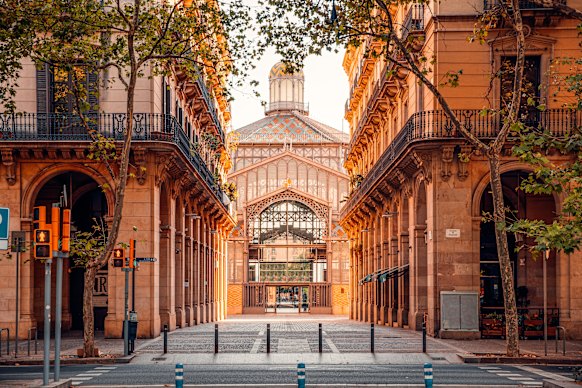
There was a time when Barcelona was filled with no-go zones, when the city had a reputation for petty crime and visitors needed to be careful with where and when they decided to visit. Those days, fortunately, are mostly over, and many of Barcelona’s neighbourhoods are now pleasant, peaceful places in which to enjoy space and discover some of the city’s finest food and drink.
Start in Sant Antoni, a leafy area that’s only a few metro stops from the Gothic Quarter, but is far more relaxed, with its own covered market and a lively restaurant scene. L’Eixample is busier but also has wide tree-lined avenues and Gaudi buildings. El Born is gritty and energetic. El Raval is multicultural and – if we’re being honest – occasionally a little too edgy. Poblenou is a creative hub. And El Poble-sec has a vastly underrated restaurant scene.
MARKET CULTURE
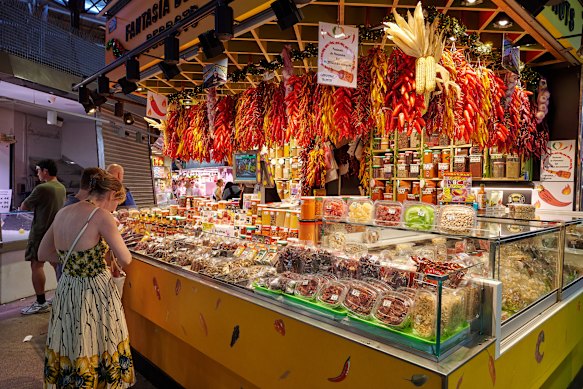
If you’ve been to Barcelona you have probably already visited – or at least know about – La Boqueria, the iconic market accessible from ultra-touristy La Rambla. It’s worth a look around, though on a second or third visit to Barcelona it’s time to explore some of the city’s other markets, which are just as exciting and often far easier to access and enjoy.
Begin close by at Santa Caterina, in El Born, with its mix of fresh produce and on-site restaurants making use of those ingredients. Move on to Sant Antoni, a 19th-century covered market that has recently been renovated and features a blend of fresh and prepared foods. The Mercat de la Concepcio is a flower market in L’Eixample, a pleasure to stroll around, while Mercat de la Barceloneta specialises in seafood, reflective of its position near the beach.
MORE THAN A CLUB
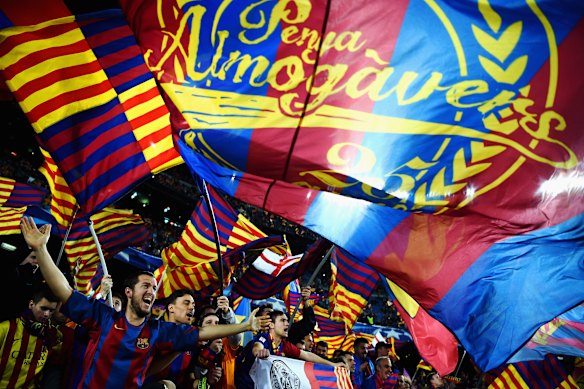
It sometimes feels as if the fortunes of Barcelona the city are very much determined by the fortunes of Barcelona the soccer team. Win, and all is right with the world. Lose and it’s a disaster. FC Barcelona is one of the biggest clubs on the planet – its motto is “Mes que un club”, or “more than a club” – and to attend a match here is to understand something vital about Catalan identity and local obsessions.
Those who have visited before will now find the club’s stadium, the Camp Nou, unrecognisable: it was demolished in 2023 and, much like La Sagrada Familia, is in an extended process of construction, due to finish in two years, though the new facility is already being used to host club matches. Tickets are available via the club’s official portal, which resells unused members’ passes: fcbarcelona.com
If you fancy a sporting experience that’s cheaper and easier to access, Barcelona is home to another top-league soccer team, RCD Espanyol. There’s also EuroLeague basketball in the city, plus motorsports and tennis. Or, just go down to Barceloneta beach for a swim.
MUSEUM SCENE
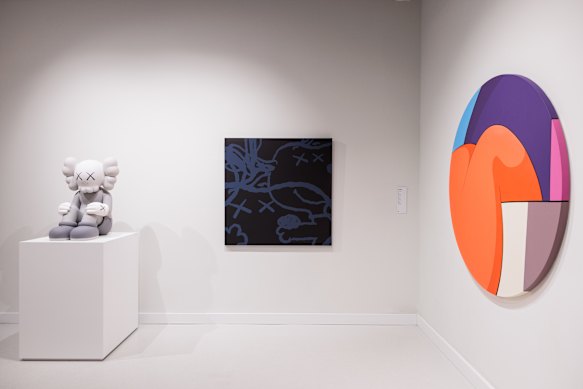
There are some big-ticket museums and art galleries that return visitors to Barcelona may have been to before, but almost certainly warrant a second look. We’re talking the Picasso Museum, the Fundacio Joan Miro, the Museu Nacional d’Art de Catalunya, and the Museum of Contemporary Art of Barcelona. All very popular, but with good reason.
If you would like to extend your reach a little, however, there are some excellent options. There’s the Museu de la Xocolata, aka the Chocolate Museum, whose attraction should really speak for itself. The Moco Museum is a smaller modern art gallery housed in a 16th-century palace. And BUAT Gallery has a collection of works by well-known artists that are up for sale.
BEACHES AND PARKS
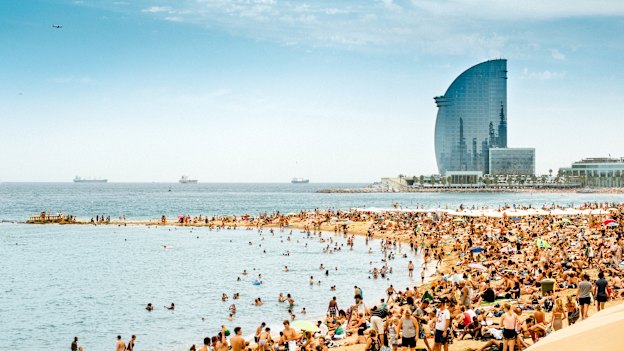
Consider the great cities of Europe: Rome, Paris, Amsterdam, Prague, London, Berlin. None have a beach. None are even coastal. But Barcelona has multiple, gorgeous stretches of sand that are a cultural experience in themselves. There’s bustle and energy as locals and tourists alike sun themselves and relax.
Barceloneta is the most popular, given its proximity to the city, just a 15-minute walk from La Rambla. Playa de Bogatell is far more relaxed, and the perfect option if you’re staying in trendy Poblenou. Directly to the north of Bogatell, Playa Mar Bella is LGBTQI+ friendly, and has a clothing-optional section. And Nova Icaria is small and low-key.
The city also has a huge amount of green space in which to take time away from the built-up areas. Try Parc de Cervantes, a sprawling area in the west of the city with extensive rose gardens; Jardins de Joan Brossa for excellent hilltop views; Parc del Mirador de Poble-Sec for incredible city vistas; and Tibidabo, a mountaintop reserve on the edge of the city that also features a charming, old-school amusement park.
CAVA AND CALCOTS
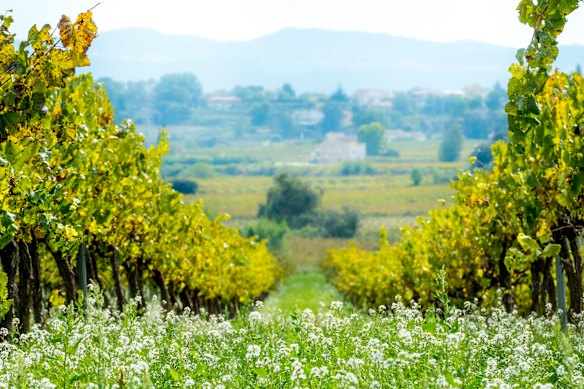
One of the best things to do after a few days in Barcelona is get out of Barcelona – particularly if you have visited before – and there are two very good reasons why: Cava and calcots. Barcelona is right next to Penedes, Cava country, the home of this globally famous wine.
It’s only about a one-hour drive from the centre of the city to the likes of Sant Sadurni, which is home to Freixenet, a well-known winery with a host of different tour and tasting options, and Recaredo, a high-end producer of beautiful drops. A gentle wander around town there will also bring you to several more cellar doors.
If you visit between November and April, meanwhile, continue your journey another 40 minutes or so to Valls, the birthplace and spiritual home of a Catalan obsession: calcots. The long, sweet onions are harvested in the cooler months. They’re served during “calcotada”, a day-long celebration of all that’s good about Catalan winter cuisine, from smoky, grilled calcots dipped in nutty salbitxada sauce, to fried artichokes with aioli, to grilled meats and, finally, crema Catalana, all served with plenty of cava and red wine.
OTHER DAY TRIPS
There are plenty more reasons to escape Barcelona for a day, and plenty of means to do it. Begin with a trip to Badalona, a neighbouring city known for its long stretch of beach and its laid-back, local atmosphere, so different to Barcelona and yet accessible by train in 20 or so minutes.
A little further afield, the city of Girona is only 40 minutes by fast train, and has much to offer in terms of historic architecture, as well as being the home of the world-renowned fine-dining restaurant El Celler de Can Roca. Further north, Figueres is the birthplace of Salvador Dali, and a museum there displays the surrealist’s work.
To the south, Sitges is a bohemian seaside town with a relaxed atmosphere, 40 minutes by train from central Barcelona. Tarragona is about an hour away, and has extensive Roman ruins.
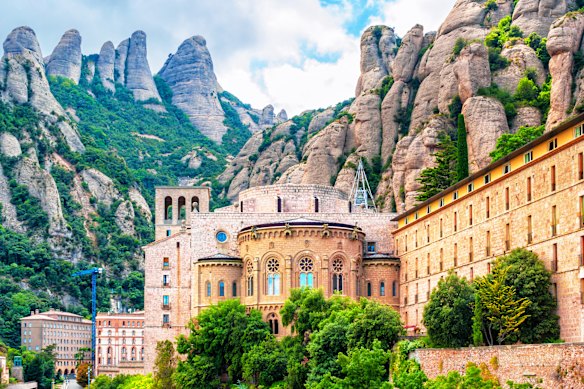
And then there’s Montserrat, a mountaintop area inland from the city, accessible via train and cable car from Barcelona. Here visitors can see an 11th-century Benedictine monastery housing the Virgin of Montserrat, a wood carving also known as the Black Madonna.
NEW HOTELS

Another reason to revisit one of the world’s great cities is a swag of new hotels. The most famous is probably the Grand Hyatt Barcelona, which opened in 2024 after a €20 million renovation of the old Hotel Princess Sofia in Les Corts, making it Spain’s first Grand Hyatt in an urban environment. Around the same time, Borneta opened in El Born. It’s a swish 92-room property with a high-end restaurant on site. There’s also the Social Hub, a relatively new, four-star hotel with co-working spaces in lively Poblenou.
A stay at any of these properties will help visitors avoid contributing to a growing issue in Barcelona right now: the proliferation of short-term apartment rentals, and the displacement of local residents. There’s a plan to phase out these rentals entirely by November 2028.
AFFORDABLE TRANSPORT
Barcelona is an easy city to get around, with plenty of public transport options. If you didn’t ride the metro or the buses on your first visit, then it’s time to dive in.
Most major sights around the city are covered by the metro, which has 12 lines and runs until late into the night. Buses and trams are also simple to use, particularly if you plug your destination into your maps app and follow the instructions from there. To ride, either purchase a 10-journey ticket, which will cover metro, buses and trams, or if you’re staying longer, a monthly pass will be better value. There’s also the Hola Barcelona Card, a tourist pass that offers unlimited transport for a set number of days, and includes transfers to and from the airport.
Barcelona has a bike-share system called Bicing, though you’ll only be able to use it if you’re a Spanish resident. See tmb.cat
DO THINGS RIGHT
Barcelona does have issues. It’s a very popular city – sometimes too popular – and locals feel their lives are being impacted in a negative way. So if you’re returning to the city, and you should, it’s an opportunity to visit in a responsible, sustainable way.
That means staying in a registered hotel, rather than a short-term apartment stay. It means shopping and eating in independent, locally owned establishments, supporting places that serve local interests as well as those of tourists.
Learn a few words of Catalan, rather than Spanish, to speak to locals and respect their identity. Visit in off-peak times instead of the height of summer. Behave in ways you would like visitors to behave in your home. Stay for multiple nights instead of ducking in and out.
Treat Barcelona with love, and there’s a very good chance Barcelona will love you back.
Disclaimer : This story is auto aggregated by a computer programme and has not been created or edited by DOWNTHENEWS. Publisher: www.smh.com.au