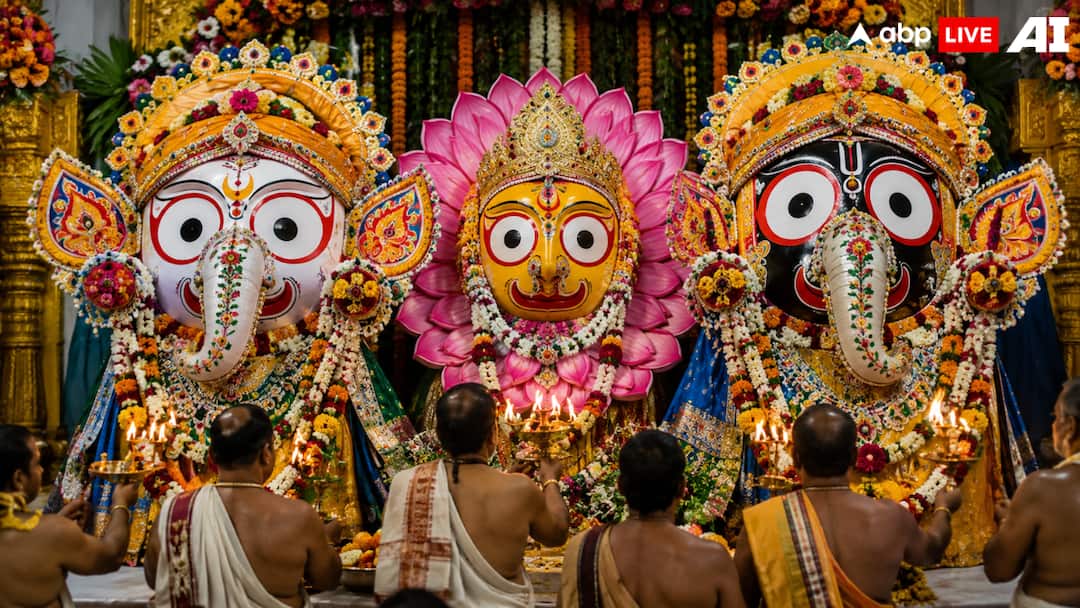
- It symbolises inclusive faith, divine compassion, and unwavering devotion.
The traditions associated with Lord Jagannath are as fascinating as they are deeply spiritual. One of the most unique among them is Gaja Vesh, also known as Gajanan Vesha or Hathi Vesh, when Lord Jagannath is adorned in the form of an elephant.
This special ritual takes place every year on Snana Purnima (Dev Snan Purnima). After the ceremonial bath of the deities, Lord Jagannath, Lord Balabhadra, and Goddess Subhadra are dressed in distinctive divine forms. The spectacular sight draws lakhs of devotees from across India and abroad to Puri.
What Is Gaja Vesh?
On Snana Purnima, the three deities are brought to the Snana Mandap (bathing platform) inside the temple, where they are ceremonially bathed with water from 108 sacred kalashs (urns).
After this grand ritual, Lord Jagannath and Lord Balabhadra are adorned with an elephant-like appearance, while Goddess Subhadra is beautifully decorated in the form of a lotus. This unique decoration is known as Gaja Vesh or Elephant Vesh.
The Devotional Story Behind Gaja Vesh
According to a popular legend, a learned scholar named Ganapati Bhatt, who was a devoted worshipper of Lord Ganesha, visited Puri in the 15th century to seek the blessings of Lord Jagannath.
However, during the Snana Yatra, he felt disappointed because he could not see the elephant-faced form of his beloved Lord Ganesha in Lord Jagannath. Saddened, he decided to leave Puri.
Lord Jagannath, who is believed to understand the deepest emotions of His devotees, chose to honour Ganapati Bhatt’s unwavering devotion.
The next time the devotee had darshan, he witnessed a miraculous sight.
-
Lord Jagannath appeared in a majestic black elephant-faced (Gajanan) form.
-
Lord Balabhadra was seen in a radiant white elephant form.
-
Goddess Subhadra was beautifully adorned in the form of a divine lotus.
Overwhelmed by this divine vision, Ganapati Bhatt realised that the Supreme Lord accepts every sincere form of devotion and can manifest in any form for His devotees.
The Spiritual Message of Gaja Vesh
Gaja Vesh is much more than a ceremonial decoration. It reflects the inclusive philosophy of Sanatan Dharma, which teaches that the Supreme Divine is one, though worshipped in many forms.
The tradition reminds devotees that God responds to pure faith and devotion rather than external differences. This is why Lord Jagannath is lovingly known as Bhaktavatsal the Lord who deeply cares for and fulfils the heartfelt devotion of His devotees.
A Tradition That Continues Even Today
The centuries-old tradition of Gaja Vesh is still observed every year with great devotion at the Shri Jagannath Temple in Puri on Snana Purnima.
Thousands of devotees gather to witness this rare and sacred form of the deities, considering it a blessing to receive their divine darshan. Even today, Gaja Vesh stands as a powerful symbol of unwavering faith, divine compassion, and the eternal bond between God and His devotees.
Disclaimer: The content of this article is based solely on beliefs, and should be taken as general guidance. Individual experiences may vary. ABPLive.com does not assert the accuracy or validity of any claims or information presented. It is strongly recommended to consult a qualified expert before considering or implementing any information or belief discussed herein
Before You Go
Magh Mela: Triveni Sangam Witnesses Sea of Faith on First Snan of Magh Mela
Disclaimer : This story is auto aggregated by a computer programme and has not been created or edited by DOWNTHENEWS. Publisher: abplive.com