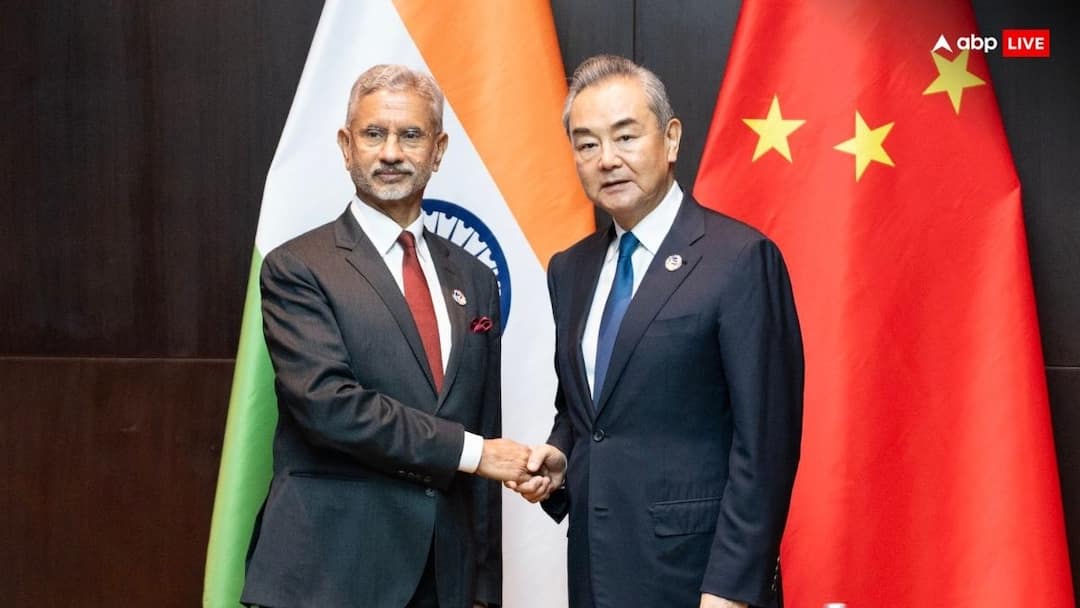
- EAM Jaishankar links normal India-China ties to LAC stability.
- Border peace and tranquility are essential for trade progress.
- Minister highlighted significant trade imbalance and market access issues.
External Affairs Minister S Jaishankar has said stability along the Line of Actual Control (LAC) is essential for normalising relations between India and China, warning that any disturbance along the border will have consequences. Speaking at the Bloomberg New Economy Forum on Tuesday evening, he linked progress in trade and investment ties to peace and tranquillity in border areas. Jaishankar said the situation had improved considerably since 2024, allowing bilateral relations to move towards normalcy after a prolonged military standoff in eastern Ladakh.
Border First
Jaishankar said India had made it clear to China that normal relations depended on maintaining stability along the disputed boundary.
“If you want a normal relationship, if the rest of the relationship is to move, it’s common sense-it’s a no-brainer that the boundary has to be stable and that we need peace and tranquillity in the border areas,” he said.
The minister noted that both countries had introduced several confidence-building measures in recent months to repair ties strained by the more than four-and-a-half-year military confrontation in eastern Ladakh. The face-off ended in late 2024.
Asked whether India would permit greater Chinese investment if an early agreement on the boundary question were reached, Jaishankar said various possibilities were being examined.
He clarified that India was not demanding a complete resolution of the boundary dispute before conducting business with China. Instead, the immediate requirement was maintaining peace along the border.
Jaishankar added that decisions on business policies and market access would be handled separately from discussions on an early agreement concerning the boundary.
Also Read: ‘Ladakh Integral Part Of India, Denials Cannot Change Facts’: MEA Rebuffs China
Trade Imbalance
The external affairs minister also highlighted significant economic differences between the two countries, pointing to a trade balance heavily tilted in China’s favour.
He said Indian businesses had struggled to secure market access in China, including in sectors where they had performed well internationally.
According to Jaishankar, India was not receiving the same level playing field in China that it had offered Chinese businesses operating in India.
Galwan Fallout
Jaishankar recalled the 2020 Galwan Valley clashes, which severely damaged bilateral relations. He noted that no blood had been shed along the border between 1975 and 2020, despite growing economic and diplomatic engagement during those decades.
The clashes, which occurred during the Covid-19 lockdown, resulted in the deaths of soldiers on both sides.
He described the incident as a profound departure from the border situation maintained since 1975, stressing that violations of peace and tranquillity inevitably affect the broader relationship.
Jaishankar said the consequences remained visible for several years, until stability along the border was restored.
Also Read: TVK Not Courting AIADMK MLAs, Will Decide If They Switch Sides: Minister Arunraj
Disclaimer : This story is auto aggregated by a computer programme and has not been created or edited by DOWNTHENEWS. Publisher: abplive.com