- Jaishankar urged diplomatic solutions for major global conflicts.
- He flagged energy market disruptions and food security concerns.
- Minister advocated for diversified, resilient global supply chains.
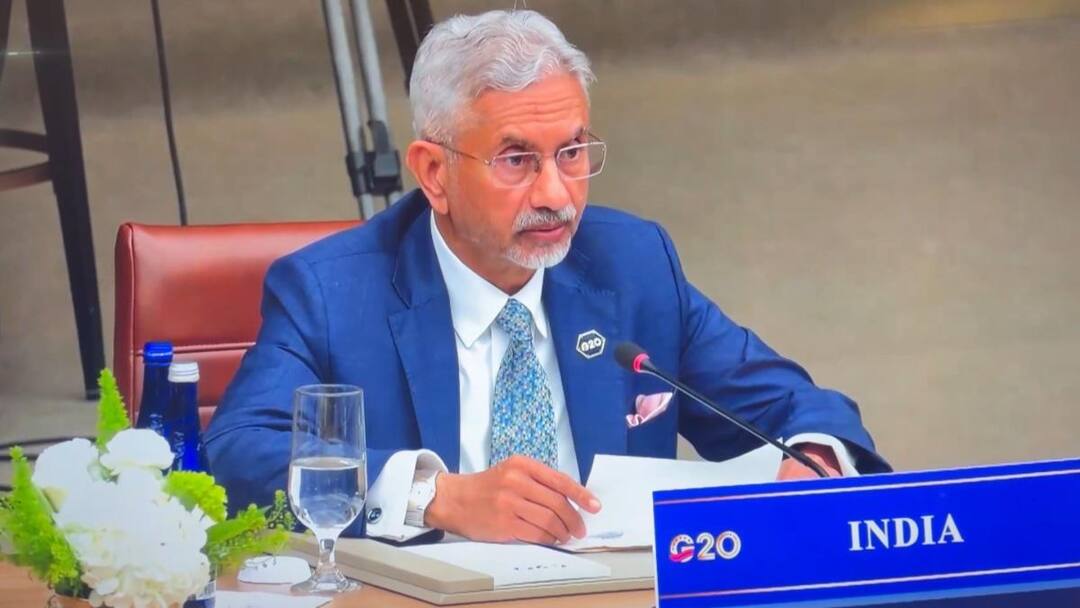
External Affairs Minister S Jaishankar has called for diplomatic solutions to major global conflicts, warning that disruptions to energy markets and supply chains were placing additional pressure on developing economies.
Speaking exclusively to ANI on the sidelines of the G20 Foreign Ministers’ Meeting in Atlanta, Jaishankar outlined India’s position during three plenary sessions focused on geopolitical challenges, energy and food security, and resilient supply chains. He described the discussions as engaging, open and constructive.
Reflecting on the session on geopolitical challenges, Jaishankar said the two major ongoing conflicts had consequences extending well beyond the regions directly involved, and stressed the need for diplomatic engagement.
“Look, there are big conflicts today, two major conflicts which are having global ramifications,” he said, adding that “there are no military solutions; we have to find a diplomatic pathway.”
He said India’s advocacy for peace had found resonance among several foreign ministers participating in the meeting.
Jaishankar Flags Energy Market Disruptions, Food Security Concerns
During discussions on energy and food security, Jaishankar raised concerns over disruptions in fuel distribution and what he described as the politicisation of energy flows. He said developing countries were bearing the consequences of energy shortages.
“This distortion of the energy markets, the politicisation of energy flows, this is something which is very harmful,” he said, adding that “the Global South was bearing the brunt of the energy shortages and that something needs to be done.”
The minister also pointed to challenges affecting agricultural supplies, including disruptions to grain shipments due to bottlenecks in the Black Sea and fertiliser shortages linked to tensions in the Persian Gulf and Red Sea corridors.
ALSO READ: Trump Speaks To Netanyahu As US Weighs Fresh Iran Strikes: Report
India Calls For Diversified Global Supply Chains
At the concluding plenary session on supply chains, Jaishankar called for greater diversification in global manufacturing and production to reduce vulnerabilities arising from excessive dependence on particular geographies.
“Today we need more diversified supply chains,” he said, advocating for “more globalised, you know, more diversified production, more diversified manufacturing.”
He also stressed the need to prevent excessive concentration in the global economy, saying that “there isn’t that over concentration” and “the world is not dependent on a single geography.”
In a post on X following the session, Jaishankar said securing supply chains and ensuring their resilience were central to the global economy’s well-being.
“The right to industrialise must be promoted; predatory practices and targeting competition should be firmly resisted,” he said.
He called diversification and de-risking, including in connectivity, key to supply chain resilience, which he said was threatened by pandemics, conflicts, climate events and mishaps.
Jaishankar also called for the “de-politicisation of markets”, saying the G20 should promote transparent and multiple supply chains and make the global economy truly multi-stakeholder.
He said “de-concentration of the global economy and optimisation of production across geographies” could discourage the weaponisation of finance, resources, production and market share.
The @G20org #Atlanta today concluded with the Plenary III focussed on Supply Chains. Highlighted the following: ➡️ Securing supply chains and ensuring their resilience is today central to the well-being of the global economy. ➡️ The right to industrialise must be promoted; predatory practices and targeting competition should be firmly resisted. ➡️ Diversification and de-risking, including in connectivity is the key to supply chain resilience, threatened by pandemics, conflicts, climate events and mishaps. ➡️ De-concentration of global economy and optimisation of production across geographies can discourage the weaponisation of finance, resources, production and market share. ➡️ The G20 should work towards de-politicisation of markets. ➡️ G20 countries must reconcile their national interests for the collective good by promoting transparent and multiple supply chains, making the global economy truly multi-stakeholder.
— Dr. S. Jaishankar (@DrSJaishankar) October 31, 2026
ALSO READ: Iran’s Mojtaba Khamenei Warns US, Israel Against Fresh Attacks, Orders Immediate Response
Rubio Highlights Strait Of Hormuz, Bab Al-Mandeb Security
US Secretary of State Marco Rubio, who hosted the meeting, also placed supply chain security at the centre of the concluding session.
In a post on X, Rubio said secure supply chains were essential for economic growth and called for the protection of key maritime trade routes.
“Critical trade routes, including the Strait of Hormuz and the Bab al-Mandeb Strait, must remain secure and open to commerce. And we must continue to strengthen and expand critical mineral supply chains to protect our future,” he said.
Jaishankar Attends Quad Meeting, Meets Russia’s Lavrov
Earlier on Saturday, Jaishankar participated in the Quad Foreign Ministers’ Meeting in Atlanta alongside Rubio, Japanese Foreign Minister Toshimitsu Motegi and Australian Foreign Minister Penny Wong.
Describing it as the third Quad foreign ministers’ interaction this year, following earlier meetings in New Delhi and Manila, Jaishankar said the discussions covered cooperation on supply chain resilience, technology, critical minerals and energy security.
He also highlighted the need to counter non-market practices and address increasing economic pressures in the Indo-Pacific.
On the sidelines of the G20 meeting, Jaishankar held a separate meeting with Russian Foreign Minister Sergey Lavrov.
“Discussed the Ukraine conflict, Gulf situation and multilateral issues with FM Sergey Lavrov of Russia,” he said in a post on X.
The United States holds the G20 presidency this year.
Disclaimer : This story is auto aggregated by a computer programme and has not been created or edited by DOWNTHENEWS. Publisher: abplive.com