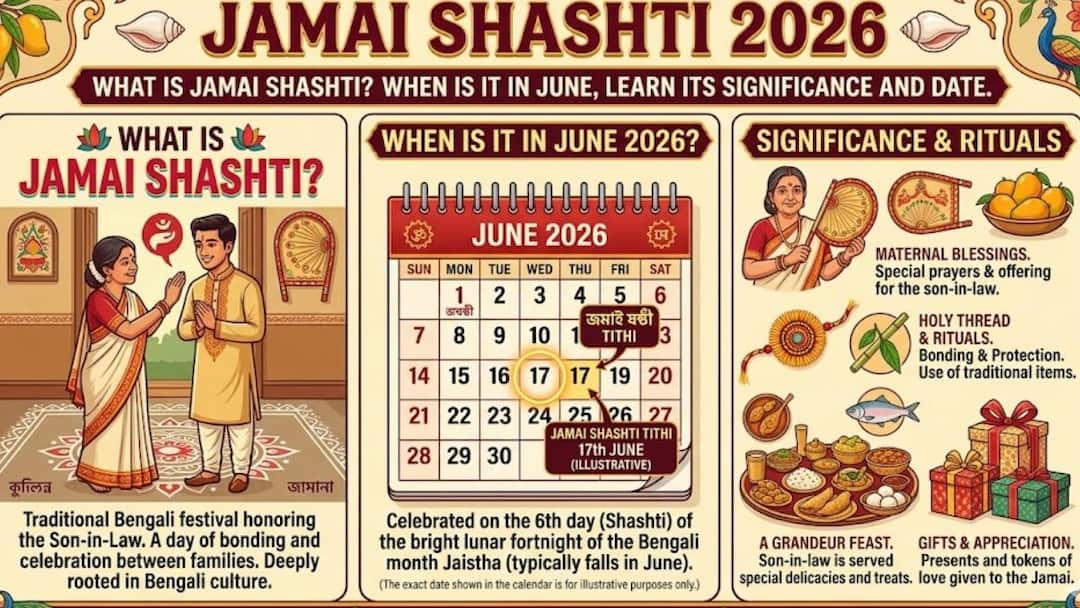
- Delicious food, gifts, strengthen family bonds and relationships.
Jamai Shashthi 2026: In Sanatan Dharma, many fasts and festivals related to daughters are celebrated. Did you know that a special festival is also celebrated for sons-in-law, called Jamai Shashthi? According to the Bengali calendar, this festival is celebrated on the sixth day of the bright fortnight of the month of Jyeshtha.
On this day, mothers-in-law pay special respect to their sons-in-law and pray for the family’s happiness and prosperity, as well as for the children’s long life and good health. This year, Jamai Shashthi will be celebrated on June 20. Learn about the significance of this festival and the traditions that are followed.
Why Is Jamai Shashthi Celebrated?
Jamai Shashthi holds a special place in the rich cultural traditions of Bengal. This festival is celebrated to honour the son-in-law as an integral member of the family, to cherish him, and to strengthen relationships. It also symbolises a wish for a bright future for the children and prosperity for the family. This festival is not just a family ritual, but also an opportunity to strengthen love, respect, and intimacy in relationships.
READ MORE | ABP Live Astro Analysis | Switching Jobs In June 2026? These 3 Mistakes Could Harm Your Career Growth
How Is Jamai Shashthi Celebrated?
- On the morning of Jamai Shashthi, the mother-in-law bathes and worships Goddess Shashthi with proper rituals. It is believed that Goddess Shashthi protects her children and is the presiding deity of their happiness and health.
- A special plate is decorated for the puja, in which items like Durva, betel leaves, betel nut, fruits, flowers and sweet curd are kept.
- When the daughter and son-in-law arrive home, they are welcomed in the traditional way. They are sprinkled with puja water and aarti is performed.
- After this, an auspicious tilak of curd is applied on the forehead of the son-in-law and a sacred thread is tied with the wish of protection and long life.
- Only after these auspicious rituals, the housewarming ceremony is performed.
READ MORE | Fazilnagar Is Now Pawagarh, But Do You Know the 2,500-Year-Old Story Behind It?
- According to the Bengali tradition, on the day of Jamai Shashthi, the son-in-law is given a taste of mango, litchi, sweets and other seasonal fruits.
- There is also a tradition of presenting new clothes and gifts to the daughter and son-in-law on this occasion.
Disclaimer: The information provided here is based solely on beliefs and information. It’s important to note that ABPLive.com does not endorse any beliefs or information. Consult a relevant expert before acting on any information or information.
Before You Go
Magh Mela: Triveni Sangam Witnesses Sea of Faith on First Snan of Magh Mela
Disclaimer : This story is auto aggregated by a computer programme and has not been created or edited by DOWNTHENEWS. Publisher: abplive.com