
TOKYO –
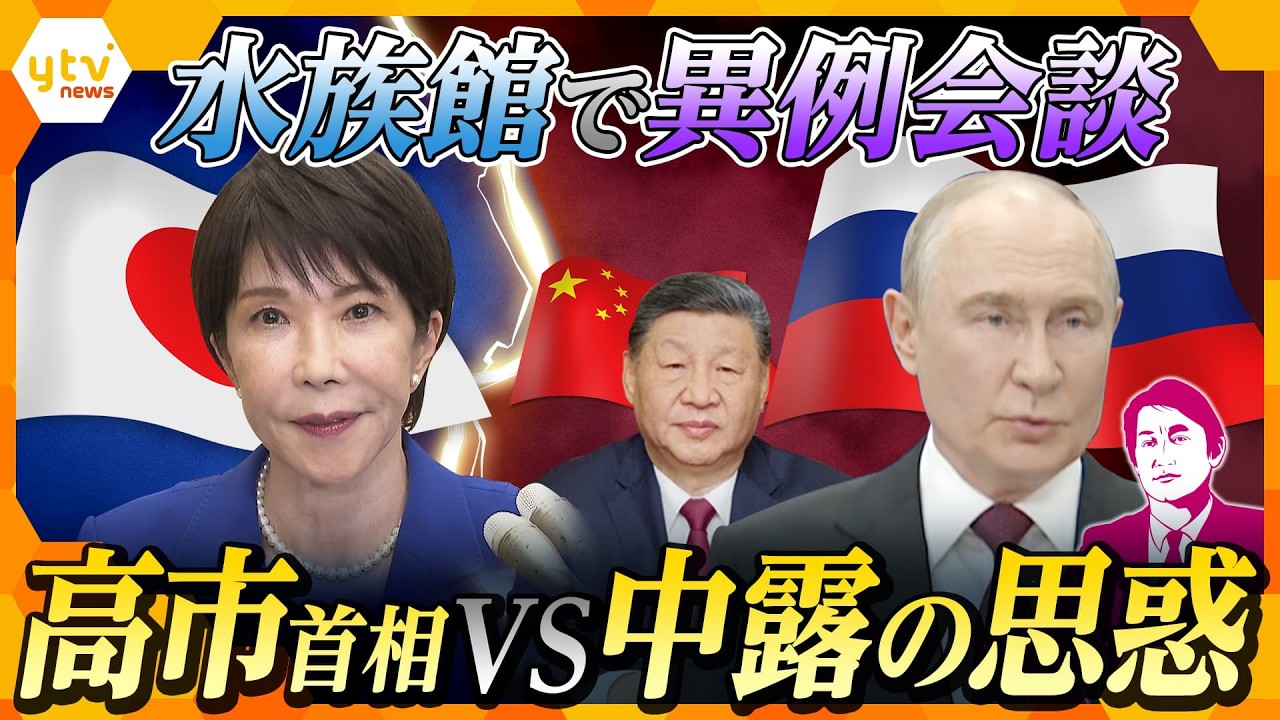
Japanese Foreign Minister Toshimitsu Motegi held rare bilateral talks with Russian Foreign Minister Sergey Lavrov on the sidelines of a G20 foreign ministers’ meeting in Atlanta, Georgia, on October 30 and 31, raising questions about whether Russian President Vladimir Putin could return to major international summits and how Prime Minister Sanae Takaichi would respond to a possible encounter with the Russian leader.
The meeting took place at a conference facility adjoining the Georgia Aquarium, one of the largest aquariums in the United States, where the American hosts organized discussions among foreign ministers ahead of major international gatherings scheduled for November and December.
Although the venue offered an unusual setting for high-level diplomacy, tensions surrounding Russia’s invasion of Ukraine dominated proceedings, exposing deep divisions between Moscow and Western governments.
Japan’s decision to meet Lavrov reflected its particular diplomatic challenges with Russia, including the longstanding territorial dispute over the Northern Territories and the detention of a Japanese journalist whose release Tokyo is seeking.
The Japanese Foreign Ministry described the encounter as a “frank exchange of views,” diplomatic language that suggests the two sides addressed their disagreements directly rather than limiting themselves to ceremonial discussions.
The meeting also carried broader significance as governments prepare for the Asia-Pacific Economic Cooperation summit in Shenzhen, China, in November, followed by the G20 leaders’ summit in Florida in December.
Takaichi is expected to seek opportunities for bilateral meetings at the gatherings, although Japanese government officials have stopped short of confirming her attendance. Unlike presidents in many other countries, Japan’s prime minister must coordinate overseas travel with parliamentary obligations, making advance confirmation of summit participation more complicated.
Foreign ministers’ meetings frequently serve as preliminary negotiations for leaders’ summits, allowing governments to identify potential bilateral discussions, establish negotiating positions and assess which international leaders are likely to attend.
Particular attention is now focused on Putin, who has largely avoided major international gatherings involving Western leaders since Russia launched its full-scale invasion of Ukraine in February 2022, apart from meetings with countries maintaining closer relations with Moscow.
Lavrov’s attendance in Atlanta was therefore viewed as a possible indication that Russia is preparing to increase its participation in international diplomacy.
The veteran Russian foreign minister, who has served under Putin for more than two decades and frequently represented him at international gatherings, attracted attention even before arriving at the conference.
Footage of Lavrov arriving at Atlanta’s international airport showed him wearing jeans and a casual sweater rather than the formal business attire normally associated with diplomatic visits.
The journey reportedly lasted more than 20 hours, considerably longer than a direct flight between Moscow and Atlanta would ordinarily require. The lengthy trip was attributed to the possibility that the Russian aircraft had to avoid European airspace because of restrictions imposed following the invasion of Ukraine.
Russia’s diplomatic isolation was also evident during the G20 meeting itself.
Participating countries were unable to agree on a traditional group photograph or a joint declaration, with several Western governments objecting to gestures that could be interpreted as normalizing relations with Moscow.
Britain was among the countries taking a particularly strong position, arguing that Russia’s responsibility for the invasion made it inappropriate for Western representatives to appear alongside its foreign minister in an official photograph.
Canada and other participating countries reportedly expressed similar objections, with approximately one-third of the delegations unwilling to participate in the customary group picture.
American officials attempted to find a compromise, but the photograph was ultimately abandoned as disagreements intensified.
Lavrov reportedly responded dismissively, suggesting there was little point in participating in a photograph if the positioning of individual ministers would become a diplomatic controversy.
The absence of a joint declaration further illustrated how Russia’s war against Ukraine continues to obstruct cooperation in international forums.
Japan, however, faces circumstances different from those of many European governments and cannot simply avoid direct contact with Moscow.
One immediate concern is the detention of a Japanese journalist in Russia, whose release Tokyo has been pressing for. Maintaining communication with Russian officials is considered important to pursuing the case.
The Northern Territories dispute also remains unresolved. Japan claims sovereignty over four islands off northeastern Hokkaido that were occupied by Soviet forces at the end of World War II and remain under Russian administration.
Putin’s reported visit to the disputed islands earlier this year has added to tensions, with Tokyo concerned that Moscow is attempting to reinforce its control over territory Japan regards as an integral part of the country.
Japanese diplomats reportedly worked until shortly before the Atlanta meeting to determine whether Lavrov would attend and whether a bilateral discussion could be arranged.
The eventual encounter between Motegi and Lavrov was notably restrained.
Photographs showed the two ministers seated opposite each other across a table, with a floral arrangement between them but none of the refreshments or elaborate ceremonial arrangements often associated with formal diplomatic meetings.
Despite having known each other for years through previous international engagements, the two appeared serious and engaged in an intense exchange.
The Foreign Ministry’s description of the talks as “frank” was significant because the expression is frequently used in diplomatic statements when officials have expressed disagreements clearly, sometimes in unusually forceful terms.
Rather than presenting the meeting as evidence of improving relations, the wording suggested that Japan had used the opportunity to raise difficult issues directly with Russia.
Motegi also held bilateral meetings with representatives of Turkey and Saudi Arabia, two countries considered important to Japan’s energy security and broader diplomatic interests.
Turkey has participated in international efforts to mediate between Iran and the United States and maintains diplomatic relations with both Western governments and countries in the Middle East.
Its strategic position and involvement in regional negotiations make Ankara an important partner for Japan as Tokyo seeks to protect its energy supplies and maintain stability in international trade.
Saudi Arabia is even more directly connected to Japan’s energy requirements as a major supplier of crude oil.
With winter approaching, the security of energy shipments through the Strait of Hormuz and alternative routes has become a pressing concern for Japanese policymakers.
Saudi Arabia has also faced attacks attributed to Houthi forces, raising concerns about regional stability and the vulnerability of energy infrastructure.
Japan’s discussions with Saudi officials included the importance of cooperation on reconstruction and economic recovery, alongside the broader relationship between the two countries.
The diplomatic activity in Atlanta has intensified speculation about whether Putin might attend the forthcoming APEC or G20 summits.
His presence would create opportunities for direct engagement with Western and Asian leaders, potentially changing the diplomatic landscape surrounding Russia’s war in Ukraine.
One possibility attracting attention is a proposal described as “Yalta 2.0,” referring to a new arrangement in which the world’s major powers would negotiate the future of international security among themselves.
The expression draws on the historic Yalta Conference of February 1945, when U.S. President Franklin D. Roosevelt, British Prime Minister Winston Churchill and Soviet leader Joseph Stalin met in Crimea to discuss the final stages of World War II and the postwar international order.
The decisions made by the three leaders helped shape the geopolitical divisions that followed the war, establishing a precedent for great powers determining international arrangements through direct negotiations.
The contemporary proposal envisages the United States, China and Russia assuming prominent roles in negotiations over the war in Ukraine and potentially reaching agreements on the future of European security.
Putin has been associated with calls for a new framework involving major powers, while speculation has emerged that U.S. President Donald Trump and Chinese President Xi Jinping might be receptive to elements of such an arrangement.
Critics fear that negotiations dominated by Washington, Beijing and Moscow could result in decisions affecting Ukraine without adequately reflecting the wishes of the Ukrainian government or the interests of smaller countries.
For Japan, such a development would raise fundamental questions about the international order and the principle that territorial disputes should not be settled through military force.
It would also present Takaichi with a difficult diplomatic choice if Putin attends one of the forthcoming summits.
An additional complication is the arrest warrant issued against Putin by the International Criminal Court in connection with the alleged unlawful deportation and transfer of Ukrainian children during the war.
The court, based in The Hague, is headed by Japanese judge Tomoko Akane, a former prosecutor who became its president in March 2024.
The ICC’s action against Putin has placed Akane at the center of an international confrontation over accountability for alleged war crimes.
Russia has rejected the court’s authority and responded with legal action against ICC officials involved in proceedings concerning Putin, including arrest measures targeting members of the court.
The United States has also adopted a confrontational position toward the ICC, reflecting longstanding concerns that the court could investigate American military personnel and officials.
Washington has imposed restrictions and sanctions targeting ICC personnel, creating tensions between the United States and an international judicial institution headed by a Japanese national.
Neither the United States nor China is a party to the Rome Statute establishing the ICC.
Consequently, neither country is subject to the treaty obligation imposed on ICC member states to cooperate with the court’s arrest warrants, although the legal and political implications of hosting Putin remain controversial.
This distinction could make it easier for Putin to attend an international gathering in China or the United States than one hosted by a country that recognizes the ICC’s jurisdiction.
China’s hosting of APEC in Shenzhen and the United States’ hosting of the G20 in Florida therefore provide possible opportunities for Putin to reappear alongside major Western and Asian leaders.
For Takaichi, the situation would go beyond the immediate question of whether Japan should arrange a bilateral meeting with the Russian president.
Japan has repeatedly emphasized the importance of the rule of law, respect for sovereignty and opposition to unilateral changes to the international status quo by force.
Takaichi has also stressed these principles in discussions with Trump, presenting them as essential foundations of Japan’s foreign policy despite the country’s close security relationship with Washington.
A direct encounter with Putin would test whether Japan can maintain those positions while simultaneously pursuing practical diplomatic objectives, including the release of its detained national and progress on the Northern Territories dispute.
Avoiding Putin entirely could protect Japan from criticism that it is legitimizing Russia’s invasion of Ukraine, but it would also limit Tokyo’s ability to press Moscow directly on issues affecting Japanese interests.
Holding talks, by contrast, would provide an opportunity to deliver Japan’s position personally while carrying the risk of appearing to soften its opposition to Russian actions.
The prospect of greater coordination among the United States, China and Russia adds another layer of uncertainty, particularly if major-power negotiations begin to shape the outcome of the Ukraine conflict without the full participation of affected countries.
With APEC and the G20 approaching, Japan’s diplomatic attention is therefore extending beyond the frequently discussed possibility of a meeting between Takaichi and Xi.
The more consequential question may be whether Putin returns to the international stage and, if he does, whether Takaichi can confront him directly over Japan’s territorial concerns, Russia’s invasion of Ukraine and the principle of the rule of law while preserving Tokyo’s broader diplomatic interests.
Source: YOMIURI
Disclaimer : This story is auto aggregated by a computer programme and has not been created or edited by DOWNTHENEWS. Publisher: newsonjapan.com




