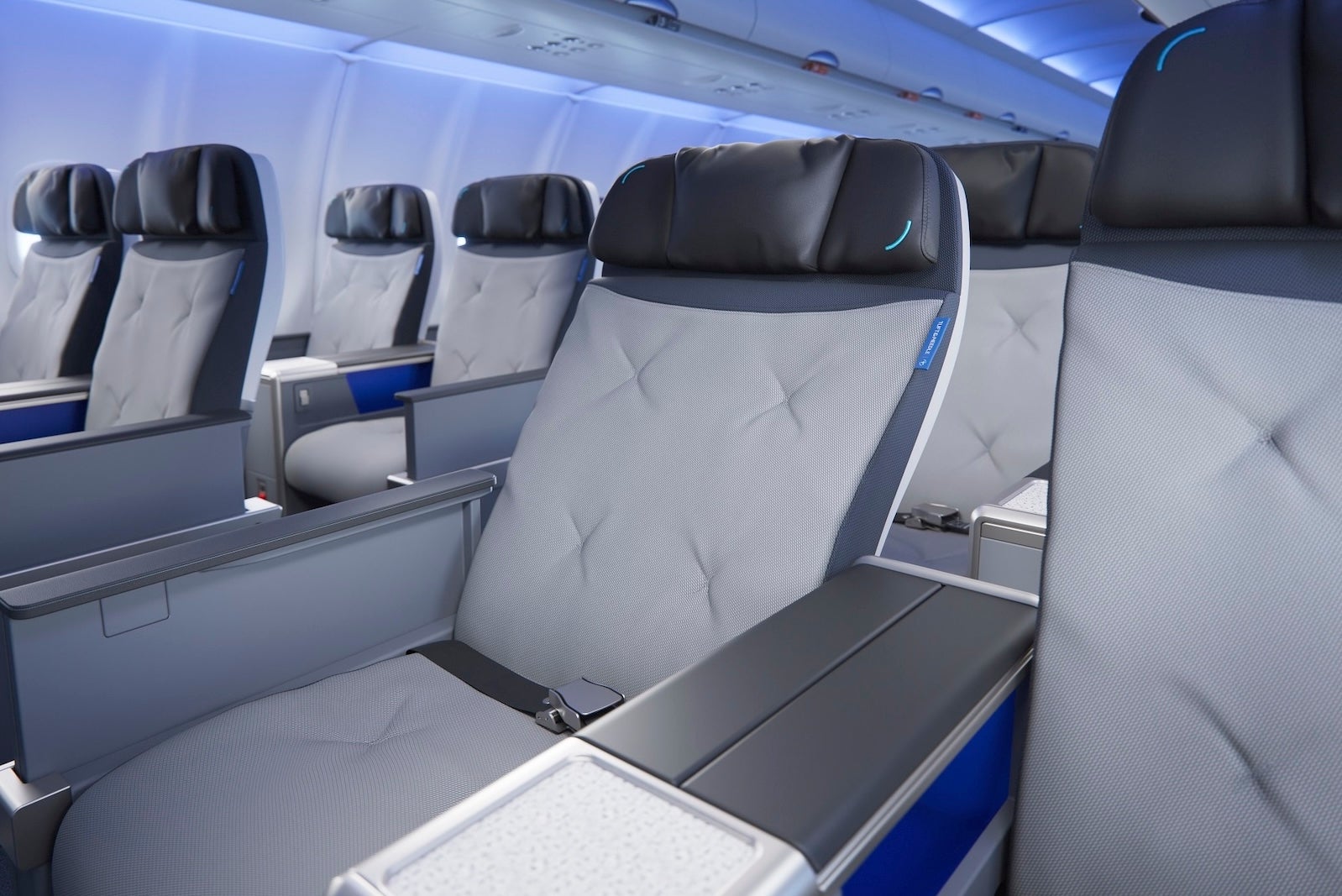
Could high jet fuel costs and financial challenges force JetBlue to pause its push to add premium products, such as first-class seats?
CEO Joanna Geraghty left no ambiguity in her answer: “Absolutely not.”
That line of questioning, which came during the carrier’s quarterly earnings call Tuesday, was fair. And Geraghty’s answer was critically important to both passengers and investors. New details dropped by executives during the call offer a first glimpse of how those new premium products are already performing.
JetBlue’s struggles and the JetForward turnaround plan
JetBlue has struggled to turn a steady profit. A heavy debt load coupled with planned capital investments — including the airline’s push to add premium amenities — helped stoke speculation that a restructuring could be in the cards for the airline. That comes as the airline’s bonds have been losing value and as its stock price hit an all-time low Monday.
“I think there is a significant disconnect between the narrative in the bond market and what our financial results are demonstrating,” Geraghty pushed back on Tuesday’s call.
More broadly, JetBlue reported a $257 million net loss for the three months ending Sept. 30 and cited a fuel bill that was up nearly two-thirds from the same time last year.
Still, JetBlue executives expect to reach a sustainable profit by 2028 as the company doubles down on its “JetForward” turnaround plan. Already, the executives said, the plan is showing encouraging signs, such as better revenue than expected this past quarter amid strong consumer demand.
JetForward focuses on realigning the airline’s network around East Coast leisure routes and growing Fort Lauderdale-Hollywood International Airport (FLL) as a focus city. It also includes the introduction of new premium products to help the airline earn the premium revenue bonus that has enabled other major carriers, particularly Delta Air Lines and United Airlines, to thrive — even amid higher costs.
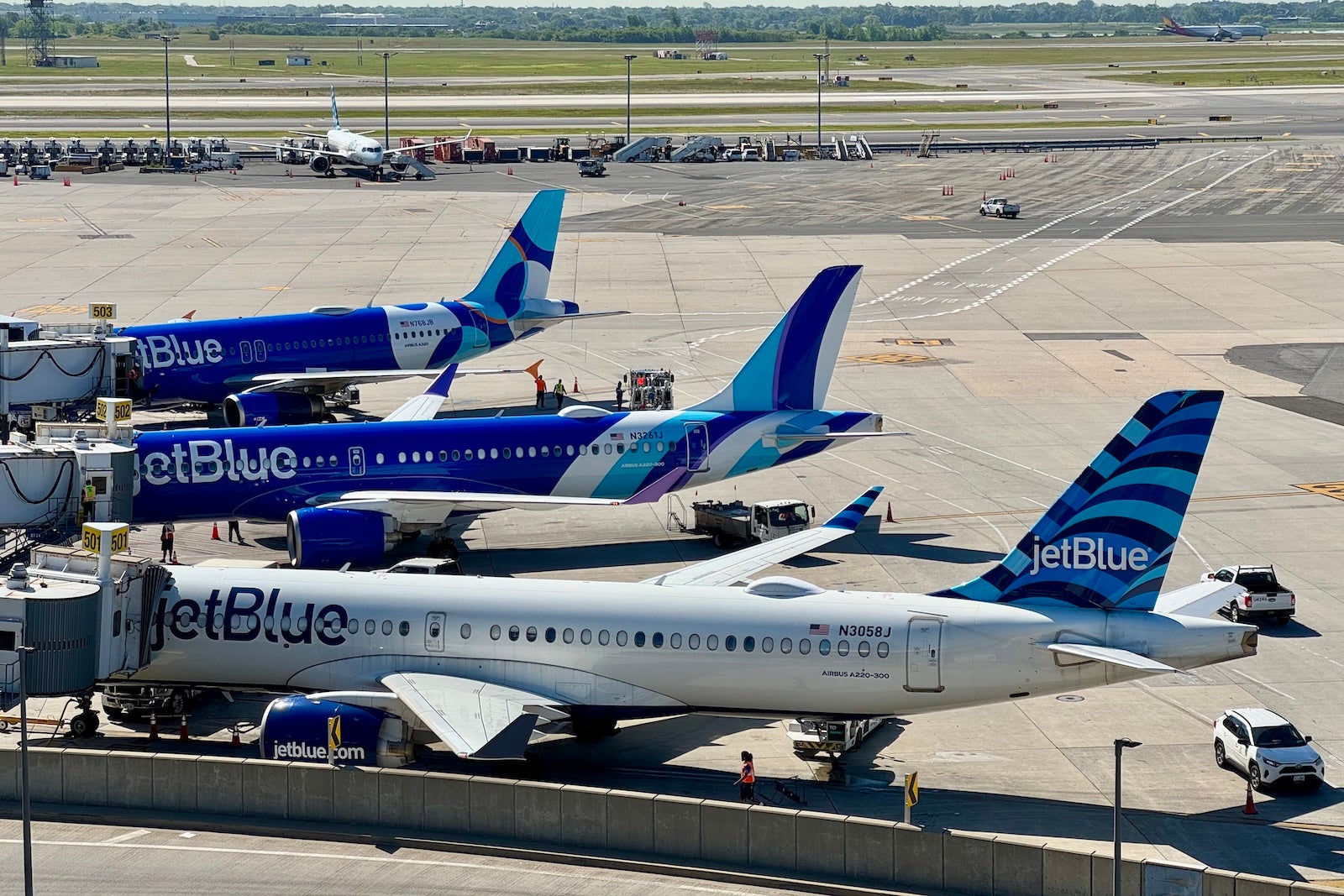
While volatile fuel costs linked to the war in the Persian Gulf continue to pressure the airline, JetBlue executives pointed to a lengthy financial cushion that it can use to continue the premium investment. This includes things like installing new first-class seats on aircraft, operating lounges and upgrading airport amenities. The airline has $2.2 billion in liquidity available, plus another $7 billion in unencumbered assets, including $2.8 billion in aircraft and engines.

Daily Newsletter
Reward your inbox with the TPG Daily newsletter
Join over 700,000 readers for breaking news, in-depth guides and exclusive deals from TPG’s experts
By signing up, you will receive newsletters and promotional content and agree to our Terms of Use and acknowledge the data practices in our Privacy Policy. You may unsubscribe at any time.
A premium plan: First-class and loyalty
For more than a decade, JetBlue has offered Mint business class on certain key transcontinental routes — followed later on transatlantic service. But BlueFirst will be the airline’s first foray into a true domestic first class.
The first BlueFirst seats went on sale earlier this month, with the first flight scheduled between Boston Logan International Airport (BOS) and FLL for Dec. 8. The airline will introduce the cabin on 38 more routes by April, and will offer BlueFirst on a “majority” of its planes by the end of 2027. The installation program across JetBlue’s fleet is slated for completion in 2028.
More: JetBlue says domestic Mint flyers can now access its lounges, too
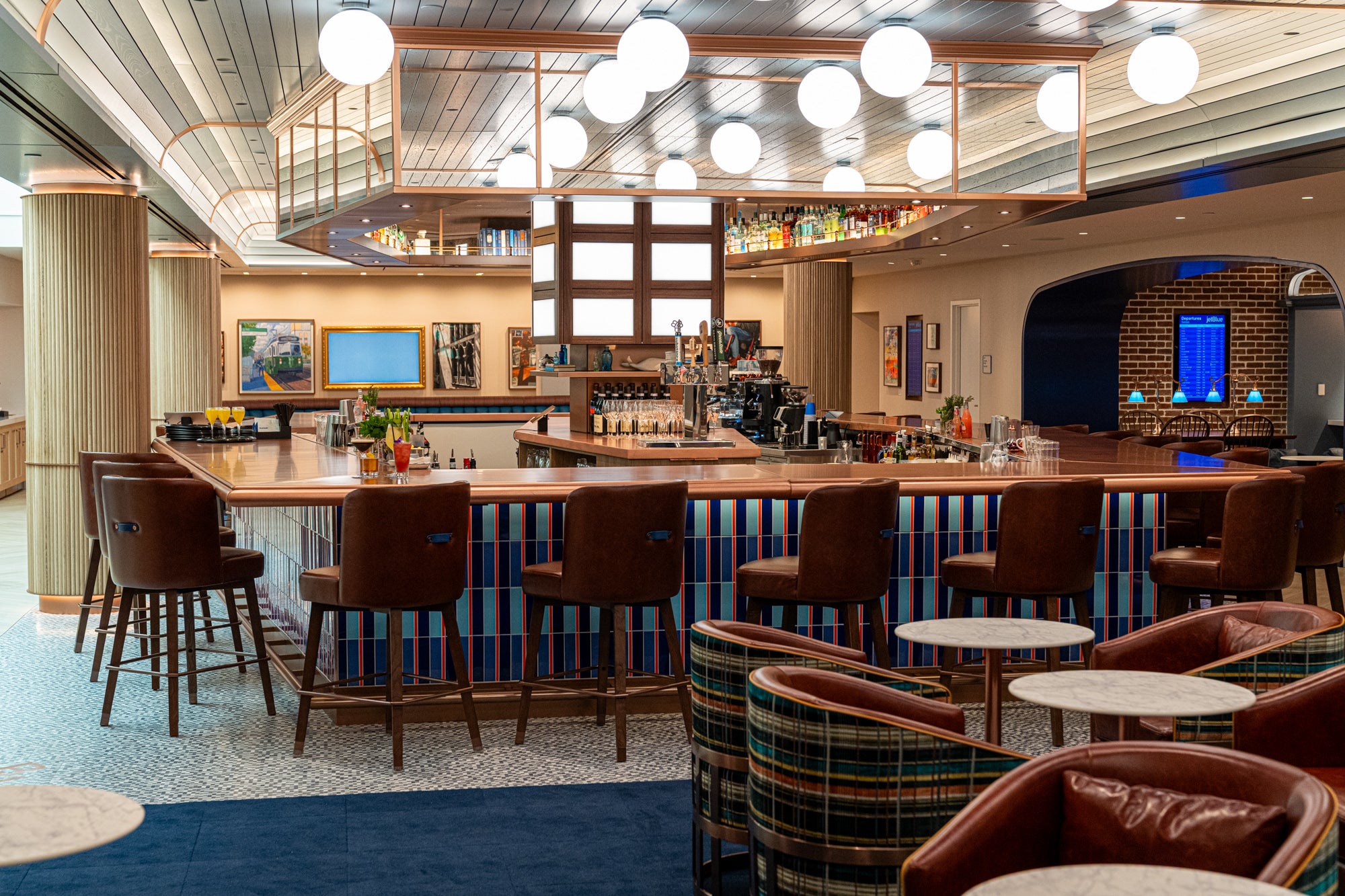
During the earnings call, airline president Marty St. George said JetBlue is “encouraged” by the early response to BlueFirst, particularly the overlap between TrueBlue frequent flyer members and the new seats. About 35% of bookings for BlueFirst so far were made using miles, St. George noted, while Mosaic elite members accounted for roughly a quarter of seats booked to date.
“Our favorite fact is seeing how many of the seats are being sold to our existing customers,” he said. “While still early, this engagement reinforces our confidence in BlueFirst’s ability to capture more premium travel demand from our existing loyal customer base.”
The loyalty program has been an important revenue driver for JetBlue, St. George noted. This, coupled with current booking trends, underscores the importance of the premium pivot in keeping passengers loyal and engaged with TrueBlue. Revenue from the program was up 20% compared to last year.
“Our investments in premium products and partnerships are driving deeper brand loyalty and engagement,” St. George said, “with record levels of active TrueBlue members and elite status qualifications this quarter.”
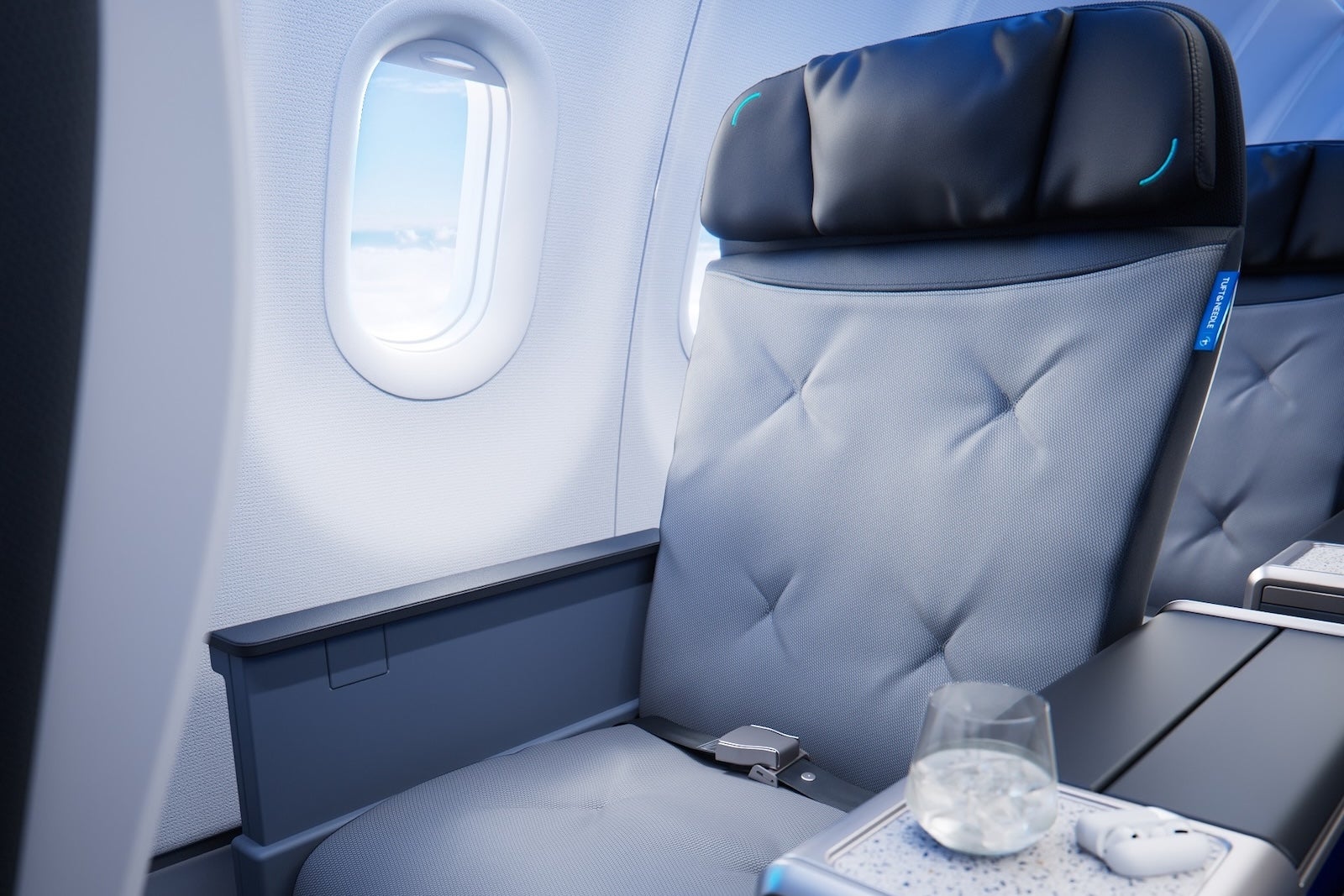
JetBlue’s new BlueHouse lounges, which opened at New York City’s John F. Kennedy International Airport (JFK) in late 2025 and at BOS over the summer of 2026, have been a meaningful driver of the loyalty program, St. George noted. Signups for JetBlue’s premium cobranded credit card, which lets cardholders enter the lounges before a JetBlue flight, increased eightfold compared to last year. Meanwhile, spending across the entire credit card portfolio grew by “double digits.”
One of the big catalysts for that increase in spending, St. George said, is the airline’s Blue Sky partnership with United, which lets members use TrueBlue miles on United flights and vice versa and allows for reciprocal elite perks. JetBlue members can earn elite status credit from JetBlue flights, but — to the consternation of United flyers — not the other way around.
Within that partnership, the list of United destinations available to travelers using TrueBlue miles has grown to include a broad list of international destinations, fixing what St. George described as “a shortcoming of the program, historically.”

Strong signs in Fort Lauderdale
JetBlue’s plan to double down on FLL in the wake of Spirit Airlines’ shutdown has been largely successful, JetBlue executives said, even as the airline continues to grow routes from the Florida focus city.
Unit revenue was up at the airport, while JetBlue’s capacity there has grown 65% compared to the same period last year, with the airline planning to continue scaling up. The airline’s seat share in the market will reach around 37% by the end of this year, up nearly 15% from the same period last year.
Meanwhile, cobranded card signups in South Florida are up 55%, Geraghty said.
Bottom line
JetBlue is carrying a lot of debt and has been hit especially hard by increasing fuel prices and bad weather along the East Coast during the summer.
But the airline sees its pivot to premium as its best way forward to financial security. Despite the current financial pressures, executives plan to stay the course and grow into its realigned network while expanding its premium offerings as quickly as possible.
So far, signs suggest that the arguments laid out by JetBlue’s management are convincing. The airline’s shares rallied on Tuesday, up around 20% to counteract Monday’s slide.
At least one financial analyst seemed to agree.
In a research note following the call, Melius Research airline analyst Conor Cunningham described the tone of JetBlue’s executives as “constructive.”
“Taking a step back, the plan JetBlue has been trying to execute is a rational one,” Cunningham wrote. “But the plan requires time, and its progress has been largely masked by erratic shifts in the macro.”
Related reading:
Disclaimer : This story is auto aggregated by a computer programme and has not been created or edited by DOWNTHENEWS. Publisher: thepointsguy.com