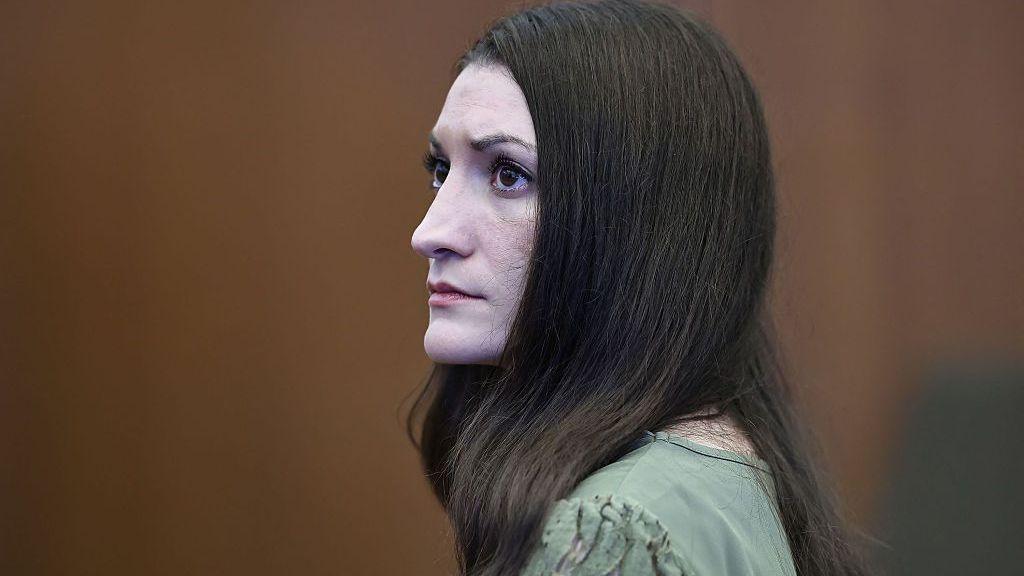
Judge denies motion to dismiss Lindsay Clancy’s murder case
To play this video you need to enable JavaScript in your browser.
This video can not be played
-
Published
A Massachusetts judge has denied a motion to dismiss the murder case against Lindsay Clancy, the US woman accused of murdering her three children.
The judge’s ruling follows her defence team’s request to dismiss the case after the 12-person jury in her September trial failed to reach a veridict.
The ruling clears the way for prosecutors to pursue the case. They could reduce the charges in a potential second trial or dismiss them altogether.
Clancy has not denied killing her children in 2023, but her defence team argues she was suffering from severe postpartum psychosis at the time. Prosecutors say the killings were intentional.
Clancy’s defence team argued to dismiss the case against her due to double jeopardy – a legal standard that prevents a person from being tried for the same crime twice.
Her lawyers argued that Judge William Sullivan, who presided over the 26-day jury trial last summer, acted prematurely when he declared a mistrial on 4 September, saying that he should have sought a viable alternative.
The five-week trial, its lead-up and aftermath gripped Americans, and put postpartum mental health issues such as psychosis in the spotlight.
In his ruling on Monday, Sullivan said that a retrial would not unconstitutionally subject Clancy to double jeopardy, according to court documents obtained by the BBC.
“Although a mistrial may be expensive in both human and monetary costs, it is not to be avoided by intrusion into the jury’s domain,” he wrote.
The possibility that “an unreasonably stubborn or eccentric juror” could be seated is “an unavoidable risk of the jury system”, he said.
“Because the court concludes that there was manifest necessity for a mistrial based on the jury’s deadlock, a retrial on the murder indictments does not violate Clancy’s right not to be placed in double jeopardy.”
Sullivan also denied a defence motion to see records of the lone holdout juror in the case and to question the juror under oath.
He said the defence failed to demonstrate that the records are needed for Clancy’s defence at any retrial, and that questioning the juror “would have been impermissibly coercive”.
The judge scheduled a hearing for 16 November to discuss scheduling a potential second trial. He previously suggested it could begin in March.
The BBC has contacted Clancy’s lawyers for comment.
Ana Faguy contributed reporting.
-
-
Published18 September

-
-
-
Published9 September

-
-
-
Published21 September

-
Disclaimer : This story is auto aggregated by a computer programme and has not been created or edited by DOWNTHENEWS. Publisher: BBC