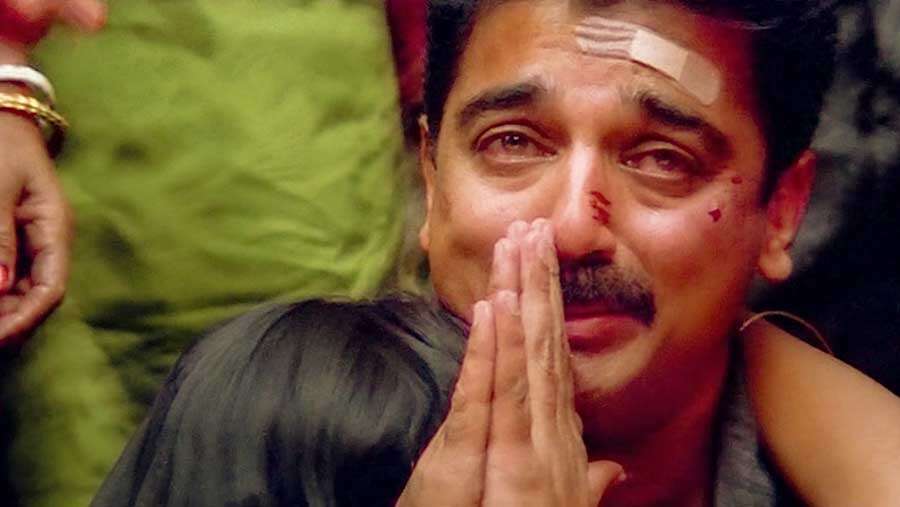
There are actors who become filmmakers because they want greater control over their careers. Then there are actors who venture into filmmaking because they have too many stories to tell. Kamal Haasan arguably belongs to the latter category. While his extraordinary acting career has often overshadowed his contributions behind the camera, the writer and director in him have been just as instrumental in shaping his legacy. In fact, much of what makes Kamal Haasan such a fascinating performer can be traced back to the stories he chooses to tell and the manner in which he approaches them.
As he celebrates his 72nd birthday on November 7, it is worth revisiting the filmmaker who has repeatedly demonstrated that cinema can be both an entertaining experience and an intellectually stimulating exercise. Whether he is writing about caste, political extremism, religious identity, human relationships or the consequences of violence, Kamal has rarely been content with merely telling a straightforward story. He wants to examine what lies beneath it.
The Writer Who Found Stories Beyond The Conventional
Kamal Haasan’s evolution as a screenwriter is particularly interesting because his writing has never been restricted to a particular genre. From comedy and family dramas to political thrillers and intense social dramas, his filmography reflects an appetite for exploring different storytelling possibilities. He has written or co-written several films, including Raja Paarvai, Sathyaa, Apoorva Sagodharargal, Thevar Magan, Mahanadhi, Kuruthipunal, Michael Madana Kama Rajan, Hey Ram, Aalavandhan, Anbe Sivam, Virumaandi and Vishwaroopam.
An early indication of this inclination came with Raja Paarvai (1981), his 100th film as an actor. Directed by Singeetam Srinivasa Rao, the film follows a visually impaired violinist who falls in love with a woman. Its treatment of disability was refreshingly different for its time, allowing the protagonist to be defined by his personality, relationships and aspirations rather than simply his visual impairment. The film also demonstrated Kamal’s interest in exploring perspectives that mainstream cinema rarely examined.
With Sathyaa (1988), he ventured into the frustrations of an unemployed young man who finds himself drawn into a world of crime and political corruption. Directed by Suresh Krissna, the film offered a grounded look at urban disillusionment and the anger of a generation struggling to find its place in society. It was another instance of Kamal using a familiar commercial-film framework to explore larger social concerns.
Apoorva Sagodharargal (1989) showcased a different side of his writing sensibilities. Co-written with Crazy Mohan, the film revolves around twin brothers separated during childhood, one of whom grows up to be a dwarf seeking revenge for his father’s murder. While its technical achievements and Kamal’s triple performance remain major talking points, the screenplay deserves equal appreciation for building an engaging mainstream entertainer around an unconventional protagonist.
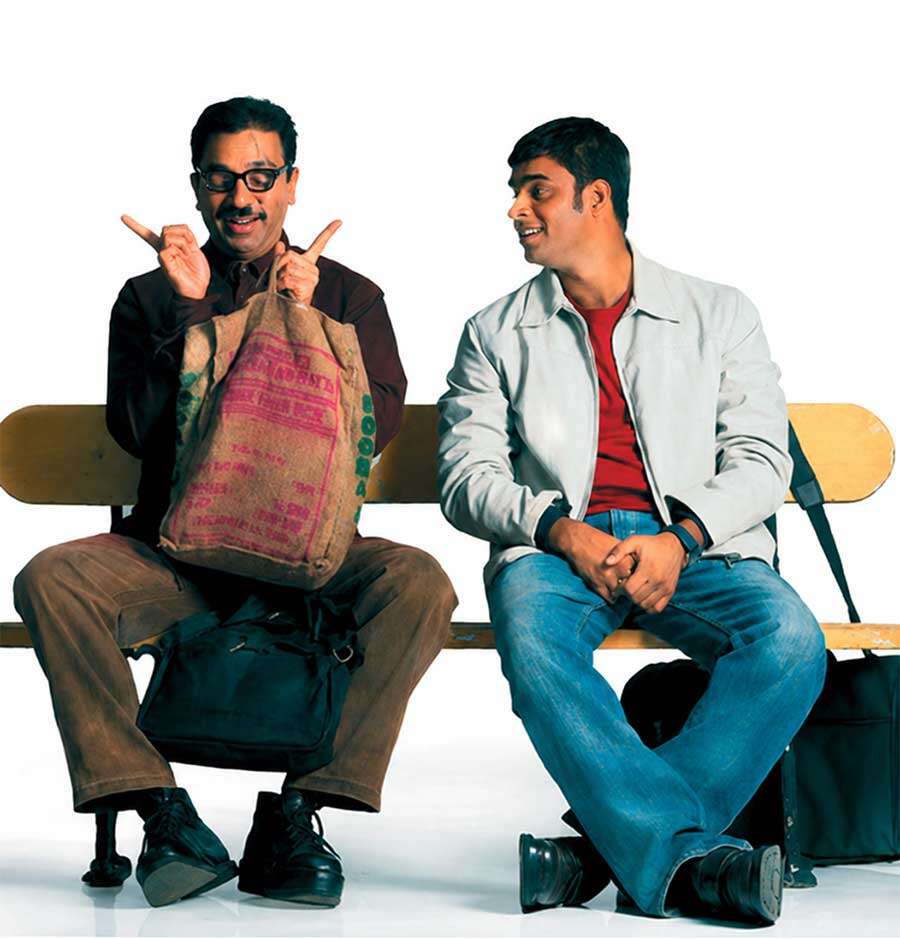
Take Thevar Magan (1992), for instance. Directed by Bharathan, the film uses the familiar conflict between a father and son to explore the complexities of caste, tradition, succession and violence in rural Tamil Nadu. Kamal’s screenplay does not simply position modernity against tradition. Instead, it examines how deeply entrenched social structures can influence individuals, even when they believe they are attempting to move beyond them. The character’s eventual transformation makes the narrative considerably more complicated than a conventional family drama.
With Mahanadhi (1994), he ventured into considerably darker territory. The film follows a father’s desperate attempts to reunite his family after being betrayed and losing everything. What makes the screenplay particularly devastating is its refusal to offer easy emotional consolation. The exploitation of vulnerable individuals, the horrors of human trafficking and the consequences of institutional corruption are presented through the experiences of an ordinary man. It is a film that understands the power of restraint, allowing its emotional devastation to emerge through the situations rather than relying entirely on melodrama.
Kuruthipunal (1995), meanwhile, saw Kamal adapt the Hindi film Drohkaal into a Tamil political thriller. Directed by P. C. Sreeram, the film follows two police officers attempting to infiltrate a terrorist organisation. Beyond its taut treatment of espionage and counterterrorism, the narrative examines the moral compromises, personal sacrifices and psychological pressures involved in fighting an invisible enemy. It demonstrated Kamal’s ability to translate an established story into a compelling cinematic experience while retaining its underlying moral complexity.
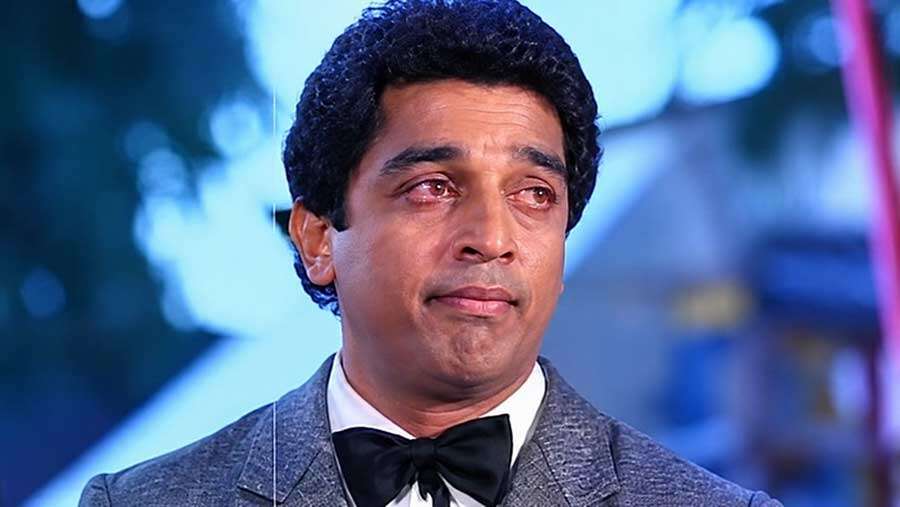
Then there is Anbe Sivam (2003), a film that brings together philosophy, politics, humour and humanism through the unlikely relationship between two men with contrasting worldviews. Written by Kamal and directed by Sundar C, the film uses their conversations to examine questions of faith, compassion and what it means to be human. Its central argument is embedded in its title, but the screenplay never reduces the characters to mouthpieces for an ideology. Instead, it allows their relationship to gradually reveal the possibilities of empathy.
Perhaps one of the most interesting aspects of Kamal’s writing is his ability to move between vastly different cinematic worlds without losing his identity. The absurdity of Michael Madana Kama Rajan, the psychological darkness of Aalavandhan and the political complexity of Hey Ram all belong to different storytelling traditions. Yet, they share an interest in characters who are considerably more complicated than their immediate circumstances suggest.
The Director Who Refuses To Play Safe
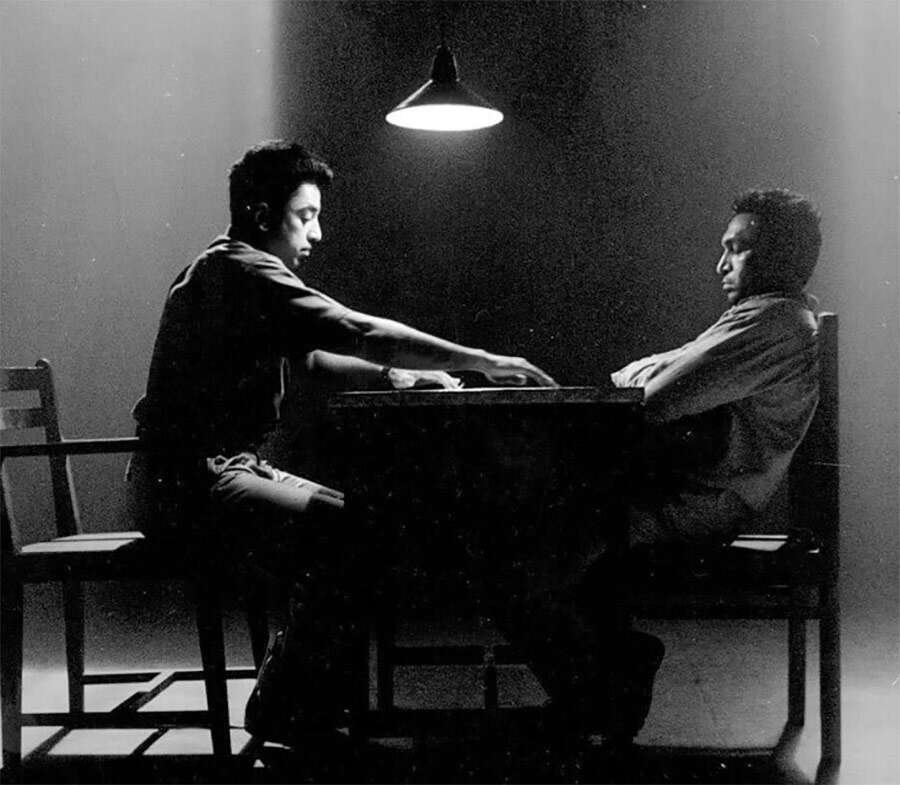
Kamal Haasan made his directorial debut with the Hindi comedy Chachi 420 (1997), an adaptation of the popular Hollywood film Mrs Doubtfire. However, it was Hey Ram (2000) that offered a more revealing glimpse into his ambitions as a filmmaker. Written, directed and headlined by Kamal, the film is an ambitious historical drama that examines the psychological consequences of communal violence through the fictional life of Saket Ram.
Rather than approaching the subject through a conventional historical narrative, Kamal constructs a deeply personal story against the backdrop of India’s Partition-era turmoil. The film’s non-linear structure, shifting perspectives and detailed recreation of a politically turbulent period demonstrate his willingness to experiment with form. More importantly, Hey Ram examines how grief and personal trauma can become fertile ground for hatred and extremism. Its eventual emotional resolution is a powerful argument for empathy over ideological hostility.
Four years later, Virumaandi (2004) showcased another dimension of his directorial sensibilities. Structured around conflicting accounts of the same series of events, the film employs a Rashomon-like narrative device to question the nature of truth. As different characters recount their versions of a violent conflict, the audience is constantly encouraged to reconsider what it has already witnessed. Beneath its rural action-drama framework lies a larger examination of capital punishment, caste identity and the cycle of violence. It is also an example of how Kamal can incorporate a serious philosophical argument into an engaging mainstream narrative.
His subsequent directorial ventures, particularly the Vishwaroopam films, further demonstrated his fascination with international storytelling conventions. Espionage, geopolitics, intelligence operations and global terrorism became the foundations for a large-scale action thriller. Kamal’s interest in the genre was not merely about recreating Hollywood-style spectacle. He wanted to explore how international political developments could have consequences far beyond their immediate geographical boundaries.
Across these films, one can identify a recurring characteristic. Kamal rarely treats genre as a limitation. Comedy can accommodate philosophical discussions, a rural drama can become an interrogation of capital punishment, and a historical thriller can examine the dangers of religious extremism.
Not every experiment has translated into commercial success, and some of his films have divided audiences. But that is also an important part of his identity as a filmmaker. He has repeatedly demonstrated a willingness to take creative risks, even when the immediate rewards are uncertain.

At 72, Kamal Haasan’s legacy cannot be measured exclusively through his memorable performances or the number of characters he has brought to life. The writer in him has consistently sought stories that challenge established conventions, while the director has attempted to translate those ideas into distinctive cinematic experiences. Together, these two facets reveal an artiste who has never been content with simply being the person in front of the camera. He has always wanted to understand everything that happens behind it, too.
Also Read: Kamal Haasan’s Sandiyar Goes On Floors On His Birthday; Makers Unveil Fierce New Poster
Disclaimer : This story is auto aggregated by a computer programme and has not been created or edited by DOWNTHENEWS. Publisher: filmfare.com