TEHRAN — Trying to reach Kim Jong Un, White House officials stationed a team outside North Korea’s mission to the United Nations in Manhattan to slip a personal note from Donald Trump into a passing diplomat’s hands.
At a later UN meeting, that diplomat tossed the unopened envelope back in front of a U.S. representative. Trump had already tried established phone lines. Nobody called back.
That episode, detailed by the Wall Street Journal on Nov. 21, exposes the collapse of coercive American diplomacy on the Korean Peninsula.
Washington spent three decades cycling through sanctions, military threats, and unilateral demands for complete dismantlement.
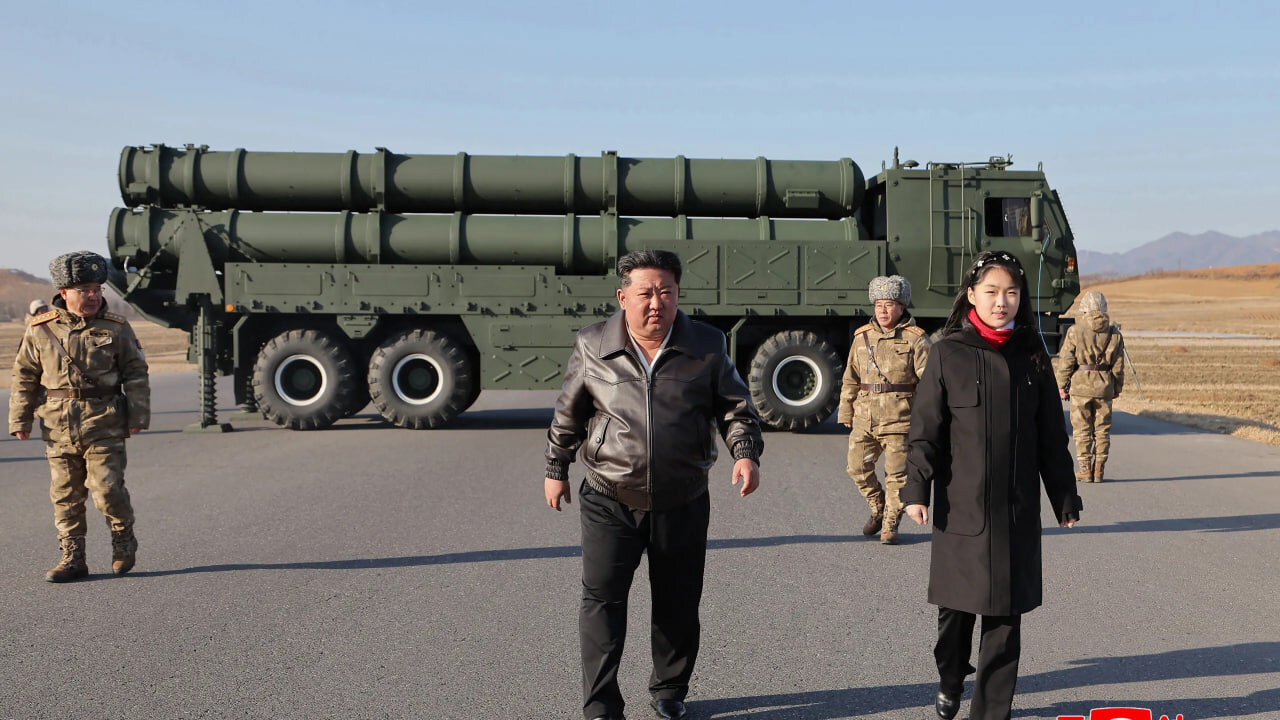
Pyongyang spent those same decades building a nuclear force now estimated at roughly 60 assembled warheads, fissile material for at least 30 more, and mobile solid-fuel intercontinental ballistic missiles capable of reaching the American mainland.
Since Kim Jong Un last met Trump at the failed 2019 Hanoi summit, his stockpile has roughly doubled.
Weakened at home after Republicans lost both chambers of Congress in the November midterm elections, Trump pressed aides ahead of his recent Asia trip to secure a headline-grabbing summit.
U.S. officials floated sweeping concessions, including a formal end to the 1950-1953 Korean War, liaison offices, and a joint statement that would sidestep demands for denuclearization in exchange for testing caps. Kim refused.
Having watched Trump abruptly walk out of Hanoi after Pyongyang offered partial facility closures at Yongbyon, the 42-year-old leader had little reason to trust Washington’s promises. Trump flew back from Shenzhen on Thursday without a meeting.
Pyongyang no longer needs American approval to survive. Under a 2024 mutual defense treaty with Russian President Vladimir Putin, North Korea reportedly sent artillery, ballistic missiles, and over 10,000 troops to aid Russia in the war in Ukraine, receiving military technology and UN Security Council protection in return.
Meanwhile, Beijing has scaled back its public calls for Korean Peninsula denuclearization, a move that suggests growing reluctance to challenge Pyongyang’s atomic status.
Bolstered by closer economic ties with Russia and China as well as reported unconventional revenue streams, North Korea recorded 3.5 percent economic growth last year, its third straight year above three percent.
Inside Washington, policy coherence has evaporated. The special envoy post remains vacant.
Last year’s White House national security strategy omitted North Korea for the first time since the Cold War, and the Pentagon’s January defense strategy dropped denuclearization entirely.
In February, Kim declared that Washington could choose peaceful coexistence by respecting North Korea’s nuclear status or face “eternal confrontation.”
Trump’s recent remark calling North Korea “sort of a nuclear power” reportedly rattled allies in Seoul and Tokyo without moving Kim an inch.
Disclaimer : This story is auto aggregated by a computer programme and has not been created or edited by DOWNTHENEWS. Publisher: tehrantimes.com