National pride in the Middle East is deeply felt—no matter the country—but not five minutes into a conversation with Reema Al-Mokhtar, senior director of tourism communications and industry partnerships at Red Sea Global, and it’s hard to imagine someone more excited about the possibility of the wider world getting to know her homeland. The woman is a force—warm, precise, and possessed of the kind of passionate conviction about her subject that simply cannot be manufactured. When she talks about Saudi Arabia, about its mountains, its coastlines, its food, and its people, listeners don’t feel as if they are being sold something. Rather, they are being let in on a secret that she has been guarding until the world is ready to hear it.
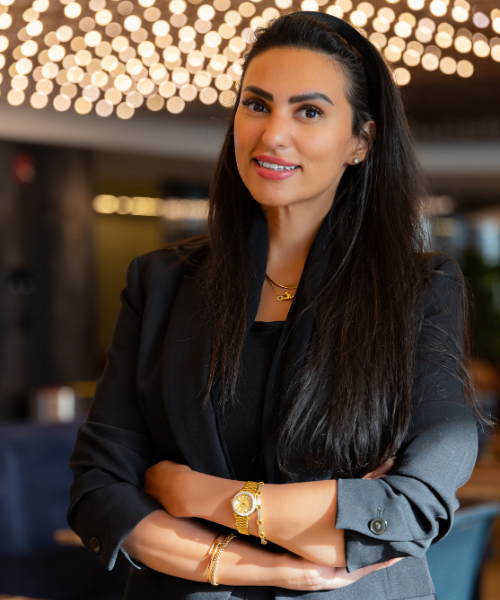
Al-Mokhtar’s origin story is, appropriately enough, a story about language and communication. Growing up in Saudi, she was pushed—as so many women of her generation were—toward a “serious career.” So she enrolled to study management information systems. “I have no idea why,” she laughs. “It was more of a pressure from the parents.” But language kept pulling her back. She volunteered as an interpreter at college events. She had a clarity of voice and a precise melodic accent that her professors noticed. They told her to do something with it. She transferred, studied English literature at King Abdulaziz University and started blog—one day a journalist from Arab News read something she had written about life on campus and called her in.
That first meeting led to her spending nine years at Arab News, and what she built there is a great indicator of who Al-Mokhtar is and what she is drawn to. She created the Lifestyle Edition, a section focused on a topic the paper had never covered: the young, the artistic, and the Saudi dreamers at a time when building a life from creative pursuits was not considered to be a serious career choice. “You never heard of a Saudi chef or a Saudi DJ or a tour operator that is Saudi,” she says. “So I used to shine the light on those kinds of people.” Some of the people she interviewed back then are now leading entire government commissions. She watched it happen. She documented the beginning of something enormous before anyone else quite understood what they were looking at.
But journalism, Al-Mokhtar found, had its own sort of limitations—and they were personal ones. “Sky News, BBC News—they were on speed dial,” she remembers. “They used to call me for every single women’s issue happening in Saudi and ask me about it.” She found herself spending more time defending the kingdom than describing it. “It felt hurtful,” she says simply. “And every time I would say, ‘You should come and see it and you will understand,’ it felt very emotional to me. It felt very personal.”
When Al-Mokhtar finally moved into the corporate world and into tourism—a world that had always been in her blood, literally, her grandfather having owned a travel company—she found the space to do what journalism hadn’t quite allowed. “I felt that now it’s an opportunity to actually challenge these people, challenge the media, challenge the public, and tell them Saudi is beautiful. And trust me, you want to be part of that story.” Today, as the spokesperson for Red Sea Global’s destinations and the architect of their international media strategy, she gets to make a case for her country all across the globe.
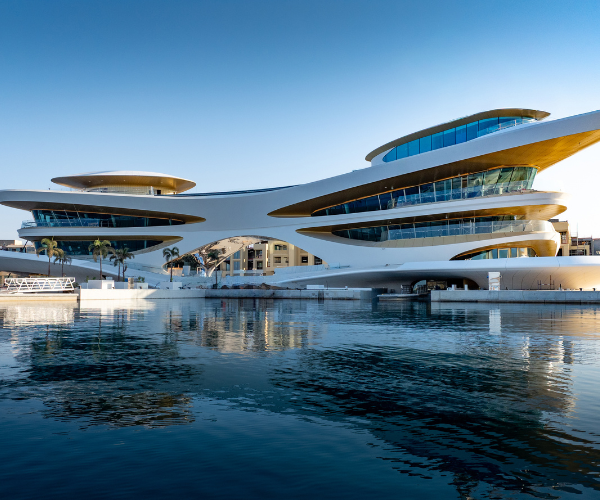
The canvas she is working with is extraordinary. Red Sea Global is the developer behind two of the most ambitious luxury tourism projects on earth: The Red Sea and AMAALA are regenerative destinations designed not merely to attract visitors but to set entirely new standards for what sustainable, high-end travel can be. While the brands that have signed onto the new Saudi vision of the future—Four Seasons, Faena, Clinique La Prairie, and Miraval—are marquee names that carry their own global weight and their own implicit promise of quality. Al-Mokhtar understands exactly what that means strategically. “These partnerships are very important for us—and we nurture them. Because when people see that their favorite brands are in Saudi, they know they can trust that.” She notes that luxury hotel brands function as a kind of cultural ambassador, doing some of the storytelling work in an organic way for her nation.
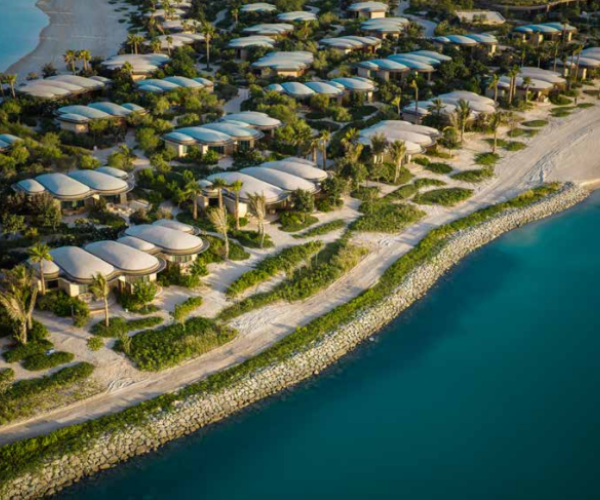
What Al-Mokhtar is most proud of, though, has less to do with brand rosters and more to do with the wide range of people who are testing the hospitality waters of Saudi. She fondly remembers 50 women—a college reunion group from Germany—that arrived together in January, having left their families behind to go on an adventure to discover the kingdom. But there are also the adventure seekers that spend their time diving in the fourth largest coral reef system in the world. Or the luxury experientialists who explore prestige pampering in both Saudi’s mountain resorts and its island properties, trailing their favorite hotel brands across a landscape that keeps confounding expectations.
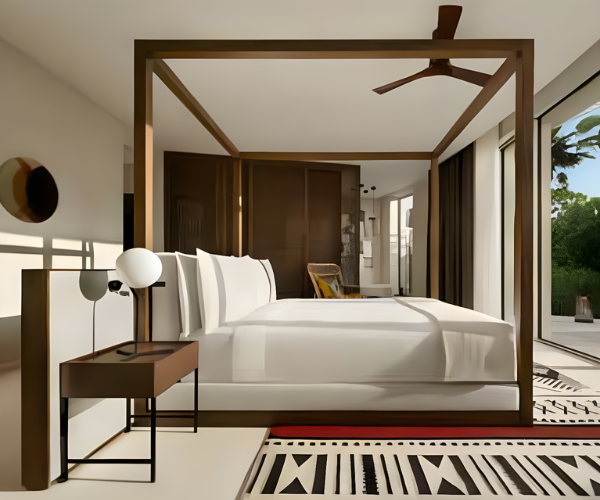
“People always think that The Red Sea is similar to the Maldives,” reflects Al-Mokhtar, “but it’s not—because of the geographical diversity. We have mountain resorts, we have desert resorts, and then island resorts.” Lewis Hamilton, she mentions in passing, called three days before a Formula One event to say he had seen an Instagram post about Shebara Resort and requested to see it in person. “This sort of thing never happened before,” she confesses. “But now we are very privileged that people, even if they don’t visit us, see us through the lenses of media, influencers, and social media—and then decision makers come to the kingdom as well.”
The conversation about the kingdom has shifted entirely in her lifetime, and she knows it. “It’s a brave new Saudi. There is a complete change in perspective in how people are perceiving tourism here.” The people she works with today at Red Sea Global – 60-plus nationalities under one roof – are not just visiting. They are moving in. Sending their children to school. Planting roots. “Today, it’s like if you’re not coming to Saudi, you’re missing a lot. You have to be part of it.”
What Al-Mokhtar wants, ultimately, is not just for the world to come to Saudi. She wants Saudi to go to the world—its fashion, its food, its culture—and for that exchange to run in both directions. “I want the world to see us,” she says with feeling. “Even if they don’t come for tourism, they come for different reasons. And if they don’t come, they don’t come—but at least they will finally be able to enjoy and understand what Saudi Arabia really is.” This is her real hope, that the world realises that there is always a place at the table for anyone who wants to come discover her cherished home.
– For more on luxury lifestyle, news, fashion and beauty, follow Emirates Woman on Facebook and Instagram
Images: Supplied
Disclaimer : This story is auto aggregated by a computer programme and has not been created or edited by DOWNTHENEWS. Publisher: emirateswoman.com