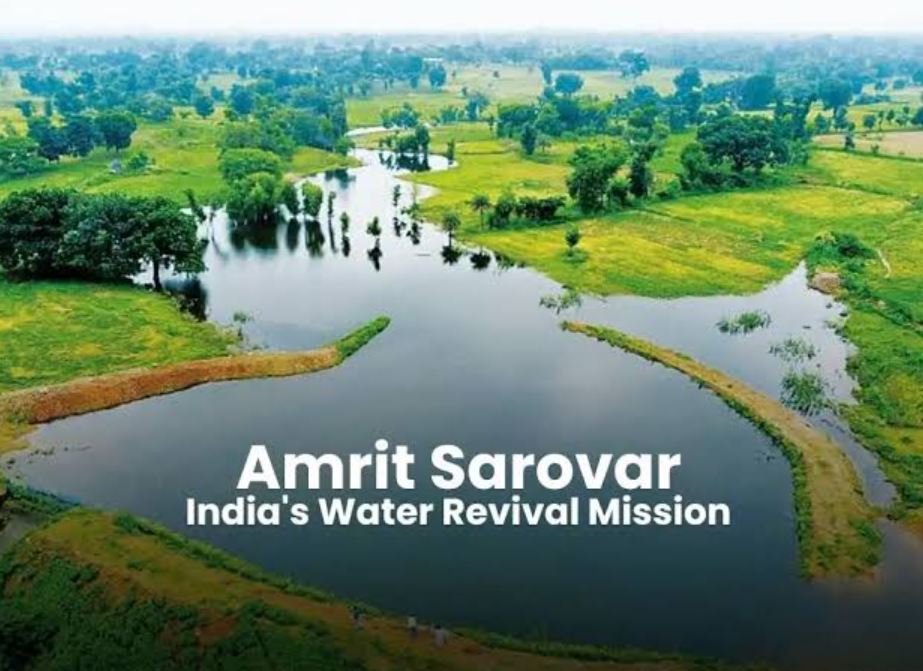
In a significant boost to water conservation and climate resilience efforts, Ladakh Lieutenant Governor Vinai Kumar Saxena has approved 97 additional water bodies under Project Amrit Sarovar, raising the total number of ponds targeted for operationalisation across the Union Territory to 163 by January 2027. The ambitious initiative is being positioned as a long-term solution to the landlocked region’s growing water challenges, while also strengthening agricultural sustainability and rural livelihoods, officials said in Leh on Sunday.
As winter tightens its grip on the high-altitude cold desert, the Ladakh administration is turning the traditionally harsh season into an opportunity for large-scale water infrastructure development. Officials say the accelerated execution of Project Amrit Sarovar reflects a mission-mode approach aimed at conserving water resources, building climate resilience, ensuring dependable irrigation and securing the future of farming communities across the region.
According to officials, the newly approved 97 ponds will be constructed within an intensive timeline, with the Public Health Engineering Department and other concerned agencies directed to complete the works by January 31, 2027. Once finished, the project will bring the total number of operational water bodies to 163, covering 163 of Ladakh’s 248 villages within just ten months. Together, these ponds are expected to create a storage capacity of nearly 550 million litres of water, providing a critical buffer against seasonal shortages.
The initiative is expected to play a key role in supporting the upcoming sowing season beginning in March, ensuring that irrigation water remains readily available to farmers and reducing the risk of crop losses caused by scarcity. Officials emphasised that improved local water storage will help shield agriculture from increasing climatic uncertainties and strengthen food security in the region.
The latest expansion builds on the success of the first phase of the programme, under which 60 water bodies have already been operationalised over the past seven months. Work on six additional water bodies in Leh and Kargil is currently underway and is scheduled for completion by December 15. Of the 60 completed structures, 40 were inaugurated by Prime Minister Narendra Modi on October 15, highlighting the project’s growing national significance.
The urgency of the programme is underscored by Ladakh’s worsening water crisis. Several villages, particularly in Kargil district, continue to face acute shortages, with officials estimating that 50 to 60 villages are severely affected. In some cases, dwindling water availability has compelled residents to abandon their homes and migrate elsewhere in search of sustainable living conditions.
Designed using scientific techniques tailored to Ladakh’s fragile mountain ecosystem, Project Amrit Sarovar seeks to go beyond immediate irrigation requirements. The initiative is intended to create sustainable livelihood opportunities, support ecological restoration and contribute to India’s larger goal of achieving land degradation neutrality. Officials note that the project aligns with the Prime Minister’s vision of restoring 2.6 crore hectares of degraded land by 2030, linking local conservation efforts with national environmental objectives.
The programme was conceived by Lt. Governor Saxena and formally launched on April 10, officials said. They added that, since its inception, it has received strong support from local communities, particularly villagers and Nambardars, whose active participation has been instrumental in identifying locations, constructing water bodies and ensuring their effective operation. Officials said this grassroots involvement has transformed the project into a successful community-led model tailored to Ladakh’s unique geographical and social needs.
With winter snowfall declining, glaciers retreating, temperatures rising and groundwater levels steadily falling, Ladakh faces mounting environmental pressures. Against this backdrop, Project Amrit Sarovar is being viewed as a critical scientific intervention aimed at capturing precious rainwater and annual snowmelt that would otherwise be lost. By transforming seasonal challenges into opportunities for resource conservation, the Union Territory is seeking to set a new benchmark in climate adaptation, water security and sustainable rural development for mountainous regions across the country.
Disclaimer : This story is auto aggregated by a computer programme and has not been created or edited by DOWNTHENEWS. Publisher: deccanchronicle.com