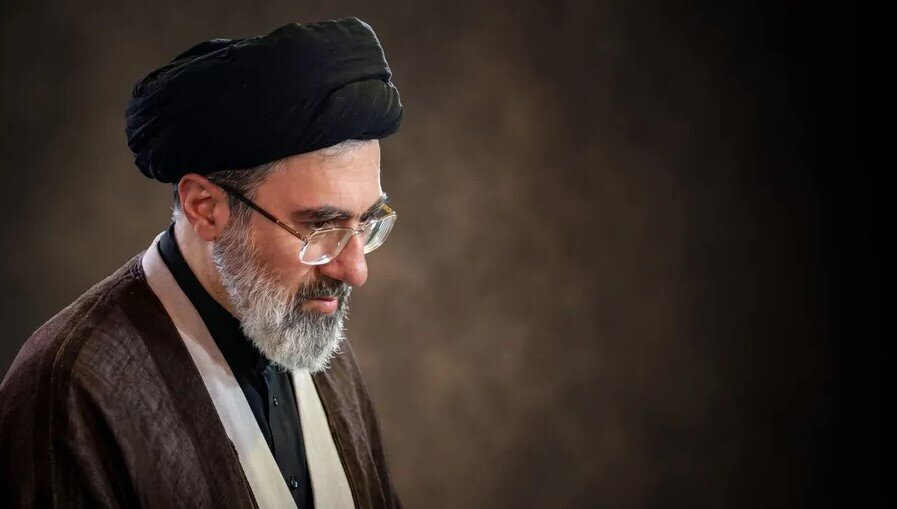
TEHRAN- Leader of the Islamic Revolution Ayatollah Seyyed Mojtaba Hosseini Khamenei has expressed condolences over the death of prominent Iranian novelist Reza Amirkhani, describing him as a committed and talented writer whose profound research and literary creativity had left behind lasting works.
In a condolence message, the Leader expressed sympathy to Amirkhani’s family, relatives and admirers and prayed for divine mercy and forgiveness for the deceased.
“The sad news of the passing of Mr. Reza Amirkhani has reached me. This committed and talented writer has left behind lasting works through his profound research and literary creativity,” the message read.
Amirkhani died on November 23 following nearly a year of medical complications resulting from a paragliding accident.
The writer was injured on November 30, 2025, when his paraglider crashed in the Mesha area near Damavand, east of Tehran. He sustained severe head and brain injuries and remained unconscious for an extended period. After undergoing several surgical procedures and receiving specialized medical treatment, he was transferred from hospital to his home, where he continued to receive round-the-clock medical care. His condition remained unstable in the months that followed.
Born in Tehran in 1973, Amirkhani studied mechanical engineering at Sharif University of Technology. He emerged as one of the distinctive voices in contemporary Iranian fiction during the 1990s, establishing his literary career with his novel “Ermia.”
He gained wider recognition with “Man-e Ou” (His Ego), one of his best-known novels, which explores themes of love, identity, tradition and social change against the backdrop of old Tehran. The book became a major success among Iranian readers and went through numerous reprints.
His other notable novels include “Bivatan” (Homelandless), “Qeidar” and “Rahesh,” while his literary output also encompasses short-story collections, travelogues and essays on social and cultural issues. His nonfiction works include “Dastan-e Sistan,” “Janestan-e Kabulestan” and “Nafahat-e Naft,” reflecting his interest in Iranian society, public affairs, culture and governance.
Amirkhani was particularly recognized for his distinctive prose, inventive use of the Persian language and unconventional narrative techniques. His writing frequently explored questions of faith, Iranian identity, social responsibility and the relationship between tradition and modernity.
His novel “Rahesh” received the 36th Islamic Republic of Iran Book of the Year Award in 2019. His works have also been translated into several languages, including Arabic, Russian, Turkish, Urdu and Indonesian, introducing his writing to readers beyond Iran.
Beyond his literary achievements, Amirkhani was known for his engagement with social and cultural debates and his contributions to contemporary Iranian literary discourse. His death has prompted an outpouring of condolences from writers, publishers and cultural figures across the country.
SAB/
Disclaimer : This story is auto aggregated by a computer programme and has not been created or edited by DOWNTHENEWS. Publisher: tehrantimes.com