Two sports have transfixed me for years — in part, I’m realizing, because of their commonalities. They both demand attention to exquisite, tiny detail and require a mastery of repeated motions. They’re both recreational darlings on a Saturday morning, played socially with others. They’re both easily broken down into specific elements, wherein you can thrive at some and struggle with others — but the end goal is much the same:
Get the damn ball in the hole.
Yes, we’re talking basketball and golf.
For these reasons, I’ve found reasons to talk with Lakers coach J.J. Redick, and explore the golf craze for NBA players who took part in the 2020 Covid bubble. Unsurprisingly, the best jump shooters often turn into the best golfers off the court. Stephen Curry, obviously, but J.R. Smith, too. Ray Allen took to golf immediately. Duncan Robinson, the lethal shooter, went all in as soon as his career took him to Florida. Likely the best golfer in the NBA, Austin Reaves, is unsurprisingly one of about 20 players who currently hoist five threes a game and also make more than 40%.
We’ve made the point — basketball’s most lethal snipers are often its best golfers, too, in no small part because putting is like shooting free throws, a proper jump shot is like a proper golf swing, pulling up off the dribble can look really great and be very effective, but much like a 40-yard pitch it can go so, so wrong when the wrong person is doing it.
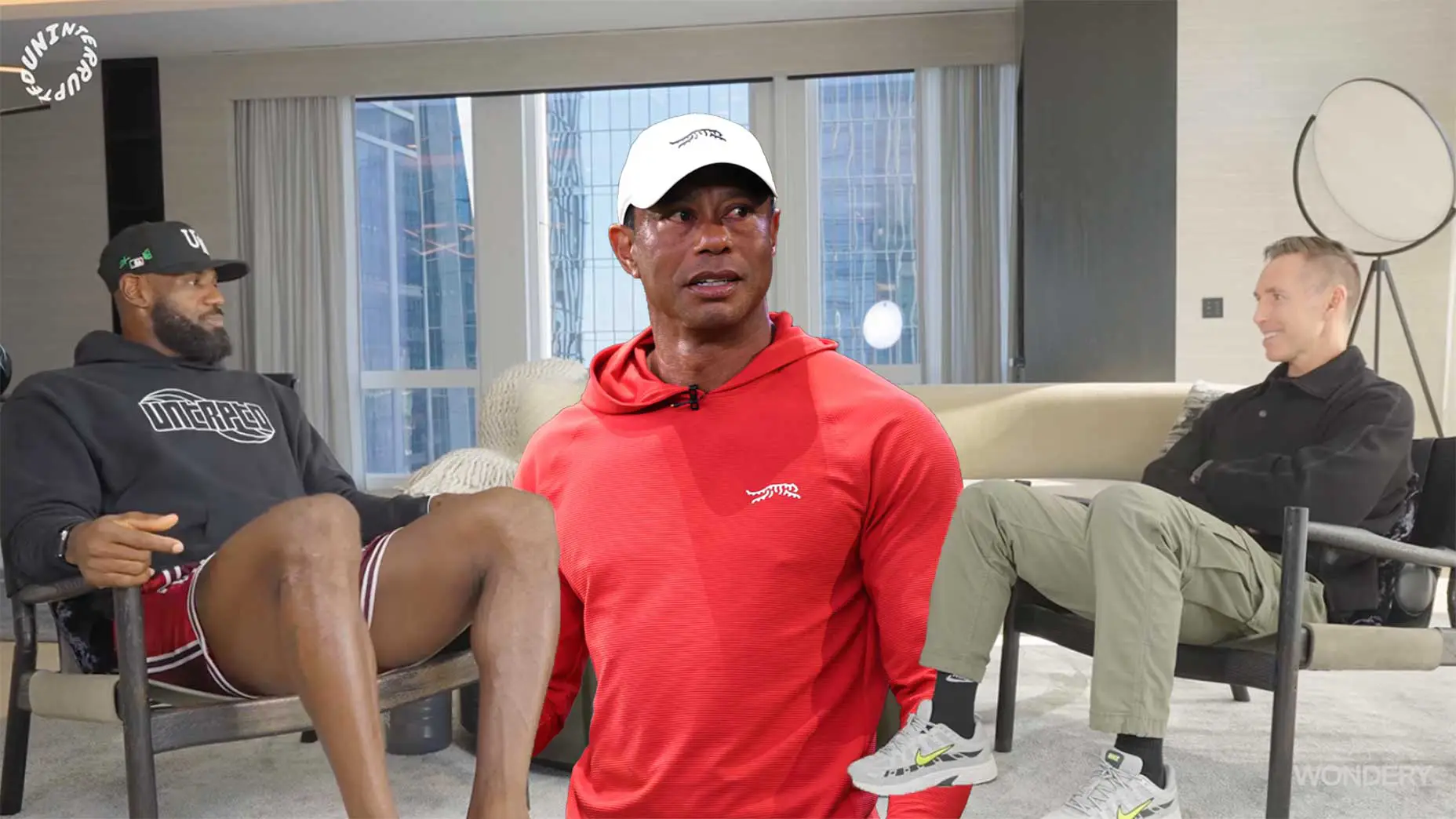
All of this brings us to the YouTube page of one of my favorite podcasts: Mind the Game, where (recent golf devotee) LeBron James and Steve Nash break down basketball to some of the tiniest minutiae. This week, they spent an entire episode on shooting, and the esoteric nerdy result is exactly the kinda thing Tiger Woods would be great at.
<figure class="youtube-facade" data-content="
“>
James and Nash are two wildly different shooters. The former is one of the greatest basketball players of all time, with admittedly wonky-looking jumpshot form. The latter is one of the greatest point guards of all time and the owner of an aesthetically pleasing jumper. Those differences are great fodder alone for a conversation on getting the ball into the hoop, but it’s their discussion on the depths of shooting that shows off their brilliant minds. From shooting to shooting practice to historically great shooters to the worst-looking jumpers of all time. From free-throw shooting to how passing impacts shooting to what the laces on a basketball mean for the shot. There’s even a magical moment where James posits why watching Michael Jordan (and trying to emulate him) led to bad habits still visible in his jumper today.
All I could think as I watched was that I’m desperate for this from Tiger Woods. We do get doses of Woods’ rarified golf knowledge. Sometimes, it’s in the occasional press conference answer, but often it might be in a video produced by TaylorMade, which gets one or two content days with Woods annually, thanks to his multimillion-dollar endorsement agreement.
Kudos to the content team at TaylorMade, who have squeezed driver, irons and short game “masterclass” videos out of Woods in recent years. They’re all fantastic. And unsurprisingly, they all require a second actor on screen, like Scottie Scheffler, Collin Morikawa or Rory McIlroy — just like Nash is used predominantly as the host of the show, pulling tidbits of intel from James.
<figure class="youtube-facade" data-content="
“>
James and Woods are alike in a few key ways. Firstly, they share Dec. 30 as a birthday. But more notably because they are regarded as the most brilliant minds in their sport. When prompted, their recall on past events and plays and thoughts is often stunning. The main difference is James is quite happy to supply it. Woods is, by nature, much more reticent.
So maybe this is all a bit of a wistful ask. But those TaylorMade videos are proof of concept. Woods is excellent in them. And he’s at a point in his life where his commentary — the type you see when he watches McIlroy hit tee shots — is way more engaging, or at least more reliable, than his own game. It’s okay to admit that! The entire golf industry (and beyond) is now ready to watch Woods make a competitive comeback at next month’s Hero World Challenge, presumably to start the path toward playing Augusta National and the Old Course in 2027, but detached observers can be realistic about his long-term playing prospects. While Woods should be afforded whatever swan song he wants, there will be another world after these strained playing years where his mind is an asset to the golfing world like his on-course achievements have been all these years.
I’d love to see Woods sit for 30 minutes straight talking about chip shots. I’d love to see Woods kick his feet up and scroll through videos of his swing from 2000, explaining to, say, Jim Furyk, why that swing accomplished everything the rest of pro golf couldn’t do. The best thing Mind the Game does is turn on the mics, organize the topics and let two legends dive into the rabbit hole. It’s on the producers to add context where appropriate. That’s as easy a workflow as could exist for Woods. He’d have to be interested in it, though, which might also be where this idea breaks down.
I’m going to hold out as a believer, though. In part because I’m not so easily wooed into believing in Woods the golfer anymore. The end of his competitive days feels closer than ever. But there will be an element of prideful urge that exists on the other side keeping Woods close to the game. It happened to Andre Agassi, Roger Federer, Peyton Manning and Tom Brady. It’s even happened to Michael Jordan, Woods’ real basketball proxy. If there’s any room for Woods’ golfing legend to grow, the role of all-knowing communicator, or professor emeritus, of golfing skill feels like the obvious one.
Here’s hoping he’s up for it.
Disclaimer : This story is auto aggregated by a computer programme and has not been created or edited by DOWNTHENEWS. Publisher: golf.com