KYOTO, May 26, 2026 (News On Japan) –
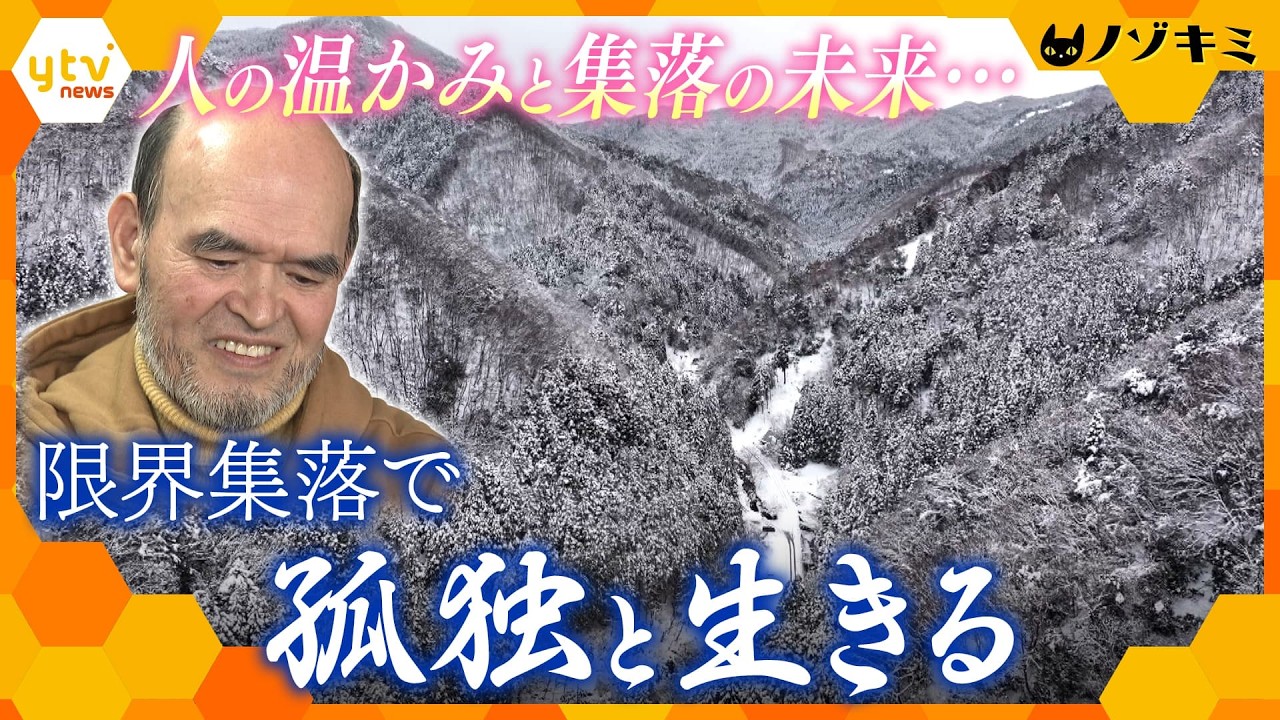
Deep in the mountains of Ayabe in Kyoto Prefecture, 74-year-old Kazuyoshi Watanabe continues living alone in the isolated settlement of Koya, which has been reduced to a single resident after a stroke left the left side of his body partially paralyzed, despite the village having no supermarkets, convenience stores, or even vending machines.
Through the harsh winter and into spring, his daily life reveals not only hardship and loneliness, but also the warmth of human connection and a determination to preserve the village’s fading traditions.
Koya, nestled along a river in the mountains of northern Kyoto Prefecture, has been labeled a “marginal village” for more than two decades, a term used in Japan to describe communities where most residents are elderly and the population is on the verge of disappearing.
“These days I have to rest often,” Watanabe says while carefully walking through deep snow. Heavy snowfall is common in the area, sometimes reaching nearly two meters.
Across Japan, 296 settlements became completely uninhabited over the past five years. Koya now stands on the brink of joining them.
Watanabe suffered a stroke seven years ago, leaving the left side of his body difficult to move, particularly during winter when the cold stiffens his muscles. Yet he continues to live alone in the village where he was born and raised.
A helper visits several times a week to assist with daily tasks and meals. With no nearby stores, he relies heavily on caregivers and delivery services.
“I look forward to seeing people each week,” Watanabe says.
Until recently, he lived with his mother, Fujiko, who is now 99 years old. In 2017, the pair were still living together in the village. At the time, Koya had four residents in total, but two later died. Last year, Watanabe’s mother moved into a care facility, leaving him completely alone.
“When I was a child, around 60 or 70 years ago, there were about 80 people living here,” he recalls. “There were around 15 houses.”
The village once had many children attending the now-closed Okubayashi Elementary School. Reaching school was difficult, however. Children walked roughly eight kilometers each way through the mountains, a journey that took nearly two hours. During winter, heavy snow forced students to stay in dormitories for months at a time, while mothers took turns visiting them weekly.
One of Watanabe’s few pleasures today is playing the board game Go with acquaintances from nearby communities once a month.
“Even if I lose, it’s fun,” he says. “It’s better than staying shut inside the house all winter.”
This past winter brought new dangers. Heavy snow cascading from the mountains piled against Watanabe’s home, threatening to shatter the windows. Days later, the pressure from the snow finally cracked the glass.
After Watanabe posted about the damage on social media, people from neighboring villages rushed to help repair the house.
“If the snow had gotten inside, it would have been a serious problem,” he says.
The scene reflected a spirit of mutual support that has largely faded in urban Japan but remains alive in isolated rural communities.
Watanabe is hospitalized once every four months for rehabilitation. After seven years of painful therapy, he recently experienced a small but meaningful breakthrough: successfully fastening the zipper on a jacket with one hand, something he had been unable to do since his stroke.
“If you keep trying without giving up, you can still do things,” he says with a smile.
The mountains surrounding Koya contain one of the region’s important water sources and have long been known for ancient horse chestnut trees, some said to be more than 1,000 years old. About 20 years ago, villagers attempted to revitalize the community by producing foods made from horse chestnuts, including rice cakes and crackers.
But with only a handful of aging residents remaining, sustaining such efforts became increasingly difficult. Processing the bitter nuts requires labor-intensive preparation, including peeling and removing toxins.
“One elderly person passed away, then another,” Watanabe says. “Little by little, the village became quieter.”
Today, many of the homes stand empty.
Fearing that Koya itself may soon disappear, Watanabe has turned his attention toward preserving its stories and traditions. He recently created a picture book based on legends and memories told to him by his grandparents when he was a child.
“I want future generations to know what existed here,” he says.
His efforts eventually led to local children performing the stories as a kamishibai-style picture storytelling event centered on the village’s legend of the chestnut god, who once saved villagers from famine.
“I’m glad I was able to leave these stories behind,” Watanabe says.
When cherry blossoms bloomed in spring, his mother temporarily returned from her care facility to help make traditional horse chestnut rice cakes, a specialty she loves. More than 20 volunteers, from children to elderly residents, gathered to assist.
For the first time in years, the village was filled with voices again.
Using practiced hands, Fujiko demonstrated the traditional methods of preparing the chestnuts while younger participants watched closely. Together, they shared the finished rice cakes around a fire.
Even if Koya itself eventually disappears, Watanabe hopes its traditions, stories, and techniques will survive.
Though he now lives alone in a village facing extinction, he has not abandoned hope.
Source: YOMIURI
Disclaimer : This story is auto aggregated by a computer programme and has not been created or edited by DOWNTHENEWS. Publisher: newsonjapan.com