
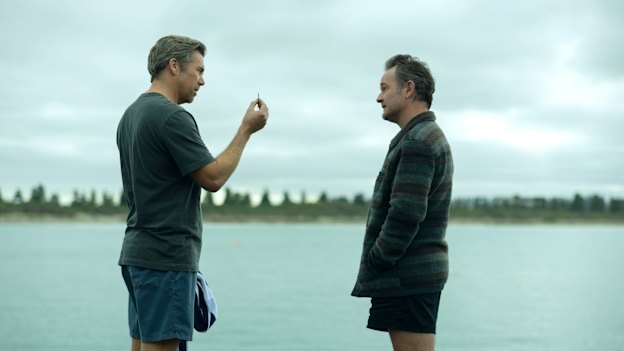
It’s a familiar picture: coastal views, a sandy beach, boats bobbing by a jetty. They’re instantly recognisable symbols of a laid-back Aussie lifestyle and summer fun in the sun. But they’re deployed to quite different ends in the lost-child mystery Last Seen.
Apple’s first local commission is sombre and wintry rather than bright and sunny. Directed with the fresh eye of an outsider by German Christian Schwochow (The Crown) and shot with flair by local cinematographer Bonnie Elliott (Fires, Stateless), it has a distinctive feel that eschews the clichéd images of the country beloved by ads and tourism promotions.
In doing so, it productively contributes to the array of local productions offering a showcase of the country to the world, a range of perspectives that is happily expanding. Within that mix, Last Seen goes its own, highly effective way, illustrating that it’s not simply about where you shoot a story, but also how you choose to portray a place.
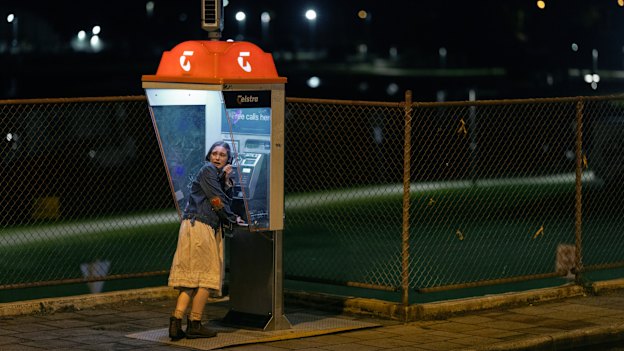
The compelling and ultimately deeply moving six-part series isn’t suited to light, gentle colours: it’s considerably darker, like its palette. The main setting is the fictional Port McKenna, a troubled township harbouring all manner of secrets and lies. Using locations in western Victoria, notably the southern coastal towns of Portland and Warrnambool, it’s rendered in inky blues, earthy browns and forest greens.
The shooting style reinforces the mood of menace: aerial shots of vehicles speeding down isolated country roads; a working port gleaming eerily at night. The atmosphere is isolating rather than inviting.
Divorced father and fitfully recovering alcoholic Ian Ridley (Patrick Brammall) is a former police officer who now works for an emergency-help line but is still shattered by the unsolved disappearance of his young daughter 11 years earlier. A panicked phone call one lonely night at the desk convinces him that she’s still alive and propels him on a relentless quest to find her.
Ridley is self-destructive and frequently damaging to those around him, especially his ex-wife, Debbie (Jessica Wren). “There’s no good place in you, just bitterness and rage,” she angrily tells him.
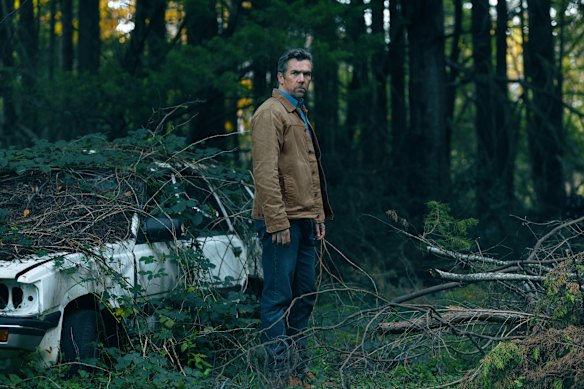
Adapted from Ryan David Jahn’s novel The Dispatcher, which is set in a rural community in Texas, the series’ relocation to the Shipwreck Coast appears seamless. It’s now on a rugged stretch forever associated with violently dashed dreams, with the region used to similar, chilly and unsettling effect in the 2013 adaptation of Peter Temple’s masterwork The Broken Shore.
Other parts of Victoria’s southern coast have also had their time in the spotlight. In the ’90s, SeaChange became so popular that the title was absorbed into the popular lexicon as people migrated from urban areas in the hope of landing in a community with the quirky charm of the fictional Pearl Bay. Shot on the Bellarine Peninsula, the series turned Barwon Heads into a tourist magnet.
More recently, Anglesea and the Surf Coast have attracted attention via the neighbourhood cul-de-sac on The Family Next Door and the young-adult series Surviving Summer. Joanna Werner, one of the producers on Last Seen, was also co-creator and co-producer of the latter which focuses on surf culture and was shot around Anglesea and the Great Ocean Road. When it launched in 2022, she explained to me, “So few drama series shoot the entirety down the Great Ocean Road and there had never been a teen one set there. So I really felt like we were going to be showing this beautiful bit of the country off to the rest of the world.”
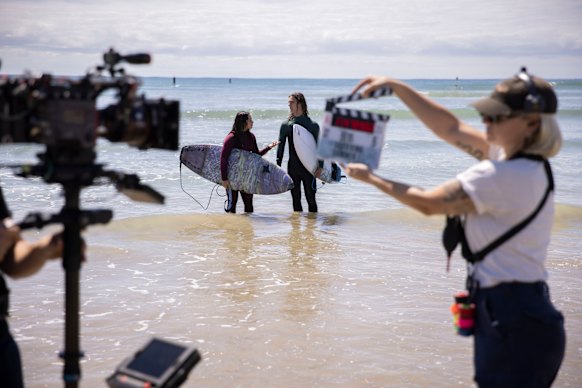
When Werner pitched the series to Netflix, she recalled, “Australia was part of the attraction. Our other partners, at ZDF in Germany, heard ‘Australia’ and ‘surfing’, and I think we had them at hello.”
Representations of the country in local TV series aren’t confined to locations boasting striking water views: a number of recent productions have looked inland for inspiration. Territory uses the wide brown land of the Northern Territory; RFDS and The Killings at Parrish Station feature the dusty red plains around Broken Hill; and Treasure & Dirt relishes the novel strangeness of Coober Pedy.
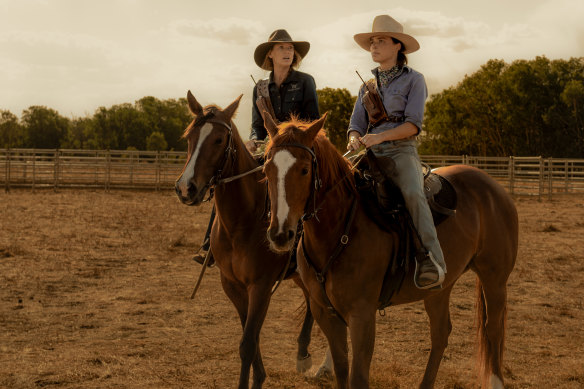
It’s interesting how times have changed since the streamers have made shows accessible around the globe. In a recent interview with this masthead, Netflix’s global chief content officer Bela Bajaria explained that her advice to people pitching projects to the global giant was not to try to sell their production as “an international show”.
“We want each show to be really culturally specific, because that will resonate more than trying to do it through a US or global lens,” she said. “If you try to make something for everyone, you make it for no one.”
That appetite for specificity wasn’t always the way. Maybe an early sign of the shift came when Scandi noir took hold. Suddenly dogged detectives in down parkas and heavy boots were all the rage, trudging through snowbound villages in the northern reaches of Europe endeavouring to solve confounding crimes.
Before that, in what was clearly an era with different priorities, I remember the producer of a network police series that was filmed in Melbourne telling me that he’d been instructed to avoid shots that contained any identifiable local features – trams, Flinders Street Station, the Arts Centre spire – as the attitude from head office was that people in Sydney were less likely to watch a show made in Melbourne. The brief was to conjure a generic urban environment.
Now that the nation’s unique characteristics are seen as assets, one state has been punching well above its weight. A number of series made in Tasmania have wonderfully displayed the attributes of the compact Apple Isle, from the gentle allure of Rosehaven to the Gothic spookiness of The Kettering Incident and the remote lakeside enclave in the first season of Deadloch.
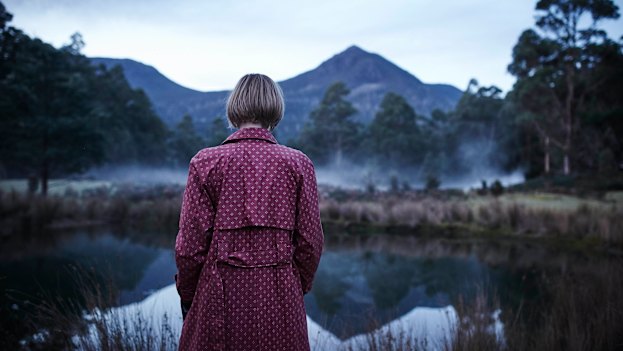
Bay of Fires co-creator Marta Dusseldorp made it her mission to focus on her adopted home state. This popular ABC comedy-drama exploited the unique assets of the state’s wild west and particularly the 19th century mining boomtown of Zeehan. “It’s a land of rust and moss,” Dusseldorp’s husband and co-producer, Taswegian Ben Winspear, told me appreciatively of the location’s aura of faded glory, which was perfect for the forgotten pocket at the heart of the series.
The state’s success in exhibiting its attributes makes August’s decision to gut Screen Tasmania, the state’s funding body for film, television and other digital media, lamentable. The Mercury reported that the move has left the organisation “at the brink of collapse”.
The Screen Tasmania cuts display a dismaying failure to sniff the wind, as well as smashing the hopes of those who’ve worked for years, with considerable success, to make the state a desirable production destination.
Because today, it’s all about location, location, location. That singular settings are valued is again clear from the landscapes of Last Seen and Tasmania is blessed with an abundance of them.
Last Seen is streaming now on Apple TV.
Want more TV? We’ve got you.
Disclaimer : This story is auto aggregated by a computer programme and has not been created or edited by DOWNTHENEWS. Publisher: www.smh.com.au



