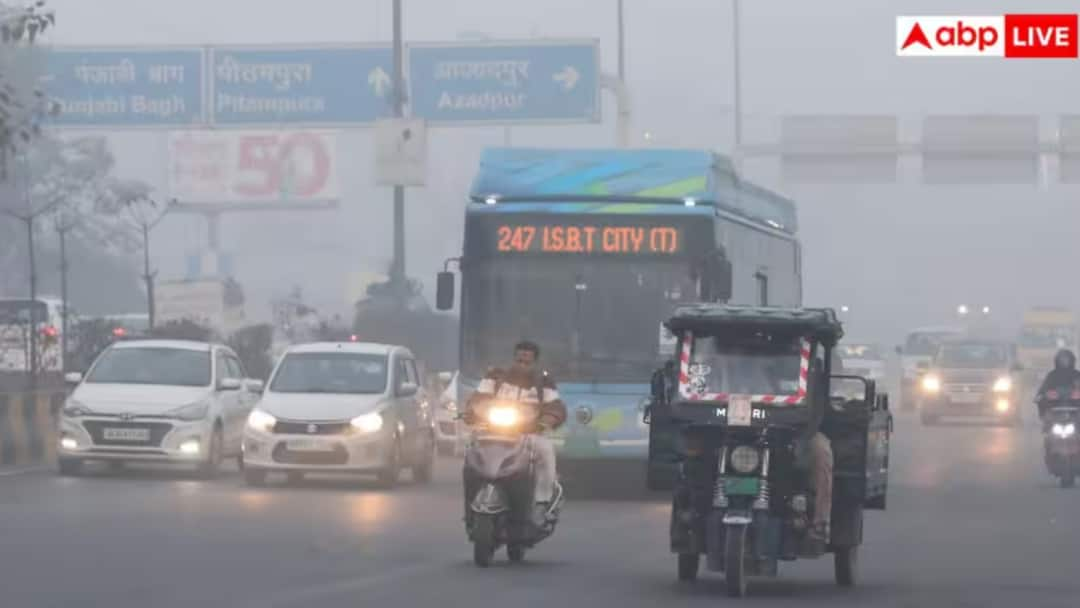
- Supreme Court noted Delhi-NCR’s improved air quality this winter.
- Court requested pollution status reports from all concerned states.
- Proposed long-term strategy: prevent commercial vehicles entering Delhi.
The Supreme Court on Monday observed that people in Delhi-NCR have been fortunate this winter, as their lungs have received some relief from air pollution. The court also acknowledged nature’s role in the relatively better conditions and sought status reports from the states concerned on measures taken to tackle pollution. During the hearing, the bench suggested drawing up a long-term strategy to prevent commercial vehicles from entering Delhi, proposing that arrangements be made to store essential goods at the borders.
Focus On Long-Term Plan
According to LiveLaw, a lawyer informed the Supreme Court that pollution caused by commercial vehicles had decreased by 30 per cent.
Responding to the submission, Chief Justice of India Surya Kant observed that people and goods continued to move into the national capital because of the daily demand for essential supplies.
He suggested exploring whether facilities could be developed at Delhi’s borders to store goods, thereby reducing the need for commercial vehicles to enter the city.
The CJI said that even if such arrangements could not be implemented this year, they could be considered for the next year. He emphasised that a system should be developed over the next five years to ensure that commercial vehicles no longer need to enter Delhi.
The bench cautioned that imposing an immediate ban on commercial vehicles could have serious consequences.
Also Read: West Bengal SIR: SC Directs ECI To Increase Tribunals, Prioritise Deleted Voters’ Appeals
States Asked To Respond
The Supreme Court also sought status reports from the states on the steps being taken to address air pollution.
The Advocate Generals of Delhi, Punjab, Uttar Pradesh, Haryana and Rajasthan have been asked to remain present during the next hearing.
The court stressed the need to work towards a sustainable, long-term strategy rather than relying on coercive or mandatory directions to tackle the pollution crisis.
It suggested that coordinated planning and practical arrangements would be more effective in addressing the issue over time.
Also Read: ‘Stop Acting Like Bahubali’: Supreme Court Pulls Up Bihar Judge Over Contempt Order Against SP
Disclaimer : This story is auto aggregated by a computer programme and has not been created or edited by DOWNTHENEWS. Publisher: abplive.com