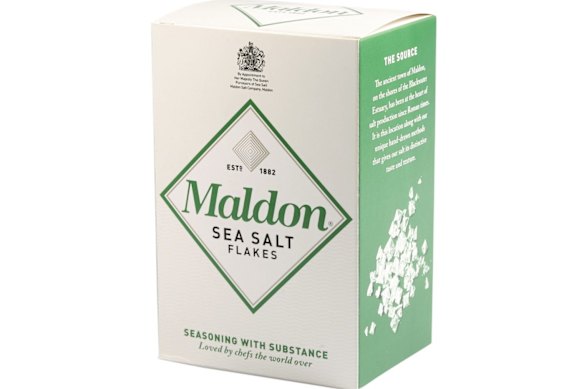
The salt is a flaky favourite of food influencers and famous chefs. A revelation last week raised questions about what makes artisanal “artisanal.”
Isabella Kwai
What makes a box of flaky, artisanal seasoning worth its salt?
Culinary connoisseurs are mulling that question as scrutiny is directed at the credentials of a cult-favourite brand of salt.
Maldon Sea Salt, a popular flaky variety found in pantries around the world, was at the centre of the shake-up. Fans of the brand, including Nigella Lawson and Ina Garten, have lauded its taste and pyramidal shape, finishing fancy dishes or desserts with a sprinkle.
Contributing to its popularity was Maldon Salt’s story as a homegrown business, founded about 140 years ago in the English town of Maldon in the county of Essex that was once a site for an Anglo-Saxon era battle. Its salt flakes, the company said, are hand-raked from the town’s River Blackwater estuary.
An investigation published on Sunday, November 15 by the British newspaper The Observer has complicated that image. Maldon, according to the report, was not made only with sea salt from local seawater. Trucks with rock salt imported from mines in Germany were spotted at a production facility — a fact that Maldon had not widely publicised on its packaging or its website.
The best recipes from Australia’s leading chefs straight to your inbox.
The company said in response to The Observer that the imported salt came from an ancient sea, and that its “100 per cent sea salt” labelling was accurate. Food regulators, including in Britain, where there is no strict definition for artisanal sea salt, approved the product.
Still, the revelation that one of Britain’s most popular artisanal brands included imported German salt rocked aficionados of seasoning.
Some took it with a pinch of salt, adding that the raw material — the inorganic compound sodium chloride — was at least authentic. Others said they felt deceived, and raised questions about whether the product lived up to its premium, artisanal branding.
Then, there were those amused or exasperated by the newly nicknamed “Saltgate,” with several outlets calling it a “posh” scandal over a brand that some perceive as a status signaller. People online joked about the “salty comments.”
Days after the investigation published, the company said it would review its packaging and be more transparent about its process.
“Our previous information focused on the finished flakes and the craft of our salt makers, without giving enough detail about how we prepare our brine,” the company said on its website, adding that it took responsibility for “not sharing that story openly on our packs and website sooner.”
The New York Times
From our partners
Disclaimer : This story is auto aggregated by a computer programme and has not been created or edited by DOWNTHENEWS. Publisher: www.smh.com.au