
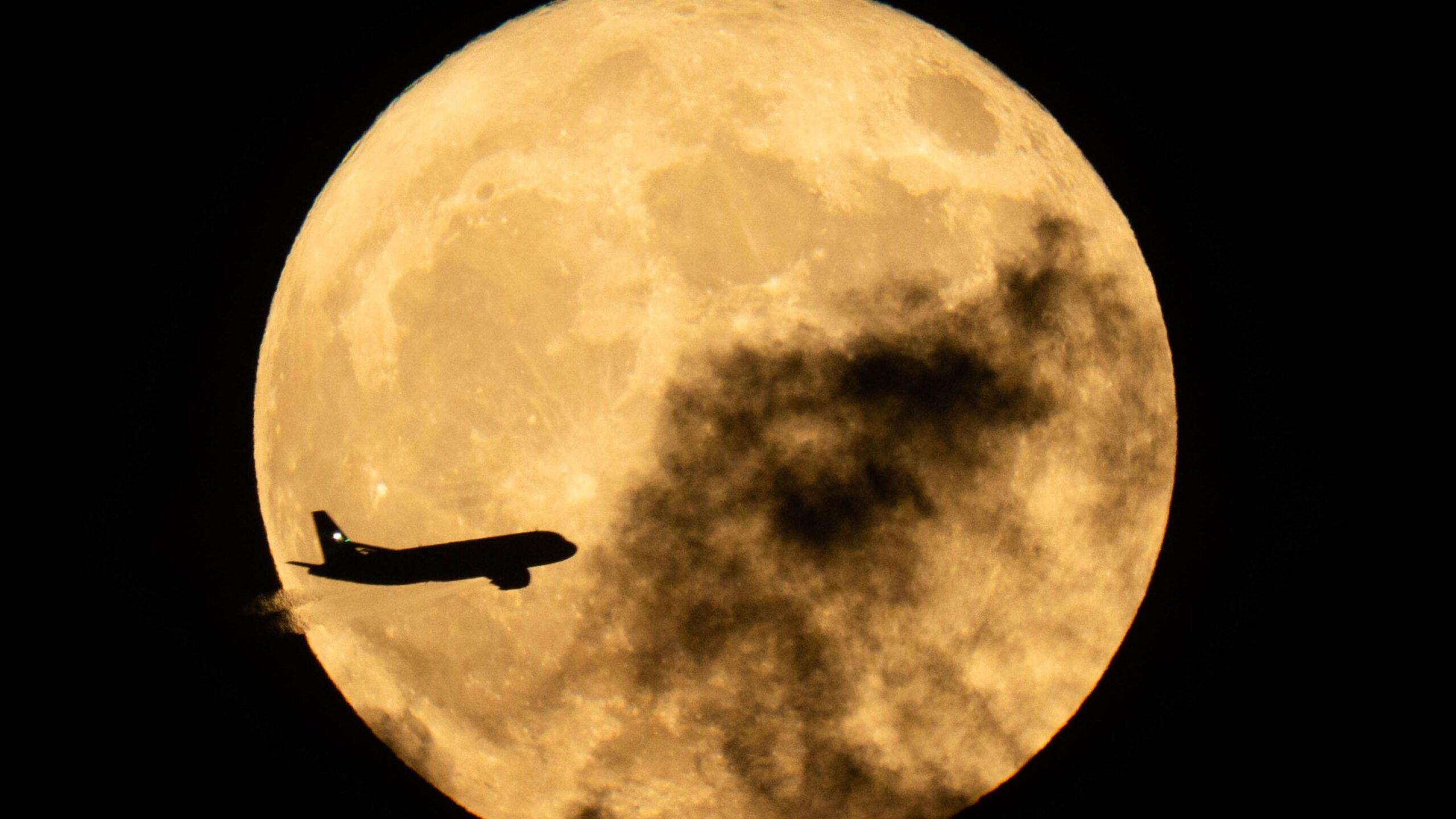
May’s full Moon is set to illuminate the night sky on Friday 1 May.
Known as the Flower Moon, it will be at its fullest at 18:23.
The term Flower Moon is thought to be a reference to the fact that May is when flowers begin to bloom in earnest with spring well and truly in full swing.
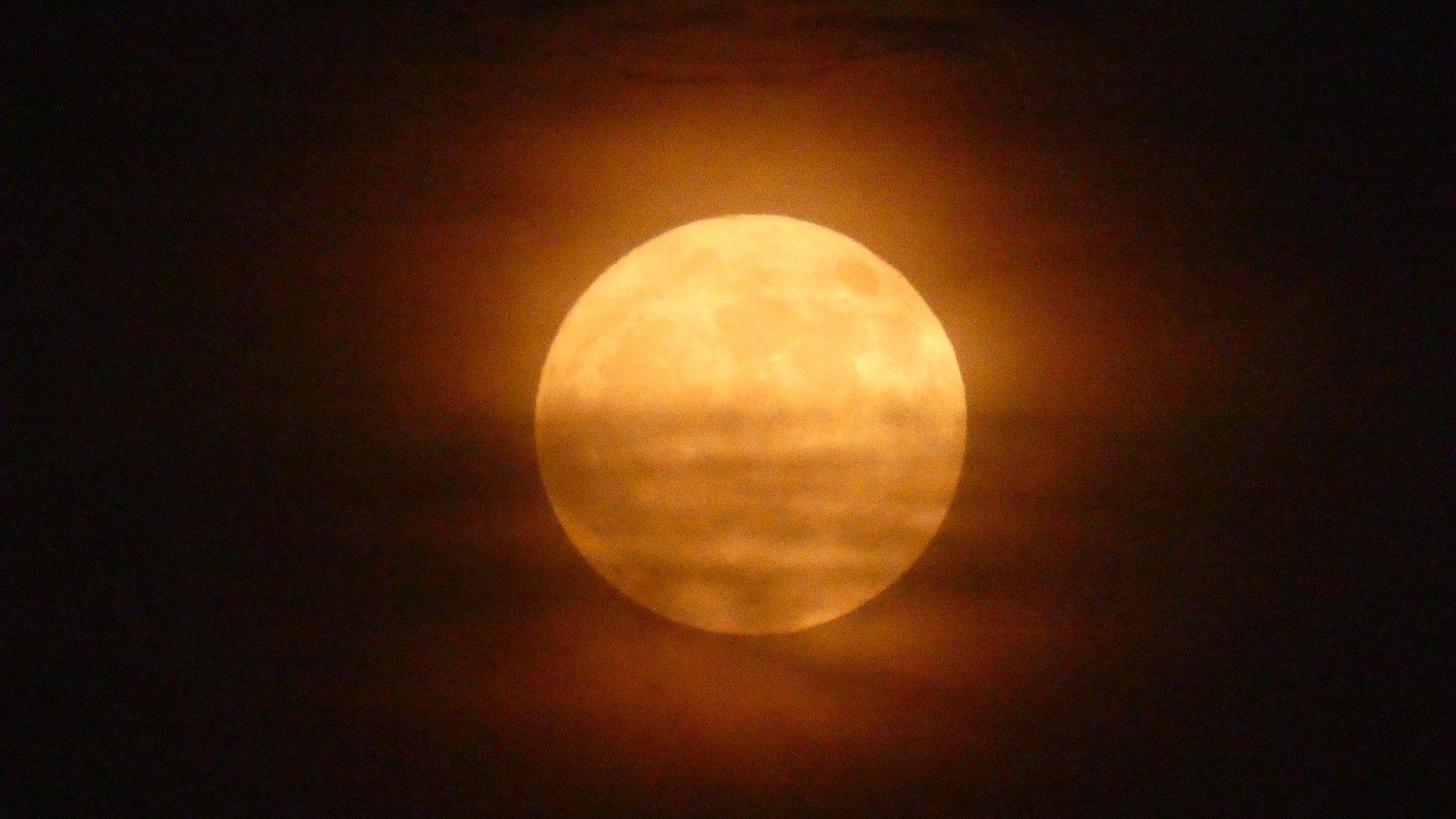
This full Moon is known as a ‘micromoon’ appearing slightly smaller than usual.
If you miss the opportunity to spot the Flower Moon, there will be a rare second full Moon opportunity at the tail end of the month, known as a Blue Moon.
 BBCWeatherWatchers/macandcheese
What is a micromoon?
The Moon’s monthly orbit around Earth is slightly elliptical rather than circular, which means its distance from us varies and so not all full Moons are the same.
When this year’s Flower Moon becomes full it will be close to its maximum distance from Earth – a point known as apogee.
That means this year’s Flower Moon will appear slightly smaller than usual because it is at the farthest point from Earth in its orbit – roughly 406,000km (252,000 miles) away.
The difference between apogee and perigee is approximately 43,000km (26,000 miles) – sounds huge, but to the naked eye the change is barely noticeable except in photographs.
The overall effect is that a micromoon appears slightly smaller in the sky and may be a touch less bright than average.
-
Why do full Moons have names?
-
13 March 2025
-
Will the weather spoil our view?
 BBC Weather
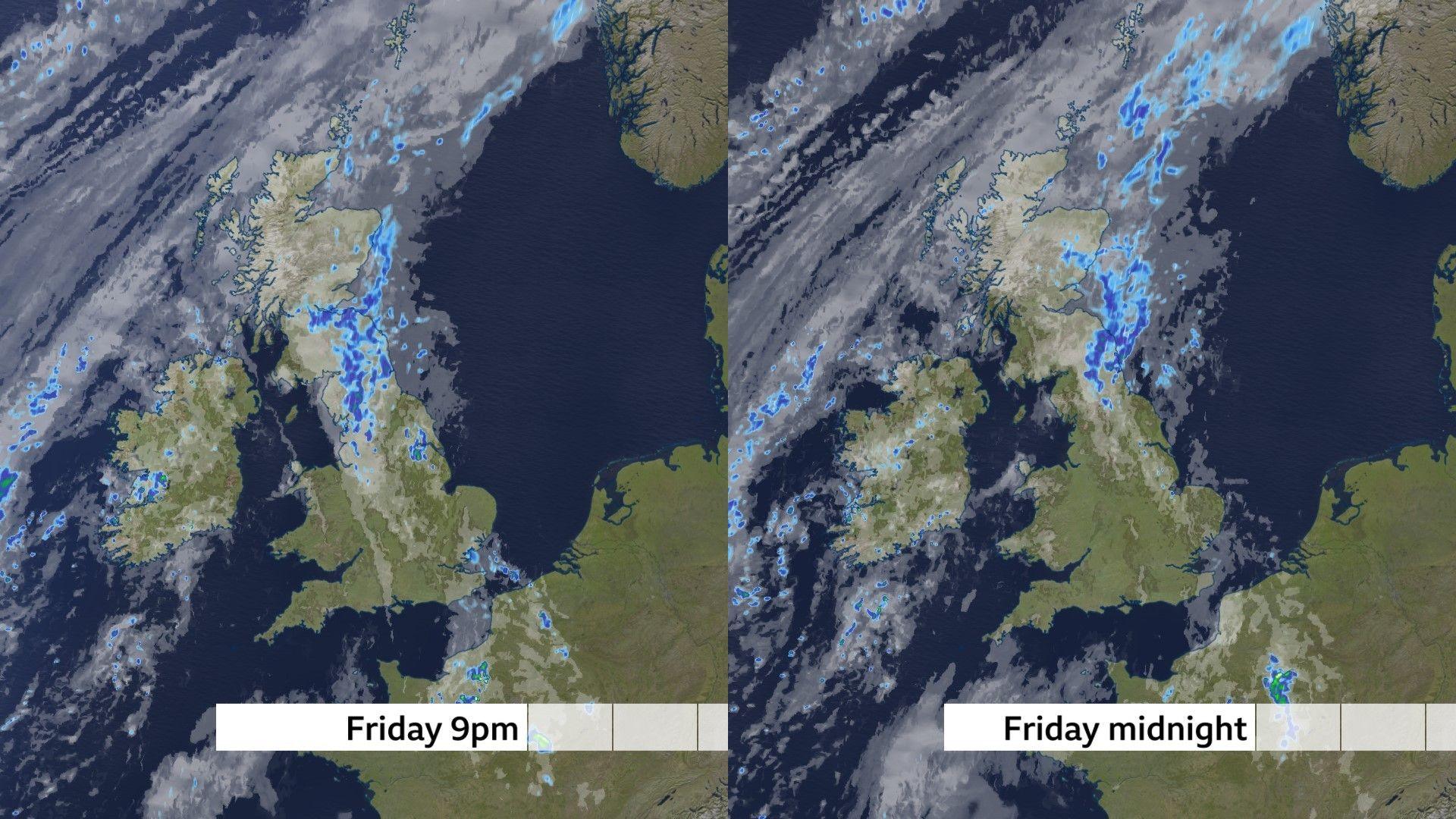
The Flower Moon is occurring just as our weather is about to change.
An area of high pressure that has brought sunny days and clear nights is slipping away into the near continent.
Falling pressure means more cloud is heading our way from the west bringing the chance of showers.
On Friday night, clearer skies could return to Wales, the Midlands and southern England but even a peep of the Flower Moon through the clouds will still be dramatic.
You can find your latest forecast on the BBC Weather website and app.
And remember to share your stunning pictures of the Flower Moon where you are via BBC Weather Watchers.
When is the Blue Moon?
If you miss the opportunity to spot the Flower Moon, there will be a rare second full Moon in the month of May.
Because there is only about 29.5 days between each full Moon, it means that every two to three years we see 13 full Moons in a year.
That’s the case in 2026 when the extra Moon – known as a Blue Moon – falls on 31 May.
As it only comes along once in a while, it is where we get the phrase “once in a Blue Moon” from.
Disclaimer : This story is auto aggregated by a computer programme and has not been created or edited by DOWNTHENEWS. Publisher: BBC



