

The Australian Design Centre (ADC) is to close its doors just 12 weeks shy of its 62nd birthday after last-ditch protests to government went unheeded, marking the demise of the state’s only dedicated craft and design hub.
At the end of March ADC’s Darlinghurst shopfront closed, its exhibition programming having wound up in February. In a grim hand-me-down economy, exhibition furniture and professional tools are being donated to other struggling arts organisations.
The last weeks of the Australian Design Centre represents one of the biggest disruptions to the inner city’s cultural shopfront landscape since the closure of the Australian Centre for Photography’s Paddington gallery a decade ago.
“I’m surprised that something with such obviously unique value to the community could not be saved,” television producer Andrew Denton, a Surry Hills resident, told this masthead. “It seems both mean and short-sighted; an unnecessary impoverishment of this city’s cultural life.”
Denton was among those who protested the cutbacks after the board announced in October it had insufficient funds to cover its overheads beyond mid-year. In a world of fast design and fashion, it was a “gutting thing to do for the state’s design community” and a “shitty thing” for this city, Denton wrote in an email to NSW Arts Minister John Graham, which went viral when it was posted publicly on social media.
ADC was established as the Australia’s first Crafts Association on July 10, 1964 with leading architect Neville Gruzman as its chair. The current funding crisis was tripped when last year $200,000 in annual federal funding, and four-year state operational funding of $300,000 a year was stripped from the centre.
NSW arts agency Create NSW subsequently awarded ADC $150,000 for each of the next two years, but despite a crowdfunding campaign the organisation was unable to operate with the shortfall.
Chief executive Lisa Cahill is now meeting with other organisations to take on the centre’s remaining touring exhibitions and representatives of the Art Gallery of NSW to house the organisation’s archives. She has just announced the University of NSW’s school of arts and design will present the 10th edition of Sydney Craft Week Festival, the event ADC pioneered in 2017.
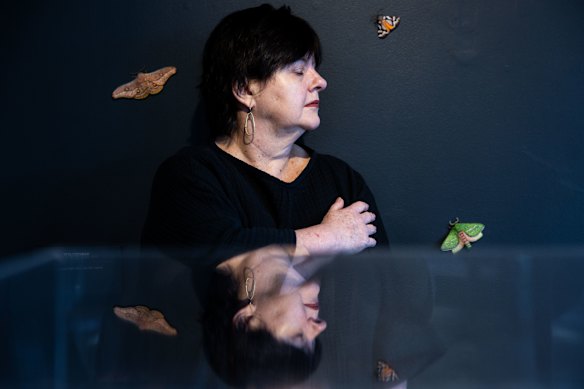
“There is no rule book for closing down a decades old arts institution,” said Cahill, whose own position and that of one full-time and two part-time staff members ceases on June 30.
“This last year has been a mixture of hope and despair; hope we might convince government to change course, rather than to pull the rug from under us, and despair that there was no one listening to reverse the decision … to see all that we have built with government investment so wilfully destroyed and a part of Australia’s culture die. It’s wasteful.”
ADC’s board has not given up hope on finding a white knight, but Graham offered no further lifeline.
“We are in the midst of one of the toughest operating environments for the arts as audience and customers deal with the ongoing cost of living squeeze, made worse by an oil shock,” he said. “The ADC has played a long-term role in showcasing our designers which was recognised by NSW Government funding for 2026 and 2027. The funding program is always heavily oversubscribed by the sector and allocations were based on the expert advice we received from industry peers on the Artform Boards.”
The ADC appears to be a casualty of budget constraints – with delivery of the Parramatta Powerhouse Museum weighing heavily on the NSW budget – and a structural shift in cultural priorities.
Under the federal Revive policy, funding has pivoted toward First Nations initiatives, art making, and uniquely Australian stories.
While these reforms are widely supported, the ADC has found itself misaligned despite its diverse work. The centre ran over 200 events annually and a citywide festival but, without makers’ studios, doesn’t entirely fit with the visible, tangible infrastructure favoured by current state-funding priorities of “activation” and the 24-hour economy.
The encroachment of museums and galleries on their design curation, exhibition making, touring, and retail pathways seems to have sealed its fate.
Long-time donor Steve Pozel believes the centre is a “policy paradox”: supporting 1000 artists annually, more than the Museum of Contemporary Art, its 10-day festival reached 81,000 people across 200 events in 37 suburbs, and generated $540,000 every year in self-sustaining income for practitioners.
“If such program excellence and fiscal responsibility doesn’t guarantee support after 60 plus years, what does?” Pozel asks. “If proven performance, community impact, and fiscal responsibility aren’t enough to maintain multi-year support, what is the government’s actual cultural policy?”
UTS Professor of Architecture and former ADC chair Anthony Burke said the loss of Australian Design Centre was catastrophic for the innovation economy.
“I think it’s a tragedy we are not funding the grassroots stuff that keeps design innovation moving forward,” he said.
Start the day with a summary of the day’s most important and interesting stories, analysis and insights. Sign up for our Morning Edition newsletter.
From our partners
Disclaimer : This story is auto aggregated by a computer programme and has not been created or edited by DOWNTHENEWS. Publisher: www.smh.com.au




