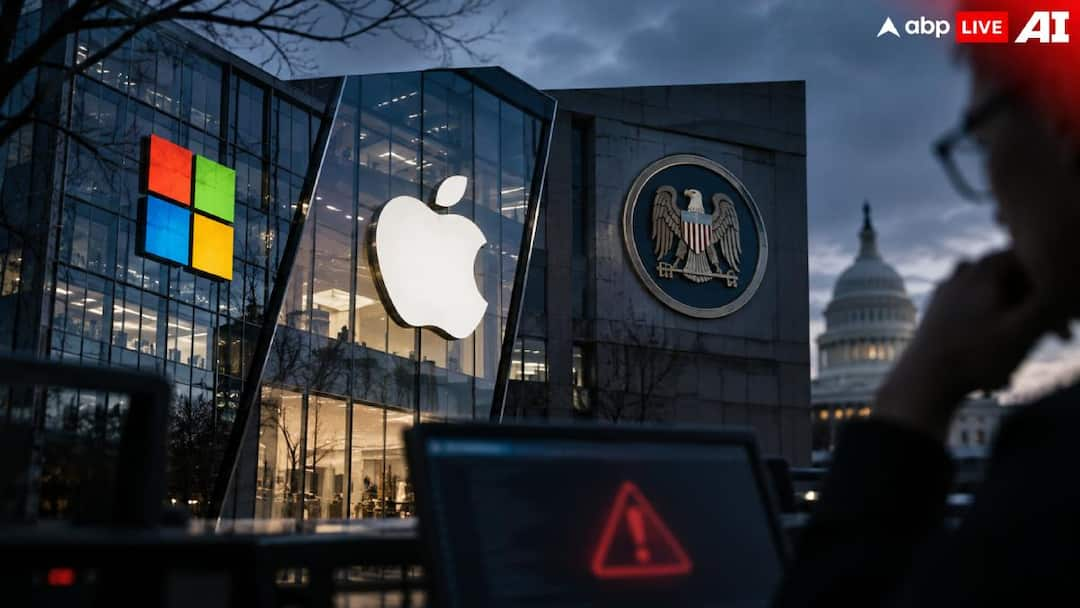
A global Microsoft 365 disruption, an internal systems failure at Apple and an outage affecting the NSA’s classified communications network have intensified scrutiny of the infrastructure underpinning the digital economy. US intelligence officials have ruled out a coordinated cyberattack, but the incidents raise questions about software reliability, ageing systems, operational safeguards and the risks of increasing dependence on interconnected technology platforms.
The systems that underpin much of the world’s digital economy have had an unusually difficult week. Microsoft spent almost 24 hours restoring access to its email and cloud services after a software defect triggered a cascading infrastructure failure. Apple subsequently experienced disruptions across consumer-facing services and internal employee systems following an update. Separately, the US National Security Agency acknowledged a temporary degradation of its classified internal network during scheduled maintenance.
The incidents have attracted attention not only because of the organisations involved, but also because they have occurred against a broader backdrop of technology failures affecting aviation, banking and other critical services in the United States.
The sequence has inevitably raised questions about whether the disruptions are connected, whether the country’s digital infrastructure is facing a wider security threat and how much operational risk is concentrated within a relatively small number of technology providers.
US intelligence officials have sought to dismiss the possibility of a coordinated cyberattack. Director of National Intelligence Jay Clayton said there was no evidence of a hostile state actor behind the incidents, while Secretary of State Marco Rubio described the failures as unrelated.
The available technical evidence broadly supports that assessment. Microsoft has published a preliminary explanation identifying a combination of software defects, traffic redistribution and reduced server capacity. Apple has attributed its disruption to an internal update, while the NSA has described its incident as a maintenance-related problem.
However, the explanations also reveal a more consequential issue. The reliability of modern digital infrastructure increasingly depends on complex interactions between software, networking equipment, cloud platforms and authentication systems. Failures in individual components can propagate across services, sometimes overwhelming the very mechanisms designed to contain them.
ALSO READ: Microsoft Reveals What Triggered 20-Hour Outlook, Teams, Microsoft 365 Outage
Microsoft Outage: How A Software Defect Triggered A Global Microsoft 365 Failure
Microsoft’s November 12-13 outage offers the clearest technical account of how a relatively contained software problem can develop into a widespread infrastructure failure.
The disruption affected Exchange Online, leaving many users unable to access their mailboxes through Outlook and other email clients. Email delivery was delayed, while connected services including Teams, Copilot, SharePoint, OneDrive, Defender and Purview experienced varying degrees of disruption.
Microsoft’s preliminary post-incident report, published on November 15, identified three contributing factors: a latent software defect, a change in network traffic distribution and a temporary reduction in available server capacity.
The underlying defect had been introduced through a change deployed in July. According to Microsoft, the software affected an internal process on networking gateway servers, where competing operations could exhaust CPU and memory resources under particular load conditions.
The problem remained undetected for more than three months. Microsoft’s normal load-testing procedures did not reproduce the conditions required to expose it. The company said the issue was more pronounced on newer hardware with a greater number of processor cores, whereas its testing environment tended to use less powerful machines.
The defect became critical after a routine failover approximately 15 hours before the outage. Teams traffic was moved from an alternative gateway to the primary gateway, which also handled Exchange Online. This increased the load on the infrastructure and altered its traffic patterns.
At the same time, nearly 14% of the gateway’s server capacity was unavailable because of an unrelated issue from the previous day.
Neither development would necessarily have caused an outage independently. Together, however, they created the conditions under which the dormant software defect became active.
As requests accumulated, servers began becoming unresponsive. Microsoft’s traffic-management systems attempted to redirect users to functioning endpoints, but the additional traffic increased pressure on the remaining servers. The problem spread through the infrastructure.
Microsoft said that, at the lowest point, more than 80% of servers in the affected gateway fleet were unresponsive. The failure also spread across regional infrastructure because normal isolation mechanisms, designed to prevent problems in one partition from affecting another, did not contain the cascading failure.
The distinction is important: this was not a failure of every Microsoft server or every Windows installation. The disruption centred on the networking gateway infrastructure supporting Microsoft 365.
Recovery proved difficult for similar reasons. Servers brought back online were immediately overwhelmed by accumulated traffic and became unresponsive again. Microsoft’s automated recovery mechanisms were not designed to handle a failure of this breadth, while conventional rollback and feature-flag procedures could not quickly reverse a change that had been deployed months earlier.
Engineers eventually restored a previously stable code path, restarted infrastructure in controlled groups, increased capacity and adjusted traffic management.
Microsoft confirmed that the incident had ended on November 13 at 16:10 UTC, with extended monitoring continuing afterwards. The company said its final post-incident review would include further details and longer-term corrective measures.
The episode exposes weaknesses in three areas of cloud operations: testing against realistic production conditions, ensuring sufficient spare capacity and maintaining effective isolation between infrastructure components.
It also raises questions about the limits of automated recovery. Systems designed to resolve isolated failures can become part of the problem when a common defect affects multiple components simultaneously.
Apple Outage: Internal Update Disrupts Consumer Services And Employee Systems
Apple’s November 17 disruption was shorter, but its reported scope drew attention to the company’s dependence on shared internal systems.
Customers reported problems accessing iCloud, Apple Pay, Apple Music, the App Store and Apple Support. Apple’s system status page also recorded disruptions affecting services used by businesses and educational institutions.
The company attributed the incident to an internal update.
“Many of our systems are back up and running after an internal update caused some outages this morning,” an Apple spokesperson said. “We’re working to get the remaining systems online as soon as possible.”
Apple also said the incident was not caused by a cyberattack.
Reporting by Bloomberg indicated that the disruption extended beyond services used by customers. Apple’s internal employee portal, AppleWeb, its authentication system, AppleConnect, and VPN access for remote workers were reportedly affected. Employees encountered difficulties accessing internal tools, calendars and software builds, while some retail operations also experienced problems.
Apple subsequently reported that its services had been restored. By approximately 5:46 p.m. Eastern Time on November 17, the company’s system status page showed services operating normally, according to CBS News.
What remains unclear is the precise technical cause.
Apple has not publicly identified the update involved, the infrastructure component affected or the sequence through which the problem spread across its services. The company’s statement establishes that an internal update triggered the disruption, but it does not provide a detailed technical postmortem.
That distinction matters because Apple’s ecosystem relies on common identity, authentication and infrastructure services to connect products and applications. A failure in a shared component can affect several services that appear independent to customers.
The incident also demonstrates that the operational consequences of an outage are not limited to consumer access. If employees cannot authenticate, access internal tools or connect remotely, the company’s ability to develop software, support customers and operate retail services can also be affected.
Without a fuller explanation from Apple, it is not possible to determine whether the failure originated in authentication, configuration management, networking or another shared system.
NSA Network Outage: What Happened To NSANet?
The disruption involving the National Security Agency carries a different significance because of the nature of the network involved.
According to CNN, citing six people familiar with the matter, the outage affected NSANet, a classified internal communications network used by NSA employees to exchange sensitive information.
The reports prompted questions about whether the disruption had affected the agency’s intelligence operations or its ability to perform national security functions.
The NSA subsequently acknowledged a problem but described it as a temporary degradation during scheduled maintenance.
“The National Security Agency experienced temporary degradation during scheduled routine maintenance,” the agency said.
It added that “while some internal systems were affected, mission-critical capabilities remain fully operational and our ability to defend national security continues.”
The agency did not publicly identify the precise technical failure, establish the full duration of the disruption or provide a detailed account of the systems affected.
Associated Press reporting, citing officials familiar with the incident, said the problem occurred during routine patching. CNN reported that the agency had introduced staggered arrival arrangements for personnel while it assessed the situation. The Guardian also reported that a Code Yellow had been issued.
Reuters said it could not independently establish the outage’s duration or scope.
It is important to distinguish an outage affecting an internal classified communications network from a shutdown of the NSA’s entire intelligence infrastructure. The agency has maintained that mission-critical capabilities remained operational. There is no verified evidence that intelligence collection was halted or that classified information was compromised.
Nevertheless, the incident raises questions about maintenance procedures and operational continuity within systems designed to support sensitive national security functions.
Classified networks operate under different security and access requirements from commercial cloud platforms. They are often compartmentalised and subject to strict controls. Those measures reduce certain risks but do not eliminate the possibility of software, hardware or configuration failures.
The NSA has not provided enough technical detail to establish what went wrong.
Are The Outages Connected? US Intelligence Officials Rule Out A Coordinated Cyberattack
The timing of the incidents has encouraged speculation about a common cause, particularly given that they involve major technology companies and a US intelligence agency.
The US government, however, has explicitly rejected the suggestion that the disruptions represent a coordinated cyber operation.
Director of National Intelligence Jay Clayton addressed the issue on November 17, saying:
“This is not a cyberattack, and this is not a coordinated effort by a nation-state,”
He added:
“We’ve looked very closely. Anytime we see something like this, those are the first questions that we ask on behalf of the American people. And we go across and we say, ‘Is that what’s going on here?’ That is not what’s going on here,”
Clayton said officials had examined the possibility of hostile activity and found no evidence supporting it.
Secretary of State Marco Rubio also sought to address concerns about the sequence of disruptions.
“We are not under systemic attack,” Rubio said.
He added that the incidents were unrelated and had different causes.
The statements are significant, but they need to be interpreted carefully. The absence of evidence of a coordinated attack does not establish that every system involved is free from security vulnerabilities. It means that investigators have not identified evidence linking the incidents to a common hostile actor.
The technical explanations released so far also point towards different failure mechanisms.
Microsoft’s outage involved a software defect and cascading infrastructure failure. Apple’s disruption followed an internal update. The NSA attributed its network degradation to scheduled maintenance.
There is no publicly established technical connection between these events.
The distinction is important because coinciding outages do not necessarily indicate a common cause. Large technology companies and government agencies routinely conduct software upgrades, security patches and infrastructure maintenance. Given the scale of their operations, independent failures can occur within the same period.
FAA, United Airlines And JPMorgan: A Wider Pattern Of Technology Disruptions
The concerns surrounding Microsoft, Apple and the NSA have been amplified by other disruptions affecting US infrastructure over the same period.
On November 13, the Federal Aviation Administration experienced a technical failure that prompted a nationwide ground stop. The agency subsequently disclosed that legacy equipment became unstable after data flooded its telecommunications network at a rate of approximately 1,000 connection attempts every four to five seconds.
The FAA’s preliminary investigation identified two potential locations associated with the excessive data flow: a radar site in Amarillo, Texas, and a radio communications site in El Dorado, Arkansas. The agency said its network service provider, L3Harris, had been carrying out work at the El Dorado site, including the deployment of a new router.
The FAA said the instability affected 17 of its 22 Air Route Traffic Control Centres and spread to several terminal radar facilities. It implemented a nationwide ground stop as a precaution.
The agency said it had no indication that the incident was caused by a cyberattack or an external malicious actor. It also said the system had stabilised and that all aircraft landed safely.
On November 16, United Airlines experienced a separate technology outage affecting departing flights. The airline said airborne flights and United Express operations were unaffected. A pilots’ union memo reported that the disruption affected several applications, including crew communications and systems used to calculate final aircraft weights.
United subsequently confirmed that the problem had been resolved and said there was no indication that it was related to cybersecurity or the FAA incident.
JPMorgan Chase also reported a software problem on November 16 that slowed transaction processing. The bank said the issue involved a software bug in on-premises hardware systems and was not cyber-related. It added that other banks could experience delays when processing transactions involving JPMorgan.
These incidents should not be treated as a single outage. Their immediate causes, affected systems and operational consequences differ.
The FAA’s account, in particular, points to the difficulties of maintaining legacy telecommunications infrastructure while replacing or upgrading components. JPMorgan’s explanation identifies a software issue in its own hardware environment, while United reported a disruption to its internal applications.
Taken together, however, they illustrate the breadth of infrastructure dependencies across sectors that are often considered separate.
A problem in aviation telecommunications can affect flight operations. A software defect in a bank’s transaction-processing environment can create delays for other financial institutions. An airline’s internal systems can prevent departing aircraft from receiving the information required for routine operations.
The economic consequences of technology failures increasingly extend beyond the organisations that own the affected systems.
The Underlying Risk: Complex Infrastructure And Concentrated Technology Dependencies
The common theme across these incidents is not necessarily cybersecurity. It is operational resilience.
Modern businesses rely on interconnected systems for identity management, cloud computing, communications, payments, data storage and network access. These systems have become more efficient and scalable, but their complexity also makes failures harder to isolate.
Microsoft’s incident provides a particularly clear example. A defect in a networking gateway became critical only after traffic was redistributed and available capacity was reduced. Automated systems then redirected traffic in a way that accelerated the spread of the failure.
The problem was not simply that one component stopped working. It was that the interaction between several components produced an outcome that the company’s normal recovery procedures were not designed to handle.
Apple’s incident raises a related question about shared internal infrastructure. The reported impact across employee authentication, remote access and consumer services suggests that common dependencies can affect multiple operational areas. The precise technical relationship remains undisclosed.
The NSA incident highlights a different dimension: even highly secured networks remain dependent on software maintenance, hardware reliability and carefully managed configuration changes.
This is particularly relevant as organisations modernise older infrastructure and introduce new systems. Upgrades are necessary, but they can expose compatibility problems, latent defects and weaknesses in testing procedures.
The challenge is to ensure that a system can absorb an individual failure without allowing it to spread.
For cloud providers, this requires genuinely independent backup infrastructure, realistic load testing, effective regional isolation and recovery mechanisms capable of dealing with failures that affect multiple components.
For businesses and government agencies, it also means assessing their dependence on external technology providers and maintaining alternative arrangements for critical operations.
The concentration of services among a limited number of cloud and software providers has created efficiencies, but it also means that an incident at one provider can affect a large number of customers simultaneously.
Diversification is not a simple solution. Operating multiple platforms can introduce additional complexity and costs. But organisations need to understand which services are critical, where their dependencies lie and how they will function if a provider becomes unavailable.
What The Companies Still Need To Explain
The public statements issued by Microsoft, Apple and the NSA provide different levels of technical detail.
Microsoft has published a preliminary post-incident report that identifies the software defect, capacity constraints, traffic redistribution and failures in infrastructure isolation. The company has also listed corrective measures, including additional capacity, monitoring improvements and safeguards around traffic distribution. Its final review is expected to provide further detail.
Apple has acknowledged that an internal update caused the outage, but has not published a comparable technical explanation identifying the affected component or the precise sequence of events.
The NSA has provided even less information, citing the classified nature of its systems and maintaining that mission-critical capabilities remained operational.
These differences do not necessarily indicate that one organisation is more transparent than another. The operational and security requirements of a commercial cloud platform, a consumer technology company and an intelligence agency are not comparable.
However, the incidents raise several questions that deserve answers.
For Microsoft, the central issue is why testing failed to identify a defect that had been deployed globally for months, and why the infrastructure’s isolation mechanisms did not prevent a cascading failure.
For Apple, the question is which internal update caused the disruption and how a single change affected such a broad range of systems.
For the NSA, the public record does not establish the precise technical cause, the duration of the outage or the full extent of the systems affected.
These are not necessarily signs of concealed malicious activity. They are legitimate questions about reliability, accountability and the management of critical infrastructure.
The Bigger Lesson For The Digital Economy
The recent disruptions do not establish that America’s digital infrastructure is under coordinated attack. The available evidence points instead to a series of distinct technical failures, several of which occurred during software upgrades, maintenance or routine infrastructure operations.
That distinction should not obscure their significance.
The digital economy has become increasingly dependent on a relatively small number of technology platforms and infrastructure providers. Cloud services, identity systems, communications networks and transaction-processing platforms now support activities that extend well beyond the technology sector.
The expectation is that these systems will remain available continuously. Yet the incidents of the past week demonstrate that even sophisticated organisations can struggle to contain failures when software, hardware, traffic and operational dependencies interact in unexpected ways.
The next phase of the investigation should focus less on the coincidence of the outages and more on what their technical explanations reveal.
Microsoft needs to demonstrate that its revised testing and recovery procedures can prevent a similar cascading failure. Apple needs to explain how its internal update affected multiple services. The NSA’s assurance that mission-critical operations remained functional does not remove the need for a clearer account of its maintenance-related disruption, within the limits of what can be disclosed.
For businesses, governments and consumers, the implications are more immediate. Digital resilience cannot be measured solely by how quickly a company restores service. It must also be measured by whether the failure could have been contained in the first place, whether essential operations continued and whether customers can understand what happened.
The outages may be unrelated. The vulnerability they expose is not.
The central question for the technology industry is no longer simply how to build systems that can scale to billions of users. It is how to ensure that when one part of those systems fails, the rest can keep working.
Disclaimer : This story is auto aggregated by a computer programme and has not been created or edited by DOWNTHENEWS. Publisher: abplive.com