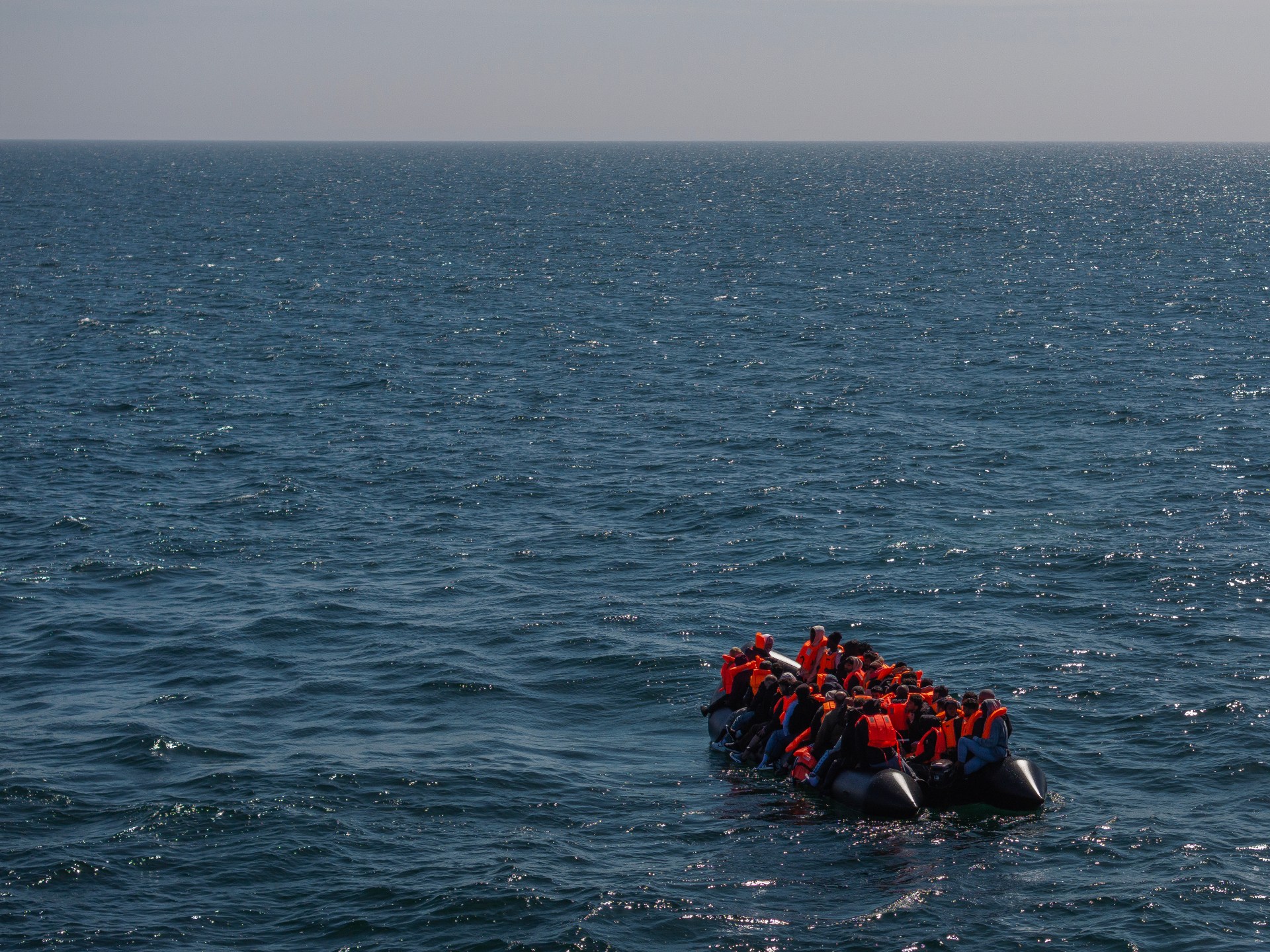
As governments gather in New York for the second International Migration Review Forum (IMRF) to assess progress on global migration commitments, a central question looms: is the Global Compact for Migration improving conditions for people on the move?
The answer is yes.
Adopted in 2018, the Global Compact for Safe, Orderly and Regular Migration is the first international agreement aimed at making migration safer and more humane through cooperation. For the Middle East and North Africa, the International Organization for Migration’s Global Overview of Migration Routes (2025), which tracks migration patterns, risks and deaths along major routes worldwide, offers a mixed picture. Some routes are shifting, but the risks people face remain severe, and in some cases are worsening.
Across the Mediterranean, arrival numbers alone can be misleading. In 2025, just more than 66,500 people reached Italy and Malta via the Central Mediterranean Route, almost identical to the year before. Arrivals to Greece, Cyprus and Bulgaria along the Eastern Mediterranean Route fell by about 30 percent, while the Western Mediterranean Route saw a modest rise. The Western African Atlantic Route to the Canary Islands recorded a dramatic 62 percent drop.
Taken in isolation, these figures might suggest reduced pressure on Europe’s borders. But lower arrivals do not automatically mean safer journeys. On the Eastern Mediterranean Route, deaths and disappearances nearly doubled in a single year. On the Western African Atlantic Route, deaths barely declined despite the steep drop in arrivals – meaning the probability of dying at sea increased. And on the Central Mediterranean Route, more than 1,300 people are known to have died in 2025, keeping it among the world’s deadliest migration corridors.
Advertisement
These trends reflect a broader reality: When border controls tighten or routes shift, journeys often become longer, more fragmented and more dangerous. People continue to move, but with fewer options, many are pushed towards irregular and high‑risk pathways.
Sudan illustrates how crises can reshape mobility across an entire region. Three years after the conflict erupted in April 2023, Sudan has become the world’s largest displacement crisis. At the peak, the number of internally displaced people more than tripled, reaching more than 11.5 million. Nearly 4 million people have returned home – often to damaged or partially destroyed housing – but almost 9 million remain displaced. Against this backdrop, it is not surprising that more Sudanese nationals are appearing along both Eastern and Central Mediterranean routes. For many, these journeys are not a first choice but a last resort, when options in Sudan and neighbouring countries are constrained.
The MENA region is also deeply connected to global mobility patterns. Movements from Asia and the Pacific to Europe increased significantly in 2025, with nearly one in three irregular arrivals originating from that region. Many of these journeys intersect with North Africa and the Eastern Mediterranean. A visa policy change in one country, a conflict flare‑up in another, or a new enforcement measure along a corridor can reshape risks across thousands of kilometres.
Meanwhile, the underlying pressures driving mobility in and around MENA are not easing. The region has one of the world’s youngest populations, with youth unemployment often exceeding 20 percent. Climate‑related shocks – droughts, floods, heatwaves – are increasingly interacting with conflict and economic stress. These factors rarely operate in isolation; they compound one another, shaping both internal displacement and cross‑border movement.
What does this mean for policy? Several priorities stand out.
First, search and rescue capacities must adapt to evolving realities. Stabilising or declining arrival numbers should never be mistaken for reduced risk. The sharp rise in deaths on some routes underscores the need for stronger cooperation on distress response, better data on deaths and disappearances, and sustained support for front-line communities. Saving lives at sea and on land is a humanitarian, legal and moral imperative.
Second, safe and regular pathways must be expanded. When regular options are limited, people facing violence, economic hardship or family separation are more likely to turn to irregular routes. Well‑designed labour mobility schemes, family reunification channels and humanitarian pathways can reduce reliance on dangerous journeys while supporting development in both origin and destination countries.
Advertisement
Third, better and shared data are essential. The Global Overview and Sudan displacement figures show the value of combining arrival statistics, intention surveys and information on deaths and missing people. Continued investment in national data systems can help governments anticipate pressures and design more effective policies.
Finally, intensified cooperation is required. In New York this week 130 states from all over the world are engaging in driving forward implementation of the Global Compact, recognising that migration is a phenomenon best governed through principled and constructive partnership.
This IMRF is about collaboration, and clarity about what we will do next. Expand safe and regular pathways. Strengthen fair recruitment and worker protection. Invest in data and protection systems that save lives. And cooperate across borders to take down criminal networks. If we get this right, fewer people will suffer, fewer lives will be lost – and more people, and societies, will thrive. That is the opportunity before us – here, and now. Let us seize it – together.
The views expressed in this article are the author’s own and do not necessarily reflect Al Jazeera’s editorial stance.
Disclaimer : This story is auto aggregated by a computer programme and has not been created or edited by DOWNTHENEWS. Publisher: aljazeera.com