
Companies betting against entry-level Gen Z talent by automating their roles may be making a costly long-term mistake.
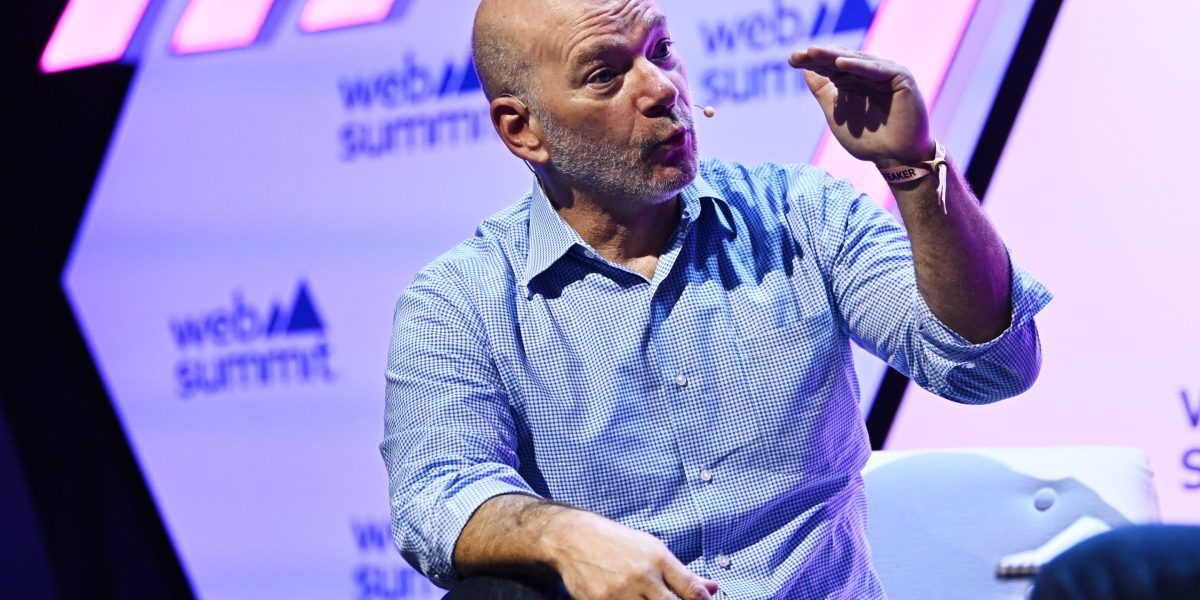
That’s the warning from MIT research scientist Andrew McAfee, who co-leads the school’s Initiative on the Digital Economy. Cutting off talent at its source, he argued, doesn’t just shrink today’s workforce—it disrupts the pipeline that produces tomorrow’s leaders.
“How else are people going to learn to do the job except via on-the-job learning and training apprenticeship?” McAfee told Harvard Business Review last month. “That’s how you learn to do difficult knowledge work is by helping somebody who’s good at that with the routine stuff. And when we put too much automation in that too quickly, we lose that apprenticeship ladder.”
The consequences extend beyond training gaps. By sidelining entry-level hiring, companies also risk losing a key competitive advantage: Gen Z’s fluency with AI.
Roughly 76% of Gen Z reported using a standalone AI tool—the highest of any generation, according to a Deloitte study. That familiarity, McAfee said, makes them uniquely valuable as companies race to integrate AI into their operations.
“There is a big demographic falloff. As people tend to get older, we tend to be more set in our ways and less willing to try crazy new things like AI,” McAfee, who is also the cofounder of Workhelix, a startup working to help companies understand their AI return-on-investment, added.
“So if you’re pulling back on your entry-level hiring, you are probably sacrificing future opportunities to learn and the skilled people of the future. You’re also turning off the spigot of the most enthusiastic power users of AI in your organization.”
Fortune reached out to McAfee for further comment.
Gen Z, already facing an uphill job market battle, is more pessimistic than ever
For many young people, McAfee’s warning may already be playing out as the job market has tightened.
Postings on Handshake, a platform focused on entry-level roles, are down 2% year-over-year and 12% below pre-pandemic levels, according to its Class of 2026 Network Trends report. Meanwhile, the unemployment rate for college graduates aged 22 to 27 stands at 5.6%, per the New York Fed.
As commencement season ramps up, anxiety is climbing. Nearly nine in 10 graduates in the class of 2026 are concerned that AI or automation could replace entry-level roles, up sharply from 64% in 2025, according to Monster.
Some business leaders have amplified those fears. Anthropic CEO Dario Amodei, for example, has long repeated that AI could eliminate up to half of all entry-level white-collar jobs.
The dynamic is especially striking given that entry-level roles are often the least expensive talent companies can hire—yet as McAfee argued, cutting them risks undermining both cost efficiency and long-term workforce development.
Yet historical data suggests young workers may be more resilient than they think. A recent Goldman Sachs analysis found that college-educated young workers tend to experience earnings losses roughly half as large as other displaced workers in the decade following job loss. They’re also more likely to switch occupations and move into roles that complement new technologies rather than compete with them.
“Contrary to current concerns that the costs of AI will fall especially hard on new graduates,” the report said, “younger workers have actually been able to adjust more flexibly through occupational mobility and skill upgrading in the past.”
Some tech firms are doubling down on early-career talent
Not every company is pulling back. Some major employers are leaning into entry-level hiring, betting that early-career workers will be essential to building—and scaling—AI.
IBM, for example, said it would triple its entry-level hiring in part to build more durable skills and create greater long-term value.
“People are talking about either layoffs or freezing hiring, but I actually want to say that we are the opposite,” IBM CEO Arvind Krishna said in October. “I expect we are probably going to hire more people out of college over the next 12 months than we have in the past few years, so you’re going to see that.”
Just this week, Salesforce CEO Marc Benioff announced his company is hiring 1,000 new graduates and interns to help build its AI systems.
“You are right they said AI would kill entry-level jobs,” he wrote on X. “Meanwhile these grads and interns are building it—powering Agentforce and Headless360 at Salesforce.”
And even Amazon—which has faced scrutiny for laying off thousands of workers in recent years—is maintaining its pipeline of young talent.
The tech giant plans to bring on 11,000 software engineering interns in 2026, in line with prior years, according to Business Insider.
“I can tell you we are hiring just as many software developers as we ever had inside of Amazon,” AWS CEO Matt Garman said. “And in fact, I see the demand for that really accelerating.”
Disclaimer : This story is auto aggregated by a computer programme and has not been created or edited by DOWNTHENEWS. Publisher: fortune.com



