Today, if an ordinary citizen dares to discuss serious issues like monopolies, oligarchies, or plutocracies within India’s 1.45-billion-person economy, they are almost guaranteed to be immediately shut down by online trolls.
What is monopoly? The textbook says that “monopoly is a market in which there’s only one supplier” and “three features characterise it”. First, its pristine motive is profit. Second, it stands alone and barriers prevent new entrants. Third, the actions of the monopolist itself affect the market price of their output.
Black’s Law Dictionary, too, notes that “monopoly is control or advantage obtained by one supplier or producer over a commercial market” and, in the modern sense, “monopoly exists when all or so nearly all of an article of trade/commerce is brought within the hands of one person or set of persons”.
Before Independence, the three main private monopoly players of India were Bata, Tata and Birla. Bata’s (which entered India in 1931) was virtual monopoly in branded footwear mart the price being unusually high compared to every other shoe supplier. Its Ambassador men’s formal shoe once cost Rs 999.95 in the late 1980s, although today it battles multiple branded rivals priced from Rs 1,439 to Rs 2,999.
Tata Steel (founded 1907), too, was an effective monopoly player from the early- to mid-20th century till the arrival of JSW and Jindal who set up large plants turning India from monopolies to market economics.
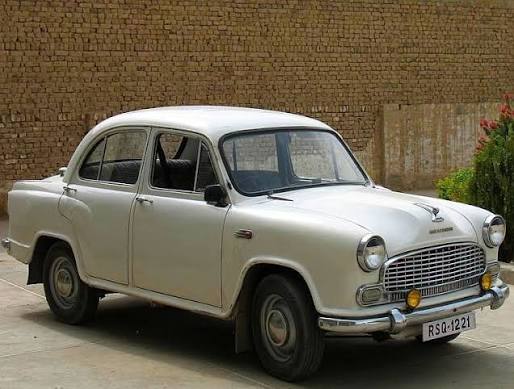
Birla’s Hindustan Motors produced the Ambassador, a car that exemplified Lenin’s early 20th-century thesis: “Imperialism, the highest stage of capitalism.” The Ambassador car was not only ubiquitous; it was the soul of State power. For decades between the 1950s and 1980s, it was the undisputed official car for India’s politicians, bureaucrats, and all Central and state government departments, civil and military alike — easily fending off competition from the Premier Padmini, originally marketed as the Fiat, and the Standard Herald (1961-1974). It’s true — this was the ruthless Ambassador monopoly at the fiery peak of its automotive imperialism.
Ultimately, the Ambassador’s market dominance collapsed under the weight of its own inefficiencies, including excessive fuel consumption, frequent mechanical failures and steep maintenance costs. Insulated by close ties to successive state administrations, the manufacturer developed an entrenched complacency, exploiting Indian consumers with a substandard product under the assumption of permanent protection. Then-PM Indira Gandhi stepped in to dismantle the monopoly of outdated, subpar cars. That decision brought in the game-changing 1983 partnership between the Indian government and Japan’s Suzuki. Maruti was born. Monopoly was gone. Indians went from “beggars can’t be choosers” to “consumer is king”.
At this juncture, let us remember that the 18th century Scottish scholar Adam Smith, referred to as the father of economics and the father of capitalism, too. In his magnum opus, The Wealth of Nations, he wrote that monopoly is the “fundamental enemy of free markets, public prosperity and efficient economic management”: “Monopoly hinders capital of the country and raises mercantile profit. But as it obstructs natural increase of capital, it tends rather to diminish than to increase the sum total of revenue which the country derives from profits.” (pp. 776-777)
Fast forward to more recent times. The 1982 Economics Nobel winner, George Stigler, provides the “foundational economic proofs to measure monopoly damages” in this regard: “Monopolists intentionally create artificial scarcity to maximise profits by charging higher-than-competitive prices, lower output meaning millions of consumers are shut out from goods they otherwise would have afforded”, thereby generating irreversible “deadweight loss”.
In his book, The Price of Inequality and People, Power and Profits, the 2001 Nobel winner Joseph Stiglitz, too, makes a devastating critique of modern monopolies and oligopolies. He writes, “Monopolists restrict output, raising consumer prices, and drive down wages.” Do Indians remember the high-priced Bata Ambassador shoes and Birla’s Ambassador cars from the yesteryears?
Stiglitz posits that “monopolies directly stifle aggregate demand, transfers wealth from ordinary workers to billionaires and corporate cash hoard, triggering persistent economic weakness”. He warns: “highly concentrated market/money power naturally transforms into unchecked political power. Oligarchs lobby to capture regulatory agencies, block anti-trust enforcement and secure rules that protect their own dominance at public’s expense.”
Paul Krugman, the 2008 Nobel Laureate, was even more pointed. He disproved the classic theory of perfect competition. “Massive corporations leverage economies of scale to lock out competitors. Once a firm achieves a certain size, it’s no longer bound by market discipline; it can manipulate market access, control supply chains, and squeeze smaller businesses,” he writes.
The 2014 Nobel awardee Jean Tirole’s ground-breaking research of/on “market power and regulation of monopolies and oligopolies” warned about “devastating effects” of poor regulation, demonstrating that “powerful oligopolists possess informational advantage over governments. They use this asymmetry to trick or bribe regulators into green-lighting anti-competitive mega-mergers”. Does this proposition echo the words of Ronald Segal’s Crisis of India wherein he says that there exists in India “a life-in-death or also a death-in-life” petrifying the condemned creatures as corruption rules supreme?
The most trenchant of all views, however, comes from David Korten, member of Club of Rome, an international think tank, whose 1995 book, When Corporations Rule the World, is a revelation preceding the departing US President Joe Biden’s farewell warning in January 2025: “Today, an oligarchy is taking shape in America of extreme wealth, power and influence that literally threatens our entire democracy, our basic rights and freedoms, and a fair shot for everyone to get ahead. We see consequences all across America.”
Thirty years before Biden’s lament, however, the scathing words of Korten appear: “The extraordinary tech breakthrough since 1995 produced billionaires who currently control them. The world is witnessing an alliance of billionaires that’s taken control of the administrative, judicial and legislative branches of the world’s most powerful government.”
“Many of us succumbed to the false promises of the neo-liberal economists of the free market.” Beginning 21st century, corporations reduced the majority of world’s people to a modern form of slavery, with billionaires serving as enthusiastic slave masters. Private bank and profit-maximising corporations are primarily institutional weapons of billionaires who use the power of their media companies to misdirect the resulting anger away from themselves to turn dispossessed against one another.
It’s time India learns from the great minds of world economics and fulfils its duty of nurturing our indigenous talent and entrepreneurs, instead of wildly imitating the model of murderous mercantilism of the United States. Indians endured the harsh reality of colonial misrule and bloodshed under London’s East India Company — the world’s first multinational corporation. We must never let that history repeat itself. India must protect its unique, self-crafted democracy and the Constitution belonging to “We, the people of India”.
Disclaimer : This story is auto aggregated by a computer programme and has not been created or edited by DOWNTHENEWS. Publisher: deccanchronicle.com