- MMU deemed Vande Mataram un-Islamic, conflicting with Tawheed principles.
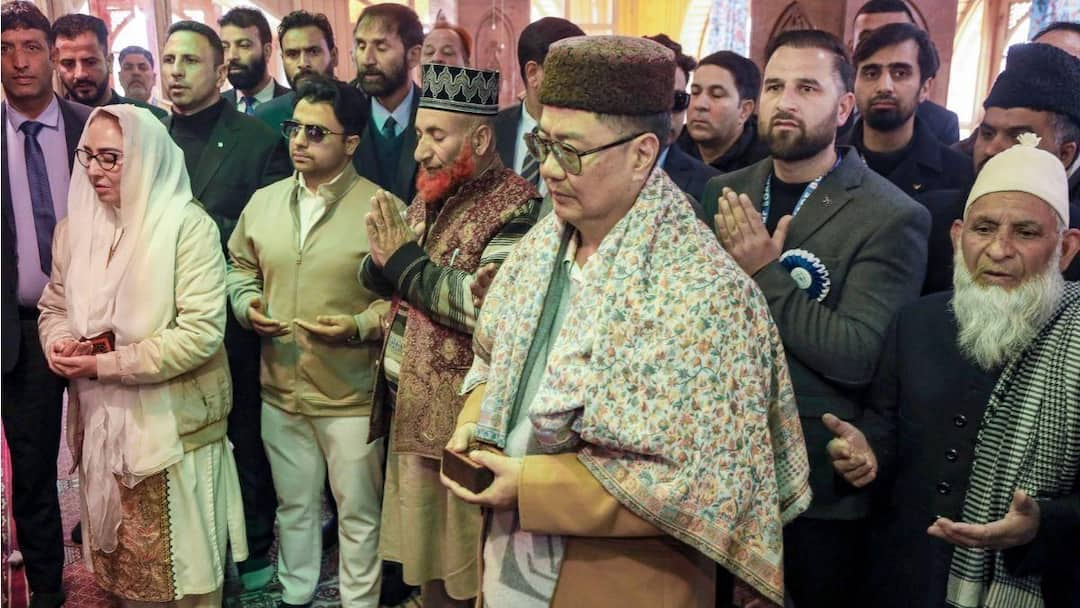
Several Muslim clerics who attended a Jammu and Kashmir Waqf Board function in Srinagar, where the full version of Vande Mataram was played, have expressed regret over their participation, saying they have sought forgiveness from Allah. The incident has triggered a religious controversy in the Valley, with clerics maintaining that they did not endorse the national song either through their words or in their hearts.
In a statement issued on Wednesday, the clerics said their presence at Monday’s Waqf Day event may have hurt religious sentiments and offered an apology for attending the gathering.
“Since we attended the gathering, if our participation has hurt anyone’s religious sentiments, we sincerely repent before Allah and pray that He accepts our repentance,” they said, reported Times of India.
The event was attended by Union Minority Affairs Minister Kiren Rijiju, Waqf Board chairperson and senior BJP leader Dr Darakhshan Andrabi, Lok Sabha MP Mian Altaf Ahmad and other dignitaries.
Why Was The Full Version Of Vande Mataram Played?
All six stanzas of Bankim Chandra Chattopadhyay’s 1875 poem Vande Mataram were played during the function in accordance with a Union Home Ministry protocol directive issued earlier this year. The directive mandated the full version of the national song at state functions, official events and legislative sessions.
The issue has also gained significance following a legislative amendment. In August, the President gave assent to the Prevention of Insults to National Honour (Amendment) Act, placing Vande Mataram on a par with the national anthem.
While the amendment did not change the song’s stanzas, it made disrespect towards or disruption of the national song punishable.
MMU Questions Waqf Board’s Decision
The controversy also drew criticism from the Mirwaiz Umar Farooq-led Mutahida Majlis-e-Ulama (MMU), an umbrella body of religious organisations and institutions in Kashmir. It argued that there was no legal obligation to play Vande Mataram at an official function and questioned the Waqf Board’s decision to include it at an event organised by an institution responsible for safeguarding Muslim religious endowments.
The MMU said playing the national song at the gathering was inconsistent with Islam’s principle of Tawheed, which emphasises the absolute oneness of Allah.
“While Islam encourages love for one’s homeland, it draws a clear distinction between love for one’s homeland and its worship. Any expression or practice that attributes divinity to the motherland is contrary to the fundamental Islamic belief of Tawheed and is, therefore, un-Islamic and impermissible for Muslims,” the organisation said.
The religious body said it was considering legal advice on the matter. It also urged Muslims holding positions of religious responsibility to remain steadfast in their beliefs without compromise.
Disclaimer : This story is auto aggregated by a computer programme and has not been created or edited by DOWNTHENEWS. Publisher: abplive.com