
Restoring German citizenship as a descendant of Nazi persecution can be a long and drawn out process. We spoke to Christian Mahne who became German after nearly two decades of trying.
When Christian Mahne finally received his German naturalisation certificate in 2025, after 18 years of trying, it felt like he’d found a missing piece of the puzzle.
“There’s always been this part of me that just felt a little bit incomplete,” the 53-year-old who lives in West Sussex, England, tells The Local. “There was just something I needed to get to the bottom of, to sort of feel complete.”
Generally it is understood that people whose direct ancestors lost their German citizenship under Nazi rule can have that citizenship restored, even generations later.
But the process for Mahne was far from straightforward. His application was rejected, delayed and repeatedly caught up in administrative setbacks.
Yet Mahne, who runs a video production business, refused to give up.
“I know what my family left behind in Germany,” he says. “To write it off like that or hide under administrative conundrums as a way of stopping it was just wrong. It was that sense of injustice that made it a fight.”
Mahne shared his experience with The Local to encourage others in a similar position not to give up when reclaiming their German identity.
“It was such a good feeling because it was so hard fought, when the breakthrough finally happened,” he says.
Why the family fled Nazi Germany
Mahne’s connection to Germany goes back generations. His grandmother’s family, the Meinhardts, were prominent industrialists.
His great-grandfather, Willi Meinhardt was one of the co-founders of Osram, the German lighting and electronics company.
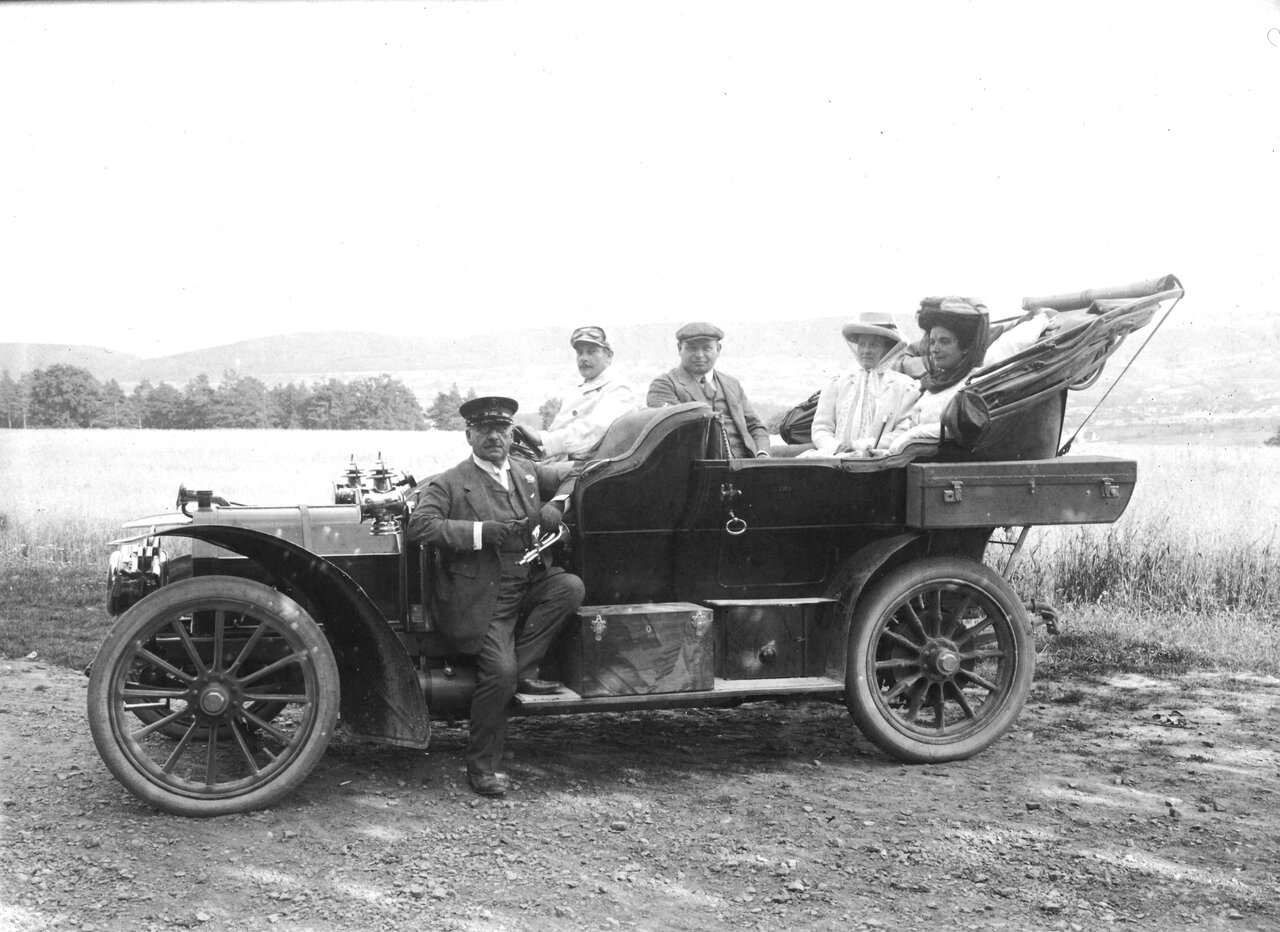
Christian Mahne’s great-grandfather Willi Meinhardt (on the left) in a car with family. Photo courtesy of Christian Mahne
Mahne says the family had a “lovely life,” in Berlin, recalling photographs of his grandmother Lotte, including one of her driving a sports car in her 20s.
The family home in central Berlin was “absolutely huge”, Mahne says, adding that it’s now the Georgian embassy.
The Meinhardts were connected to some of the leading scientific figures of the time, including Albert Einstein, who they occasionally spent holidays with.
But the family’s Jewish heritage made life dangerous as the Nazis grew in power.
“Willi Meinhardt, and the Meinhardt’s generally, were Jewish. And so the rot started to set in,” Mahne says.
In the early 1930s, his great-grandfather was forced out of his firm. “He was basically fired from Osram, he was told that he could no longer run the company,” Mahne says.
The family “did everything they could” to remain in Germany, says Mahne. His grandmother, Lotte, even tried to get baptised in an attempt to claim that she wasn’t Jewish. But it did not work. “The net started to close in,” Mahne says. “The writing was on the wall.”
By the mid 1930s, the family realised they had to leave Germany. They first went to Switzerland, where they stayed with Einstein, before making the journey to Britain.
Lotte, her husband Curt Mähne, and their two sons eventually settled in London.
Mahne’s father, who was born in 1932, was still a young child when the family left Germany. He later became known by his middle name, Peter, rather than his first name, Claus, because it was more anglicised.
“It must have been hard being a little sort of German boy, you know, in the country that people are at war with,” says Mahne.

Photo of Christian Mahne’s grandmother Lotte holding Peter soon after his birth in 1932. Photo courtesy of Christian Mahne
The move also meant a gradual loss of the German language (and the umlaut from their original name). Mahne’s grandmother had taught him German before he could speak English – but he did not hold onto it.
“As soon as I could communicate in English, I didn’t want to speak German anymore, which is something I regret to this day,” he says.
Looking back, Mahne says it is clear that his family’s Jewish heritage was the reason they left Germany.
“Basically, it all came down to the fact that my grandmother’s side of the family were Jewish,” he said. As persecution intensified, being Jewish became “the biggest problem for them at the time”.
The difficult path to reclaiming German ancestry
Mahne first tried to reclaim citizenship in 2008 via the German Embassy in London, believing his family history and evidence would make the process relatively smooth. But the application was rejected.
The decision was tied to Mahne’s father having only two Jewish grandparents, which did not meet the requirements at the time.
Authorities also considered the family to have left Germany voluntarily and subsequently chosen British citizenship, rather than having been forced out by Nazi persecution.
However, Lotte had been stripped of her German citizenship under Nazi rules, leaving her technically stateless until she acquired British citizenship.
Mahne’s father was also treated as having lost his German nationality through naturalisation rather than persecution.
In 2010, Mahne hired a lawyer, who he describes as “brilliant”, to start another application. But progress was still painfully slow. Rather than formally rejecting the application, authorities seemed to stall the paperwork.
“They just put it into endless changes of caseworker and administrative spin cycle hell, where they wouldn’t turn it down, but they wouldn’t progress,” he says.
Then the law changed. The government expanded restitution laws in 2021 to clarify the circumstances in which people who were stripped of their German citizenship by the Nazi regime, as well as their descendants, could reclaim it.
READ ALSO: More than 52,000 Nazi victims and their descendants have become German
Still, it took another push. After watching a discussion between German officials and British comedians David Baddiel and Matt Lucas about their journey to citizenship through restoration, and on how much easier the process had become, Mahne contacted the German Ambassador in London to describe his own experience.
That eventually led to his case being referred to the restitution unit in Cologne.
“That was the tail end of 2024, about November,” says Mahne. “And I turned up at the embassy in January, 2025 to get my (naturalisation) certificate. So it finally, finally came good.”
‘Important part of where I’ve come from’
Although holding a German passport means that travel is much easier – he doesn’t have to worry about EES checks or visas for longer stays – it means so much more to Mahne. It has given him a connection to history, to his roots, that had previously felt distant.
“It shows the foundation of who I think I am, in a way that wasn’t before,” he says.
“I was kind of thinking Germany is over there in the past, this is all something new. And actually, as I’ve got older, I’ve really appreciated much more who I am as a product of where I’ve come from, and this is a really important part of where I’ve come from.”

Christian Mahne collects his German citizenship certificate. Photo courtesy of Christian Mahne
A spokesperson from the the Bundesverwaltungsamt (BVA), the central federal service agency headquartered in Cologne, said it could not comment on individual cases.
When asked how long an application for German citizenship through restoration generally takes, the spokesperson could not give an estimate.
They said: “Applications for naturalisation as a form of reparation under Section 15 of the German Nationality Act (StAG) are processed in the order in which they are received.
“The duration of the procedure depends, amongst other things, on the completeness and quality of the documents submitted and the complexity of the individual case. It is therefore not possible to make a general statement regarding the duration of the procedure.”
‘Don’t take no for an answer’
For anyone in a similar position, Mahne advises not giving up when the going gets tough.
“I wanted to be able to say this can be done and that you can challenge the system,” he says. “If your case is strong, you can win. I just wasn’t going to let it beat me.”
He says that hiring a lawyer “to get your application in shape” is a good idea but that ultimately “just don’t take no for an answer”.
Mahne is now enjoying getting to know Germany as a naturalised German. Every year he takes a trip with his partner to explore parts of the country.
“It’s drawing me back to Germany and the places that were connected to my family.”
Keep an eye on thelocal.de for future stories on this topic. For more information on how to apply for citizenship via restoration, visit the government’s website.
Disclaimer : This story is auto aggregated by a computer programme and has not been created or edited by DOWNTHENEWS. Publisher: thelocal.de




