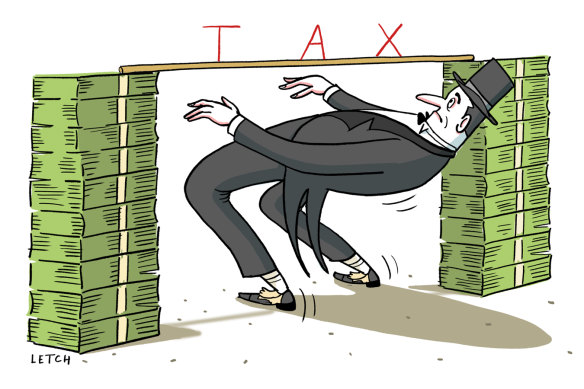
I understand the new laws that will apply an additional tax on people with superannuation balances above $3 million from the 2026/27 financial year also introduces an option for a “cost base reset” of assets. Could you explain how this works, what needs to be done and who needs to be notified?
SMSF specialist Meg Heffron points out that many self-managed super funds hold assets that have risen significantly in value over time. To ensure that this past growth is not caught by the new Division 296 tax, the legislation allows trustees to reset the cost base of all CGT assets held at June 30, 2026, to their market value at that date. This is an all-or-nothing choice, so you cannot reset some assets and ignore others.
If the trustee elects to use the reset, the fund must effectively keep two sets of records for each asset. The original cost base remains in place and is used when preparing the fund’s tax return and calculating capital gains tax in the usual way.
Alongside that, a second, adjusted cost base is created based on the market value at June 30, 2026. This adjusted figure is used solely for calculating earnings under the Division 296 tax and does not affect the fund’s normal tax position.
For example, imagine a fund holding two assets at June 30, 2026. One was purchased for $4 million and is now worth $7 million, while another cost $2 million but has fallen in value to $1.5 million. If the reset is chosen, those market values become the reference points for Division 296 purposes, while the original purchase prices continue to apply for normal tax.
If the first asset is later sold for $10 million, the fund would show a capital gain of $6 million for its tax return, being the difference between the sale price and the original $4 million cost. However, for Division 296 purposes, the gain would be only $3 million, measured against the reset value of $7 million.
The reverse can also occur. If the second asset is sold for $1.8 million, the fund would record a capital loss of $200,000 for tax purposes but a gain of $300,000 for Division 296 because the reset value was lower than the original cost.
The detailed mechanics of how the election is to be made have not yet been released. At this stage, all we know is that it will need to be done in a format approved by the ATO, and it must be completed by the due date for lodgement of the fund’s 2026/27 tax return.
While that may be some way off (even as late as May 2028 for some funds), the relevant asset values for the adjustment will be June 30. The practical implication is that trustees need to think about whether they will opt in much earlier and will have to obtain accurate market valuations, well-supported with evidence, at that time.
I’ve recently retired and have about $900,000 in super. It remains in accumulation phase and I haven’t needed to access it yet. I’m planning to add another $390,000 in non-concessional contributions in early July, using the three-year bring-forward rule. That money is currently in a term deposit.
Given the current global uncertainty, would you suggest holding off on adding these funds until conditions improve, and keeping the money in a high-interest term deposit for now? Secondly, do you always recommend moving super into pension phase, even if the income is not needed? I’m concerned that converting in the current environment could have a negative impact.
History tells us that time in the market is far more important than trying to time the market. If you have recently retired, you may have 25 years or more ahead of you, and over that time you will see the normal gyrations of all markets.
If you have worked in the current financial year, it may be worth investigating the possibility of making a tax-deductible contribution before June 30, which could generate a useful tax refund.
Make sure your asset allocation suits your risk profile, and that you keep at least three years of planned expenses in cash or similar investments so you are never forced to sell growth assets at a bad time. As for delaying your non-concessional contribution, that becomes a judgment call, but history suggests that delaying investments in the hope of better conditions is rarely rewarded.
Your accumulation and pension accounts are usually invested in similar assets, so switching from one to the other does not materially change your market exposure. What it does change is the tax treatment.
By moving to pension phase, the earnings on that portion of your super become tax-free, so in most cases there is a clear advantage in making the switch, even if you do not need the income immediately.
I understand that when I make a profit on shares, I pay capital gains tax if I have held them for more than 12 months, and that there is currently a 50 per cent discount on the gain. Do I pay CGT as a separate tax on the remaining amount or is the discounted gain added to my taxable income?
A hypothetical example might help. Suppose you had $250,000 worth of shares and decided to sell $100,000 of them. If there was a capital profit of $40,000 on that parcel, the gain after the 50 per cent discount would be $20,000.
That amount is added to your taxable income and taxed at your marginal rate – it is not a separate tax. The remaining shares retain their existing cost base, which is used for CGT purposes when you eventually sell them.
Noel Whittaker is author of Retirement Made Simple and other books on personal finance. Questions to: noel@noelwhittaker.com.au
- Advice given in this article is general in nature and is not intended to influence readers’ decisions about investing or financial products. They should always seek their own professional advice that takes into account their own personal circumstances before making any financial decisions.
Expert tips on how to save, invest and make the most of your money delivered to your inbox every Sunday. Sign up for our Real Money newsletter.
 Noel Whittaker, AM, is the author of Making Money Made Simple and numerous other books on personal finance.Connect via X or email.
From our partners
Disclaimer : This story is auto aggregated by a computer programme and has not been created or edited by DOWNTHENEWS. Publisher: www.smh.com.au