Early “gymfluencer” Aziz “Zyzz” Shavershian’s nerd-to-superman story gave hope to a horde of skinny young fans. Then he was found dead in a Thai spa.
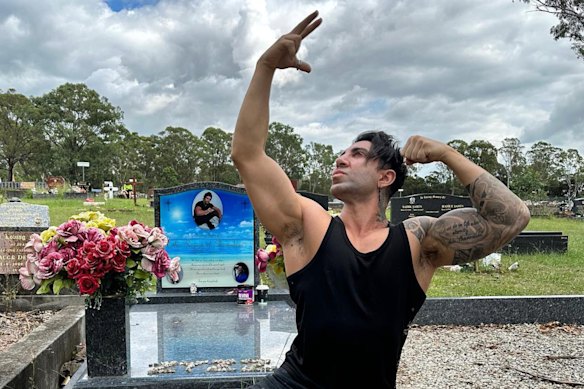
You can’t miss Aziz “Zyzz” Shavershian’s headstone in a grassy corner of Riverstone cemetery in Sydney’s north-west. There he is, looking back at you from an oval ceramic photo set in the granite, a muscular bicep straining against the fabric of his tight black T-shirt, all tousled, gelled hair and coal-black eyes, against an image of a tranquil ocean meeting an endless blue summer sky. Etched beneath the dates of his short life – March 24, 1989 to August 5, 2011 – is Zyzz’s signature mantra, Veni, Vidi, Vici (“I came, I saw, I conquered”) that in life was tattooed across his hairless, sculpted chest.
Over the years, a steady stream of local and overseas fans have made the pilgrimage here, to lay flowers and cards on the polished granite base under the gum trees, or post videos on commemorative pages on Instagram, YouTube and Facebook (one such page has 346,000 followers). Many of the tributes left on these digital shrines are overwhelmingly effusive. “Thank you for changing mine and a million other lives,” a visitor from Seattle posted on Instagram. “After 12 years, I finally made it to your grave. It was an honour to pay my respects,” declared a muscly, tattooed compatriot on Instagram. “You motivated me to get off the couch and get to the gym,” gushed one Australian man on YouTube.
Back in 2010 and 2011, before TikTok and Snapchat, before Instagram became popular, and before the reign of the insidious algorithms that would turn social media into an endless echo-chamber, Zyzz racked up hundreds of thousands of views for his videos on YouTube and a loyal follower base on bodybuilding forums and his Facebook page.
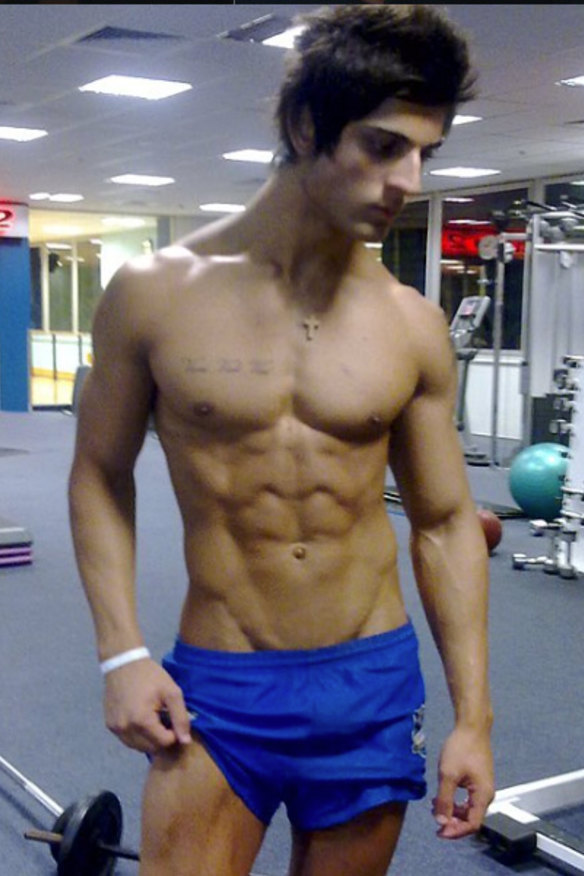
A skinny, shy World of Warcraft gamester and star high-school student who metamorphosed into a muscly party boy, Aziz brought the classic nerd-to-superman archetype to life through Zyzz, baiting his legion of young male followers to “get aesthetic” in videos shot from his bedroom webcam or by members of his crew while he was partying or sweating it out in the gym. The videos were always amateurish, often fun, sometimes cringeworthy, occasionally offensive, but they resonated. After his death, Zyzz became more popular and mythologised than he ever was in life.
By the standards of today’s vast army of bulked-up online gym influencers (“gymfluencers”) – the top tier of whom can earn in the millions – Zyzz was as lean as a lamp post, but that was precisely his bedrock appeal. Because his transformation from teen beanpole to sculpted Adonis didn’t shout steroid-bolstered size (even though he did use image-enhancing drugs), his muscle growth at least seemed plausible – albeit one attributable to a mighty amount of grit, hard work and self-discipline. Which is why his signature mantra, “We’re all gonna make it, brahs,” became a rallying cry.
Some credit Zyzz and his “aesthetics crew”, which included his older brother, Said Shavershian, who adopted the name of Chestbrah, with upending the world of bodybuilding, shifting the focus away from sheer size and thickness to a tight, V-shaped physique. “At that time, bodybuilding was still a cult sport that only attracted guys with superior genetics and a desire to put on bulk,” recalls Said, who is now 40 and runs a successful online training business supported by more than 437,000 followers on Instagram. “We changed the game by showing people that you don’t need to be an overblown bodybuilder to look good. Most men dream of having a physique like Brad Pitt in Troy or Zac Efron in Baywatch, but not every man wants to look like Arnold Schwarzenegger.”
As Zyzz’s online star rose, so did the online backlash from trolls calling him a wanker, a gym douche, and a “fake natty” (someone who is using steroids but pretends to be natural). And not surprisingly, given he invited fans and haters alike to admire his physique (“You mirin’ brah?“), he also became a magnet for competitive hostility from other men – and, sometimes, outright aggression. On one occasion, according to his brother, he was set upon by a bunch of hoons outside a nightclub; he briefly fended them off and jumped into a passing taxi, but before the vehicle sped away, his attackers shoved their arms through the window and tried to wrench him out.
While he publicly dismissed the vitriol with bravado – “I’d rather be a person that’s hated on, than a person that does the hating” – there were signs that the deeply vulnerable young man was increasingly undone by it. For a man obsessed with his appearance, the cruel attacks on his facial features, most notably his prominent nose, must have particularly stung.
The relentless demand for more and better content, combined with a lifestyle of nightclubs, music festivals and heavy training – all fuelled by a volatile cocktail of steroids, recreational drugs and Xanax – began to take its toll, leaving Aziz utterly exhausted by his own alter-ego creation within just 18 months or so. “There is no ‘Zyzz’, that is just an act,” he posted in a revealing video in the months before his death.
When news broke in August 2011 that the 22-year-old internet phenomenon had died in Thailand – reportedly in a sauna, from a previously undiagnosed heart condition – public speculation ran wild. Was the cardiac arrest caused by steroid use, recreational drugs in the sauna or an underlying, unmanaged heart condition? Some days later, when it was revealed that a thief had stolen belongings from Aziz’s hotel room – including his laptop, wallet and clothes – conspiracy theories flourished.
Behind the tragic headlines, the truth never entirely came out. Now, as the 15th anniversary of Aziz’s death approaches, a new documentary to be aired from August 5 on Stan (owned by Nine Entertainment, the owners of this masthead) explores the rise of the self-proclaimed “son of Zeus and brother of Hercules”. Poster Boy: Becoming Zyzz contains some dramatic new information about his death (we’ll get to this a bit later), including his real reason for going to Thailand, and some morbidly compelling medical details about what killed him.
Aziz and Said Shavershian probably would not have made it to Australia had it not been for the collapse of the Soviet Union in the early 1990s and the elder brother’s severe childhood asthma. Having lost most of their assets in the upheaval and seeking a warmer, drier climate for Said’s condition, the boys’ Russian-Kurdish parents, both of whom were doctors in Moscow, moved to Australia in 1993, when Said was seven and Aziz four, finally settling in Sydney’s Carlingford, a family-friendly, middle-class area in the city’s north-west. Theirs was the classic migrant tale of starting afresh and building a new life which, for the parents, meant getting their degrees again. They had high hopes for their sons, wanting them to be doctors or lawyers, but fortune took them in another direction.
Both brothers had lingering lisps when they were small; unable to pronounce Aziz, older brother Said called him “Zyzz” and the nickname stuck. At Marist College in Eastwood, an all-boys Catholic school, the brothers were as academically impressive as they were athletically unassuming, with Aziz distinguishing himself as the school’s dux. The boys grew up watching WWE – their heroes were Hulk Hogan and Ultimate Warrior – and geeked out over games like Warcraft.
As the high school years advanced, the professional hopes of the parents took a back seat as the boys found a physical outlet in the gym. “I started bodybuilding because I was bullied a bit in school for being so skinny,” Said tells Good Weekend. “So I wanted to build a bit of muscle mass to look intimidating to other men, and also get the attention of girls.”
Aziz soon followed his brother to the gym and found his natural home there. “He started getting bigger than me, and I didn’t know why,” Said told Neil “The Muscle” Cummins, a former Kings Cross bouncer, in a frank interview last year for Cummins’ Secrets of the Underworld podcast. “And then I walked in on him putting a needle in his bum. And I’m like, ‘You little f—–, you’ve been doing this behind my back.’
“Around year 11, he started learning about girls and drugs, and it went downhill from there,” Said also told Cummins. “He was very hard to control. Even my parents couldn’t control him.”
Phillip Raymond, who became a friend of Aziz during this time, trained with him at Fitness First in Carlingford, and also filmed content for his videos. He says Aziz had charisma in spades. “Girls wanted to be with him and guys wanted to hang out with him,” he recalls. What didn’t come across in his boisterous videos was Aziz’s intelligence. “He was super-intelligent, very switched on.”
Given that Aziz, at 185 centimetres tall and super skinny, had the type of frame that in gym parlance is a “hard-gainer”, his transformation, via high-volume, heavy resistance training, would have taken years without chemical enhancement. Phillip Raymond explains that he never had to resort to steroids because, with a shorter (he’s 170 centimetres), thicker, mesomorphic physique, he has always been able to pack on muscle quickly. But Aziz was a young man in a hurry – he wanted the dream physique and appeared to relish the image of the hypermasculine alpha male that can accompany it, even if it was just that: an image. “You lift weights, you get tatts, you f— bitches, brah,” he once crudely boasted to his fans in a video.
Selina Miles, director of Poster Boy, whose award-winning documentary Silenced focused on the fight against laws silencing sexual-abuse survivors, told Good Weekend she was determined not to skate over Zyzz’s at times boorish braggadocio. “I couldn’t promise participants we wouldn’t be looking at that,” she says. “By the same token, it’s really important for audiences to remember he was 20 when he became famous and only 22 when he died. When you meet his friends, you think, ‘This guy must have been all right.’ Many of the people who loved him have grown into really self-aware, considerate men.”
For years after Aziz’s death, Said was forced to be a reluctant apologist for his brother’s often distasteful stunts and statements, such as when Zyzz wore his T-shirt as a turban and mockingly mimicked prayer. Aziz was just being a “clown”, a “dickhead” under his Zyzz persona, Said told Neil Cummins. Said insisted that those alter-ego antics did not reflect his brother’s real-life views, that he had a diverse group of mates, including Muslims and gay friends. And despite his reputation as a playboy, which was “partly true”, Aziz had a steady girlfriend for three years.
Over the past 15 years, Said has put considerable energy into preserving his younger brother’s name and complex legacy, most notably by producing a 19-minute YouTube video (Zyzz: The Legacy) that has attracted more than 18 million views. So in 2022, when documentary producer Tom Blackwell approached Said about making a documentary looking at Zyzz’s life, he pounced at the opportunity. “There’s a bit of Zyzz in all of us,” Aziz once declared.
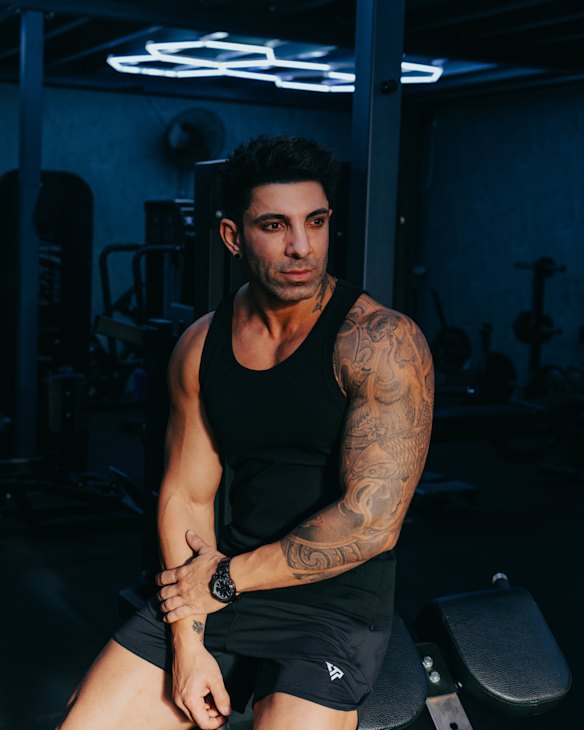
If anything, Aziz’s short life and his Zyzz persona serves as a mirror for a look-at-me selfie culture that has only grown exponentially more pervasive since his passing, reaching a new inflection point with the current phenomenon of “looksmaxxing”. (Said has been upfront on Instagram about his own enhancements: “Hair transplant: $10,000; Veneers $15,000; “Brotox” $500 for six months; Supps and TRT [testosterone replacement therapy], $500 per month.“) But the “looksmaxxing” terrain becomes very dubious – and dangerous – in extreme examples led by influencers such as Clavicular, who advocate bone injury and smashing to create a more chiselled jawline and cheekbones (there is no medical evidence backing these methods).
Daniel Principe, a high-profile youth advocate best known for his campaigns to promote healthy masculinity, was a little younger than Aziz when the Zyzz persona was riding high. “We all love a transformation story and Zyzz had an appeal, especially for guys who weren’t particularly sporty, jockish, or ladsy – he told us, ‘You, too, could achieve the ultimate physique,’” Principe recalls. “At the time, no one else was putting themselves out there like him. Now it’s a saturated market, with both the number of gym bros and fitness influencers.”
It certainly looks that way: back in 2010, when Zyzz was pumping out sets on the bench-press at Fitness First in Carlingford, there were 800 gyms and fitness centres in Australia; today, there are more than 7300. For young men in particular, anything that drags them away from their screens has to be a good thing. Yet, Principe is disturbed by the sheer volume of “fitfluencers”, biohackers and celebrities who are injecting steroids and peptides to maintain a perfect body, while insisting to their followers they have achieved their results by hard training, diet and over-the-counter supplements.
‘Perhaps even the supplement sponsors don’t really care if an influencer is hiding their steroid use.’Youth advocate Daniel Principe
“Even if a young man suspects an influencer is on steroids, he can’t escape the visual saturation of images of ‘giga chads’ – idealised versions of alpha males – confronting him daily on platforms like TikTok and Instagram,” says Principe. “Perhaps even the supplement sponsors don’t really care if an influencer is hiding their steroid use because it’s like, ‘You’re helping me sell my product, so who cares?’ ”
No generation in human history has spent more time watching, listening and interacting with their peers – and less time listening to their parents and older mentors – than people under 25 today, thanks to social media invading every corner of our lives, Principe points out. This makes the battle for parents, and mentors with wiser heads, more challenging than ever, he says.
The underlying driver of all this self-obsession is something far more insidious than narcissism in the classical sense, according to research over the past few years: it’s constant body surveillance, fuelled by looking at social media feeds for hours every day. Far from motivating us to improve our lives – get out and exercise, eat healthily – we’re often left feeling anxious, inadequate and confused by the flood of images.
It’s not exactly breaking news that taking steroids is gambling with your health, from risking premature heart enlargement and atherosclerosis to liver damage, prostate cancer – and in young men, a permanent decrease in fertility. Clinical research in recent years suggests heavy, chronic steroid use may also be linked to reductions in brain volume and accelerated ageing. Over the past three years, there has been a string of deaths of high-profile male influencers, including the Australian fitness coach and podcaster Jaxon Tippet (30), Belarusian bodybuilder Illia “the Mutant” Yefimchyk (36), German Jo “Joesthetics” Linder (30) and British pro winner Neil Currey (34).
More often than not, endless medical warnings about the physical harm caused by steroids don’t pierce the armour of young men who imagine they’re bulletproof, says Dr Tim Piatkowski, a researcher at the University of Queensland, who recognises that impulse not from a medical textbook, but from his own life. Piatkowski, 34, went through a period in his 20s when he experimented with steroids. As a teenager, he watched Zyzz’s videos, even if he did baulk at some of his trash talk. “Zyzz was a huge part of the culture at the time. I was getting into strength training and going to music festivals – in those environments, you want to be strong, confident and muscular.”
Piatkowski leads a research team that is running the world’s first steroid checking service (ROIDCheck) and the Steroid QNECT program, a hotline where people can get confidential advice on image and performance-enhancing drugs. He believes testing is even more important now given the illicit injectable peptide craze, which is drawing in users ranging from athletes to grandmothers, gym bunnies and young women trying to lose weight. His testing service confirms that forewarned is forearmed: the majority of steroid and peptide vials purchased illicitly online contain doses and additional chemicals that are different to those listed on the label. One recent peptide (retatrutide) he tested contained a dosage 190 per cent above what was listed on the label. Two of three illicit peptide products contained substantially less than the labelled amount.
“Some people will tell you, ‘I’m walking into this, and I know exactly what the risks are.’ But if they’re in hospital with liver failure, I don’t think they’re going to be saying, ‘Oh, I knew this would happen, and I’m going to live with it.’ ”
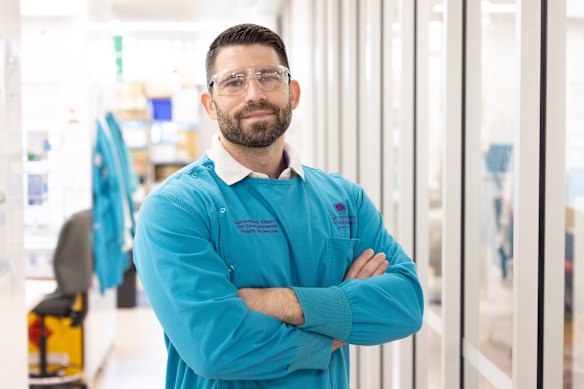
Piatkowski’s research has highlighted the high risks to bodybuilders and athletes of combining or “stacking” disparate steroids with other drugs. Analysing data from 1167 men across 69 countries, his team found that certain combinations of steroids, particularly when mixed with clenbuterol, a drug widely used off-label by bodybuilders for its fat-burning effects, can seriously raise the odds of a cardiovascular incident. (Zyzz reportedly used clenbuterol.)
Reliable estimates of the number of steroid users in Australia are hard to come by, but a systematic review by Piatkowski puts the figure at 4 per cent. “The prevalence estimates for lifetime anabolic-androgenic steroid use is likely to pale in comparison to the number of illicit injectable peptide consumers,” he says.
By the time Aziz boarded the plane for Bangkok alone on July 16, 2011, he’d spread a web of calculated half-truths about his travel plans among his inner circle of family and friends, leaving them in the dark about the real reasons for his visit to Thailand. “He told me he was going with a mate of ours, and told that person he was travelling with someone else, doing the same with others,” recalls Phillip Raymond. “Lo and behold, we later found out he was travelling by himself.”
A few days before his departure, he posted on his Facebook page asking his followers for “travel tips” as he prepared to leave “for a month this weekend”. Even his brother Said thought it was a simple holiday in Thailand with the boys, until he spoke to him two or three days before his death and found out he was in Thailand alone. “Aziz could be quite secretive,” Said told Neil Cummins.
By this time, there were signs Aziz was tiring of his online persona. Phillip Raymond recalls that Aziz had the signature tattoo on his chest – the Latin phrase, Veni, Vidi, Vici so associated with his “King of Aesthetics” image – partly obscured by a larger tattoo of a rose.
About halfway through making the Poster Boy documentary, Selina Miles found out why Aziz travelled alone. “It was quite a process finding out what really happened,” she says.
Aziz had travelled to Thailand to have plastic surgery on his face, including a nose job: he had told no one, not even his brother and parents, and had booked the operation weeks in advance. Two days after his arrival, he underwent plastic surgery in Bangkok, a medical tourism hub as well as major tourist destination. Two weeks later, he was found dead, not in a sauna as was widely reported, but in a wellness spa.
The official report from the Office of the Thai Consulate, obtained by the documentary’s producers, recounts Aziz’s final moments in stark, dispassionate detail: The patient had nose and cheek reconstruction and buccal fat removal done on July 19 2011. Mr Shavershian went to a spa to have a foot massage. He told staff that he was tired and wanted to sleep. After almost two hours, staff tried to wake him, but he didn’t wake up. A hospital medical team attempted to resuscitate him but were unsuccessful.
A toxicology report also secured by the filmmakers cited acute respiratory failure – the result of a volatile cocktail of morphine, cocaine and benzodiazepines (Aziz was addicted to Xanax, a potent drug that depresses the central nervous system). The report also noted an enlarged heart, though it was unable to specify what had caused this, or whether it contributed to his death.
After police arrived at the doorstep of the Shavershian home in Carlingford and delivered the news to Aziz’s devastated parents, handing the death certificate to Said, word spread quickly. Close mates and members of the “aesthetics crew” converged on the house. Some time later, when a couple of Aziz’s friends went to identify the body, they could barely recognise him because of the plastic surgery.
After years of grief, and losing his way in the early years after his brother’s death, Said says he is now more content than he’s ever been, having completed a degree in operations management and logistics and running successful businesses with his partner, Amelia Mohebbi. “My life before [meeting Amelia] was chaotic. Having a girlfriend has grounded me more and made me work harder. In fact, I wish I met my girlfriend years ago because I’d be more structured in my life, and doing less of the stupid shit.”
Reflects Selina Miles: “We never got to see Zyzz grow up – who he would turn into. There was so much lost potential, as he was a very bright young man.” Ultimately, this might be Aziz’s deeper legacy: not the Adonis-like body he was so intent on perfecting, but the warning to other young men he left behind.
Get the best of Good Weekend delivered to your inbox every Saturday morning. Sign up for our newsletter.
Read more from Good Weekend:
Disclaimer : This story is auto aggregated by a computer programme and has not been created or edited by DOWNTHENEWS. Publisher: www.smh.com.au