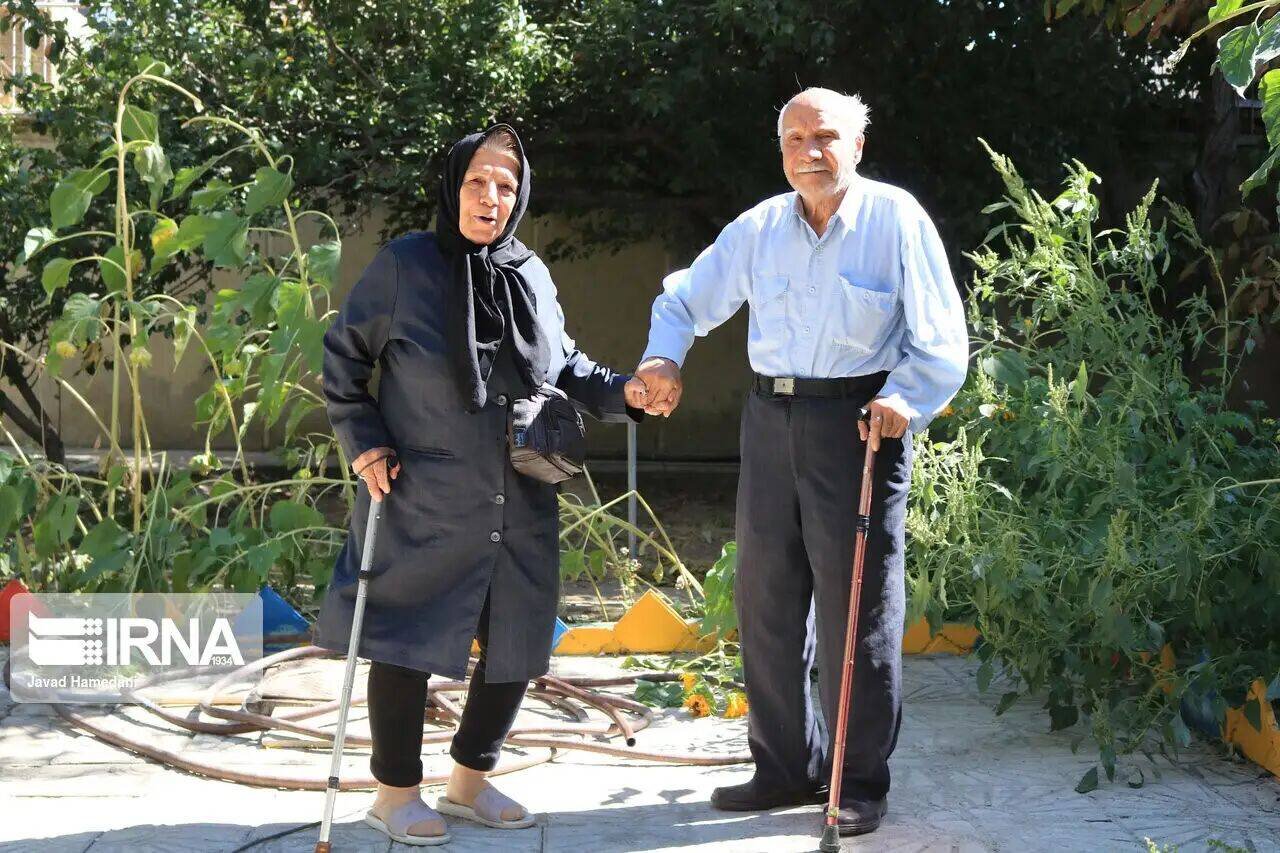
TEHRAN – The health ministry is commemorating National Elderly Week from September 26 to October 2 to raise awareness among policymakers and the public about aging, focusing on healthy, active, and empowered aging.
The week highlights key aspects of aging, including the health and quality of life of the elderly, the promotion of public health, the empowerment of caregivers and the families of the elderly, and the expansion of health services, IRNA reported.
Encouraging healthy aging lifestyles, preserving a healthy environment, upholding the status, human dignity, respect, and rights of the elderly within the family and society, fostering active aging and social participation, supporting elderly care, benefiting from the valuable experiences and capabilities of the elderly, strengthening the role of families in providing care, as well as engaging philanthropists, NGOs, private sectors, and other relevant entities in the field of geriatric health are among other objectives of the week.
It also emphasizes enhancing the status, human dignity, respect, and rights of older adults within the family and society, fostering active aging and social participation, and supporting elderly care through the involvement of philanthropists, NGOs, the private sector, and other relevant institutions.
The days of the week focus on the following topics.
Saturday, September 26, ‘Longevity, different future, rethinking policies on aging’
Sunday, September 27, ‘Active, happy, empowered, hopeful aging’
Monday, September 28, ‘Older adults’ participation, from service recipients to social assets’
Tuesday, September 29, ‘An age-friendly society, city, neighborhood, and home for a better life’
Wednesday, September 30, ‘More years, healthier lives’
Thursday, October 1, ‘Silver Economy, older adults: an opportunity, not a cost
Friday, October 2, ‘Generations together, family, empathy, a community for all ages’
The International Day of Older Persons is observed on October 1 every year. This year, the day is themed ‘The Age of Longevity: Rethinking Systems for Longer Lives’. It is an urgent call to address the needs of an ageing world.
Elderly to account for 30% of Iran’s population by 2050
With older adults already accounting for 13 percent of Iran’s population and the country’s fertility rate continuing to decline, demographic shifts are accelerating. Current projections indicate that within the next 25 years, nearly one-third of Iran’s population will be aged 60 and above.
Iran is aging, and this demographic shift will place significant pressure on the healthcare system, pension funds, social support agencies, and the national economy. To prevent the consequences of an aging population, the country is pursuing policies aimed at boosting the youth population and incentives for childbearing.
Aging is a natural process of the life cycle, but the way society approaches this life phase today will shape the living conditions of future generations.
An aging population entails more than just an increased demand for healthcare services; the rising number of elderly individuals also drives a growing need for care services, rehabilitation, home-based care, environmental adaptations, and social welfare services, which will alter the pension system and pose serious challenges to it.
Demographic shifts make action more urgent than ever. Actions need to be taken now to be able to address the livelihood and well-being of the elderly in the years to come. The interval between the current situation and advanced aging offers an opportunity for policymaking and structural reform; failing to act would result in consequences that are significantly more challenging to address.
According to Marzieh Vahid-Dastjerdi, the secretary of the National Population Headquarters, the young population is one of the indicators that has to be paid attention to. The young population is the share of the population aged less than 15 years old. In Iran, it forms 21.5 percent of the total population, that is 21.5 out of 100 individuals is below 15, currently. However, it is declining with falling birth-rates.
Fortunately, Iran is in a population window of opportunity – a period when a large proportion of the population is of working age, the country has 15 to 20 years before the demographic window began to close.
Alireza Raeisi, an official with the health ministry, says that “Population decline is itself a consequence rather than a cause; therefore, to reverse the trend, the various economic, social, cultural, and familial factors that have led to reduced fertility must be identified, analyzed, and addressed. Furthermore, even if we succeed in increasing the population, we must bear in mind that population aging is inevitable.”
MT/MG
Disclaimer : This story is auto aggregated by a computer programme and has not been created or edited by DOWNTHENEWS. Publisher: tehrantimes.com