The focus on fraud as the reason for the increases in NDIS costs deflects attention from more mundane issues (“Overhaul of NDIS to cut 300,000 and save billions”, April 23). NDIS is fundamentally privatisation of support, and so profit is built into every service. A pricing arrangements booklet of more than 100 pages lists payments for all services and is updated (generally increased) every six months. Most of the rates are eye-watering. For example, the current hourly rate for support workers is more than $70. However, it is rare to find actual support workers being paid much over the minimum wage of just under $25. Not a bad profit for the companies. The intention to require all suppliers to register with the NDIA will largely force recipients to use companies rather than individuals, so choice and control will be reduced. Hiring sole workers directly leads to a consistency of service and allows the participant to get to know and trust the support provider. This is especially important for people with long-term, complex mental health issues who can’t cope with changes in support workers, which often happens with services provided by companies. In addition, essential support such as psychologists and allied health therapists may be largely inaccessible because of the registration requirement. There must be a better way of ensuring payments align more with the cost of the service. Lorna MacKellar, Bensville
Labor has shown courage in taking the difficult decision to curb NDIS spending. It is to be hoped though that the government will show equal courage in finally introducing a fair tax on gas exports. That gas belongs to all of us yet profits are funnelled almost entirely to multinational gas companies – an estimated $149 billion from exports in four years. The multinationals are complaining bitterly and running a scare campaign but if less well-off individuals are being asked to bear some pain from budget cuts, the least the government can do is insist that wealthy companies contribute their fair share. Imagine how helpful such a tax would be in boosting the bottom line. Who knows, the NDIS may not have to be cut quite as deeply in the long term. Alison Stewart, Riverview
The Albanese government must think we’re not paying attention. On the same day Health Minister Mark Butler announced at least 160,000 Australians would be cut from the NDIS to “secure” the scheme, the Senate gas tax inquiry was hearing that Japan now collects more tax on Australian gas imports than Australia does on the exports themselves. The NDIS must be sustainable, granted. But that argument loses every shred of credibility when the government chooses to recover the shortfall from disabled Australians rather than from a foreign-dominated gas industry it has barely bothered to tax. We should be funding healthcare and the energy transition from taxes on the gas weAustralians own. As one of the world’s largest gas exporters, this should be one of the richest countries on earth, not one debating whether the NDIS is affordable. Even the Commonwealth Bank’s CEO and Liberal MP Andrew Hastie back a 25 per cent export levy. Labor MP Ed Husic is right – the deal Australia gives the gas multinationals is “obscenely sweet”. Cutting the most disadvantaged is the cheapest thing a government can do. Taxing the gas exporters is the right thing. Albo, stop taking us for mugs. Josh Bates, Ultimo
One of the biggest issues related to the blow-out in costs of NDIS and aged care support at home seems to relate to the privatisation of support services. I remember when every community had its own meals on wheels and home care services, but the privatisation model has undercut these once great services, often destroying them, and has pushed costs up. As a counsellor, my most expensive rate is to NDIS. Why? I accept much lower rates from Medicare charged services. Luckily for the public purse, I do very little NDIS work, but others have now built their careers and livelihoods on this. How sad that such a great social goal of independent support for those in need became feeding frenzy of inflated rates and greed. Rhyan Andrews, Faulconbridge
Unfortunately, the NDIS changes will leave many people who need help worse off. While the focus of the changes is on recipients, more attention should be paid to the role of the providers, many of whom are skimming off a good percentage of the allocated funds while providing very little support. From the perspective of a recipient of an age care package, I receive little or no input from my provider, whose only role seems to be to process invoices from the carers. I have never received any inquiries as to my health or welfare. I have an annual review via a Zoom call which lasts an hour. Living with any disability is difficult and the prospect of having cuts to your care package is stressful. I thought the main focus of the scheme was to help people maintain independent living, but these changes will force people into care homes, which are already struggling with staff shortages. Georgina Blyth, Narara
Australia is a land of contrasts. We read this week of government plans to recoup $35 billion by removing up to 300,000 people from NDIS. Last week, the same government announced an additional $53 billion in defence spending. At the same time, much has been said about the importance of holding on to our Australian “values”. What is going on? Michael Schell, Berkeley Vale
It’s ironic that Labor is taking the axe to the NDIS yet it vigorously opposed cuts that were proposed by previous Liberal governments. Still, it is doing what had to be done. Let’s hope it’s just as brave when looking at spending of all the major government portfolios. Mike Kenneally, Manly
It is galling to hear the Coalition whingeing and criticising the Labor Party for its attempts to keep the invaluable NDIS sustainable. Labor has introduced all the major social and economic policy reforms in this country, the NDIS among them, while the Coalition has introduced none.
For the Coalition to snipe from the sidelines is disingenuous at best, hypocritical at worst. Judy Hungerford, Narraweena
Interesting how we can’t afford to keep the mildly disabled on the NDIS but can still afford submarines, fossil fuel subsidies, private school funding, negative gearing, capital gains tax concessions, the private health insurance rebate, franking credit cash refunds and stage three tax cuts. Fabio Scalia, Balaclava (Vic)
Time to break free
Shaun Carney refreshingly champions a rethink in the traditional government approach to its remit, particularly economic management (“The know-it-alls pouring scorn on Labor have easy answers. They deserve more scepticism”, April 24). Wisely, he asks not only for change but a careful scrutiny of the criticism that will flow from “experts” such as economists and company managers or investors following the upcoming May budget. This is a view offered in light of the substantial changes through which we are going courtesy of internal and external pressures. A consequential overhaul of traditional thinking is finally warranted, one area of which should be the realignment of how we see our position in the world. The state of the economy is at the heart of the budget, and there is a craving for saving, meaning cuts to programs, notably the NDIS. Rethinking our position in the world might also mean a much-needed decoupling from traditional allies, programs and the assumptions and views hitherto from experts clinging to a traditional and conservative ideology. In effect, we need to decouple from the AUKUS elephant and save not only our souls but hundreds of billions of dollars best spent elsewhere than on nebulous goals. Frederick Jansohn, Rose Bay
Housing elitism
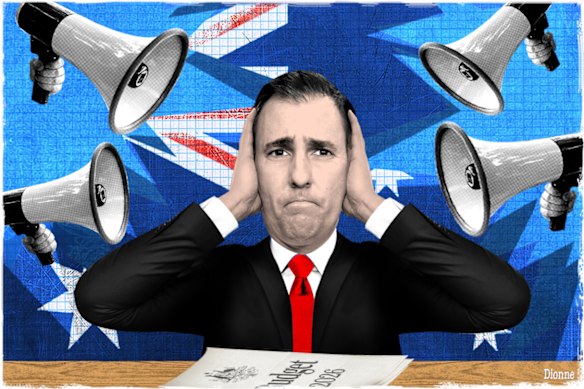
Shane Wright is dead right in his assertion that our housing market is cooked and someone has to do something, with that someone being our prime minister (“Tax reform won’t fix housing crisis”, April 23). Despite being a huge country and having a small population, the average cost of a two-bedroom city apartment is the 10th highest in the world, making Australian property prices nearly 90 per cent above the global average. While the mooted changes to capital gains tax and negative gearing may help, they will be far too late and will not alone fix the problem of the Australian economy’s dependence on property. Britain has often been seen as a country of haves and have-nots, and sadly we have achieved a similar status by ourselves. Peter Nash, Fairlight
Gambling harm
Despite being the leader of a progressive political party, Chris Minns is more often thought of as a social conservative (“He’s taunted protesters and rebuked judges. Is the premier fraying cohesion?”, April 23). While state legislation limiting freedom of speech is rushed through parliament, other reforms such as cashless gaming cards, considered by many to be the most effective way to solve money laundering, have been rejected. Incredibly, over four years, Mounties customers alone staked more than $4 billion on gaming play and still the Minns government is yet to reveal its policy to reduce money laundering and gambling harm. Meanwhile, communities, families and individuals suffer. John Bailey, Canterbury
Libs still in a cave
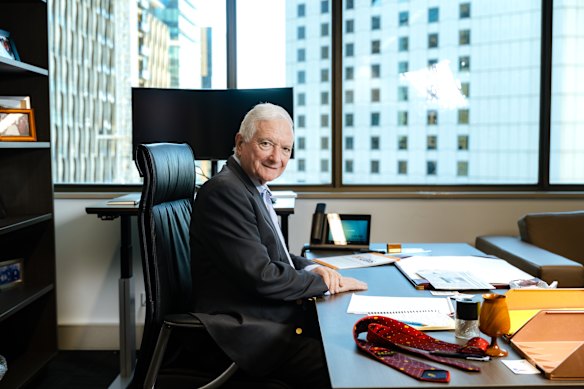
I recall Nick Greiner being a “nice guy” conservative premier of NSW (Letters, April 23). I’m not sure when John Howard passed the poisoned baton of Grand Old Liberal Master to him, but it’s in keeping with their tired party policy of handing it to the next oldest white male. The Libs remain right-right, their own worst enemy despite Greiner’s efforts to paint them as centre. If they would, for once in their lives, support or propose big ideas instead of opposing all things visionary, maybe they might then shift one tile to the left and become centre-right. But that won’t happen with Angus Taylor or the Nats. With the Coalition, it has always been about survival and doing whatever it takes to win the next election rather than moving with the times and offering nation-building proposals. Until they emerge into the bright daylight, they’ll remain in a sunless cave of their own making. Patrick McGrath, Potts Point
Short-circuited
Perfect! We’ve done the right thing by buying solar batteries, but now the power companies are crying foul about their supposed incapacity to meet maintenance costs (“Battery owners face thousands of dollars in losses under new scheme”, April 23). I expressly recall it being nigh on impossible to go off-grid during purchase of said battery system, so “providers” could still reap the ongoing connection service fees. Put another way, I’ve invested in a cleaner planet but I’ll be slugged because those who cannot afford solar and batteries need to keep using coal-fired power. To borrow from another pony, Scott Morrison: how good is that? Ted Bush, North Epping
Charging mystery
Peter Robertson wrote of his frustration that EV chargers were located in streets with no signage or parking restrictions (Letters, April 23). I took part in the inner west working group for EV charging. At the time, the council planned to install these chargers in public car parks and shopping centres so people could charge while shopping. Then at the eleventh hour, the council announced that they would install them in streets. I and several other members of the working group explained that this would result in the problems that people now experience – residents understandably not wanting them outside their homes, etc. I wonder if this sudden change of direction is because the Inner West Council wants to put 22-storey apartment blocks on these car parks. Tim Douglas, Hurlstone Park
All that is needed to ensure everyone has a chance to use EV charging bays is an app to tell the customer they have 10 minutes to collect their charged vehicle and a camera with AI to alert an operator to call in a tow truck. After 10 cars are impounded for a week or two while the fines are calculated, the message would be heard from Paddington to the Pilbara. David Neilson, Uralla
Not staying silent
Airservices has stated that “existing Sydney Airport noise-sharing arrangements will remain unchanged” when the new Western Sydney Airport starts operations (“Sydney flight path shake-up locked in as cargo planes set to land at new airport”, April 23). That will be small comfort to residents north and north-west of Sydney Airport. In the first three months of this year, the respite modes designed to divert aircraft away from the north in off-peak weekday periods and at weekends were used for a grand total of 10 hours and 13 minutes – an average of seven minutes a day. So much for noise-sharing from Sydney Airport operations. Doug Walker, Baulkham Hills
Valentine message
In a world that has spiralled into a virtual hell, it’s hard to comprehend that we have lost forever one of the truly good people in our orbit (“ABC radio presenter James Valentine dies aged 64”, April 24) Radio is a very personal medium, and those of us who love it deeply feel very strongly, even possessively, about those we choose to listen to. James, you will never be forgotten, your cheeky, sardonic humour will stay with us forever, your voice indelibly embedded in our minds. Donna Wiemann, Balmain
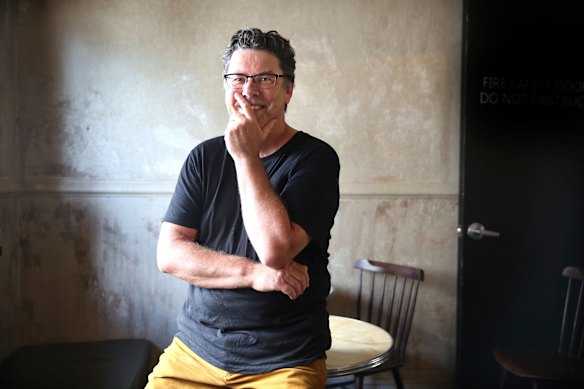
So often, alone in my car at the end of a glum and difficult day, listening to ABC Drive, I found myself laughing out loud. And I thought “I truly love you, James Valentine.” He rocked my day. My world will be forever incomplete without him. Catherine Cusack, Lennox Head
- To submit a letter to the Sydney Morning Herald, email letters@smh.com.au. Click here for tips on how to submit letters.
- The Opinion newsletter is a weekly wrap of views that will challenge, champion and inform. Sign up here.
Disclaimer : This story is auto aggregated by a computer programme and has not been created or edited by DOWNTHENEWS. Publisher: www.smh.com.au