
Labor is making the biggest cut to a single government program this century.
Health Minister Mark Butler will slash projected spending on the NDIS by $35 billion over the four-year forward estimates, and up to $150 billion over the coming decade.
These are big numbers – bigger than most people expected – and they require bold reforms. Behind those numbers are thousands of disabled Australians whose lives will be changed.
The government is promising this is for the better, both because it improves the budget bottom line and cements an essential piece of Australia’s social infrastructure into the future.
But after years campaigning against Coalition cuts to social services, Labor’s plans dwarf in dollar terms even former treasurer Joe Hockey’s infamous efforts to slow health and education spending. (They would have cut $50 billion and $30 billion in the long term.)
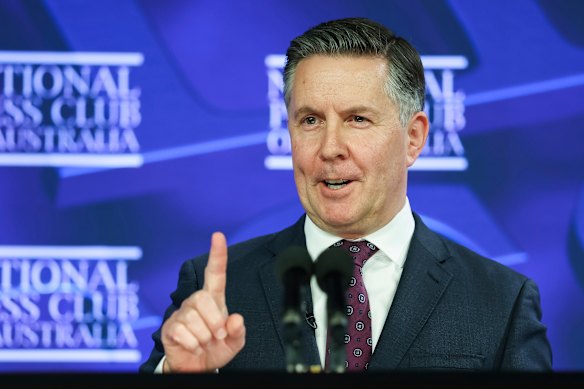
The line, as always, is that these programs still grow. But Butler didn’t say that with too much gusto as he unveiled his plans for a total NDIS reset at the National Press Club on Wednesday.
Labor wants to slow NDIS growth to 2 per cent a year, on average, for the next four years. This rate is below inflation and population growth – a cut in real terms. The first lot of changes this year should drag growth down to 4 per cent before it gets as low as 1 per cent in the years thereafter. That’s almost nothing.
If you put the treasurer’s hat on – even that of a policy wonk, frugal taxpayer or disability service provider – you would look at the numbers on paper and conclude the government had no choice.
The NDIS was designed to cover 410,000 people and cost about $13.5 billion. In 2017, the Productivity Commission estimated the scheme would cost $30 billion in 2025 and $40 billion by 2030.
It will cost $50 billion this year, with 760,000 participants, and it’s still tracking at 10 per cent growth. Forecasts that landed on Butler’s table this year said there would be 900,000 people on the $70 billion scheme by the end of this decade.
This is more than Australia will be spending on Medicare and the Pharmaceutical Benefits Scheme – the pillars of a universal health system for more than 27 million people – combined.
This is the big picture. For participants, it’s a different story.
The realpolitik of Wednesday’s announcement is that at least 160,000 people will be removed from the scheme. If you consider that participant numbers should keep growing until the eligibility changes are introduced in 2028, there will be many more shown the door. Taking Butler’s numbers, there are 300,000 people who would have been NDIS participants in 2030 who will no longer qualify.
Then consider their families, many who fear they will again become the primary carers or advocates for their loved one’s support in a system stacked against them.
Butler’s plan isn’t to leave these people in the lurch. They are supposed to be diverted to state services and so-called foundational supports. These should deliver assistance through existing school or health networks, and resemble the wider network of state-run supports that dried up when the NDIS was rolled out. An extra $10 billion has so far been allocated to this purpose.
But these have not yet been designed, and states have been notoriously prickly in negotiations. Many people with disabilities are reasonably anxious about what these supports will look like, and whether they will resemble anything like the services they’ve built lives around through the NDIS.
Even those that remain on the NDIS will be affected.
They will have their entitlements cut, particularly budgets for services that are supposed to offer community and social inclusion. Each person’s current level of funding will revert to their 2023 base. Some people will lose as much as 50 per cent of their allocations.
Others still will have choices curtailed as the government requires some of the scheme’s service providers to be chosen from a pre-approved panel or scraps unregistered providers for some services.
These moves are supposed to deliver integrity to a scheme with embarrassingly little for the past decade or more.
But it will all come down to the execution. Butler’s list of changes on Wednesday was so long that many substantial reforms received only a 30-second spiel. They range from a new pricing regimen to a new commissioning framework that will require the government to approve and then recommend who delivers certain services.
Reining in the NDIS is a task that has defeated every disability minister who has tried, whether because of political obstruction, legal issues or technical complexity. Bill Shorten fought hard against the Coalition’s attempts. Then many of Labor’s more recent changes under Shorten either didn’t make enough of a dent or have been repeatedly delayed.
Butler faces many of these same challenges. With the prime minister’s green light and an opposition that acknowledges the problems, however, he should have the best chance.
Labor is also taking a gamble with its own social license. But if it gets this right, it might get away with cuts the Coalition never could.
Cut through the noise of federal politics with news, views and expert analysis. Subscribers can sign up to our weekly Inside Politics newsletter.
 Natassia Chrysanthos is Federal Political Correspondent. She has previously reported on immigration, health, social issues and the NDIS from Parliament House in Canberra.Connect via X or email.
From our partners
Disclaimer : This story is auto aggregated by a computer programme and has not been created or edited by DOWNTHENEWS. Publisher: www.smh.com.au