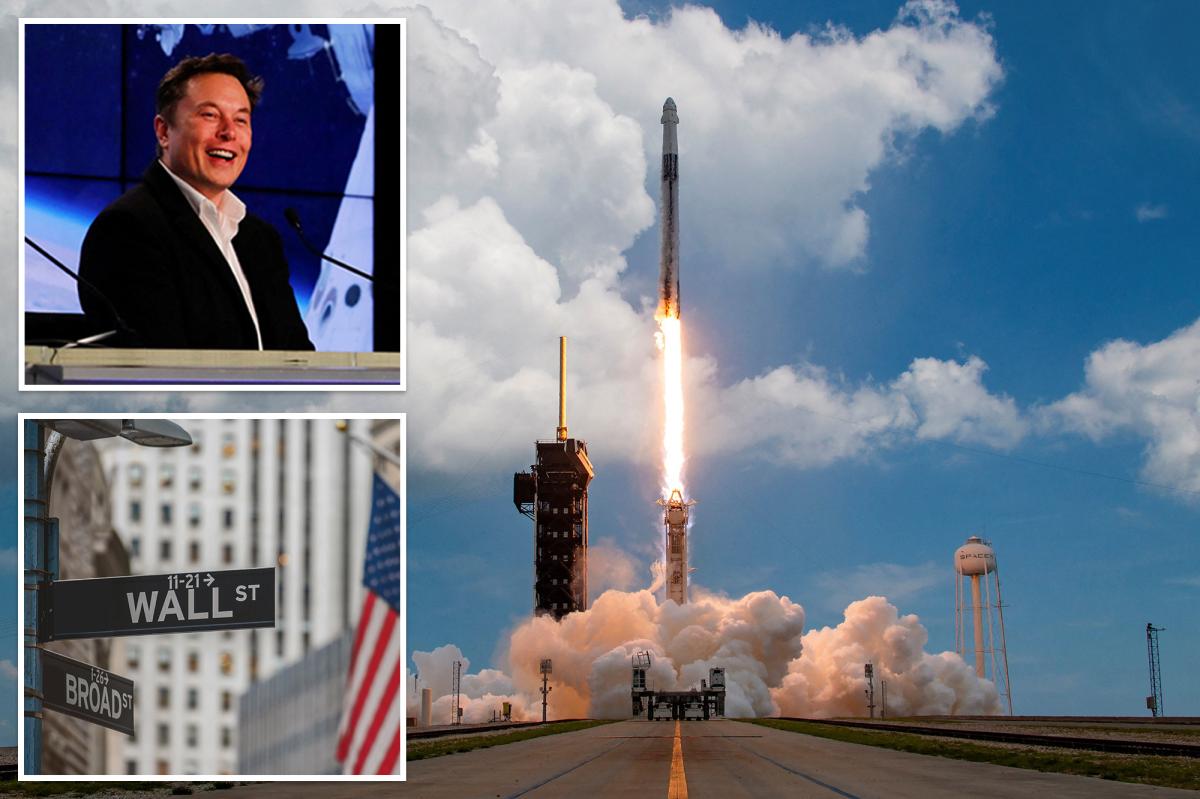
SpaceX’s IPO filing has revealed details into Elon Musk’s tight grip on his business empire, its multi-billion-dollar losses and the stock market debut that could crown him the world’s first trillionaire.
The Texas-based company filed paperwork Wednesday to go public on Nasdaq next month under the ticker SPCX at an expected valuation around $1.5 trillion, which would make it the largest IPO in history.
SpaceX’s sprawling businesses include artificial intelligence company xAI, satellite-internet business Starlink and social media platform X. But the world’s largest private company has questionable financials, including sizable losses over the past few years, according to details cited by the Wall Street Journal.
The company reported losing $4.9 billion last year on revenue of $18.7 billion – and those losses are already widening as xAI burns through cash building expensive, power-hungry data centers.
In the first quarter of 2026, the company lost $4.3 billion on revenue of $4.7 billion, Wednesday’s securities filing showed. SpaceX recently signed a deal with AI rival Anthropic to rent out its two data centers for $15 billion a year through May 2029, the document revealed.
Its total capital expenditures reached $20.7 billion last year, including $12.7 billion from xAI and a combined $8 billion from SpaceX’s launch and satellite businesses.
Musk – who has a net worth of $807.5 billion, according to Forbes, making him by far the richest person in the world – has closely ruled over his tech empire, and SpaceX is no different.
He controls a whopping 85% of SpaceX’s voting power and is the largest shareholder, holding a vast trove of Class B shares, which get 10 votes for every single vote held by Class A shares.
Musk was already poised to land an unprecedented $1 trillion in compensation from his automaker Tesla if he meets a series of hard benchmarks. Similarly, the tech titan faces a series of lofty goals at SpaceX that will pay out big if achieved.
In January, SpaceX gave Musk a package worth 1 billion Class B shares that will vest if the company establishes “a permanent human colony on Mars with at least one million inhabitants.”
There are also rewards for hitting a $7.5 trillion market cap and building “non-Earth-based data centers.”
SpaceX’s eight-person board is full of Musk allies, while some of the firm’s independent directors are longtime investors who have made fortunes from his companies, according to the Journal.
The company’s paperwork revealed close intermingling between Musk’s businesses – and said it expects to “explore other areas of strategic collaboration with Tesla in the future.”
Last year, SpaceX bought $131 million worth of Cybertrucks from Tesla and $506 million worth of Megapack energy storage products from the EV maker.
From early 2024 through February of this year, Musk’s xAI has paid Tesla about $731 million.
SpaceX and Tesla are also partnering on a chip factory in Texas called Terafab and an AI-driven software project known as Macrohard.
Federal departments including NASA and the Pentagon have also given SpaceX a boost, accounting for roughly 20% of the company’s revenue. The National Reconnaissance Office, which is focused on space intelligence work, is also a SpaceX customer, according to the paperwork.
SpaceX’s public listing is poised to surpass Saudi Aramco’s IPO, which raised a record-breaking $26 billion in 2019. Observers estimate SpaceX will raise at least $80 billion from the stock sale, expected on or around June 12.
The filing did not specify a proposed share price or initial valuation.
Musk and other major investors have agreed not to sell their stock for 366 days after SpaceX starts trading, while other pre-IPO investors are facing a 180-day lockup. The latter also have the option to sell before the six-month window is over through “early releases.” Musk and other insiders don’t.
Disclaimer : This story is auto aggregated by a computer programme and has not been created or edited by DOWNTHENEWS. Publisher: nypost.com