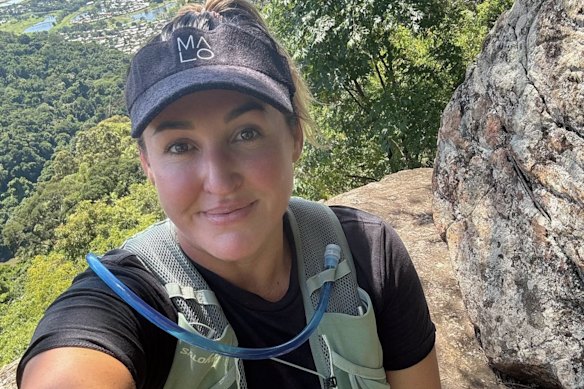

Homicide detective Bree Sonter has seen some of the worst crimes imaginable during her 20-year policing career, but says her first three as a beat cop were the hardest.
“That’s when you go from living a relatively normal life into being immediately thrust into the world of policing,” said Sonter, now a 43-year-old detective senior constable with Queensland Police’s Homicide Investigation Unit.
“When I was 23, I was just lurching from one crisis to the next, and just trying to learn how to be a police officer, how to act … [while] also being exposed to all this trauma.
“It always felt like you didn’t want to stop because you didn’t want to think about it too much. But it doesn’t go away.”
Sonter expected her vocation to be tough, but was surprised by the lack of support for officers facing daily stress and trauma.
“What was never really explained to police or me … were things like moral injury, organisational stressors, [and] how to recover after critical incidents,” she said.
“Back then … there was definitely a perception that if you put your hand up, if you are vulnerable, if you seek help, you may be risking your career. There was a culture of just toughing things out.”
The consequences of this, Sonter recalled, were isolation, spiralling mental health and – as happened to a couple of her colleagues – death by suicide.
Estimates show up to 14 per cent of Queensland’s serving police officers suffer post-traumatic stress disorder, 12 per cent are severely psychologically distressed, and more than 20 per cent have been diagnosed with depression.
A 100-day review of the QPS workforce published last year identified widespread fatigue, burnout and psychological distress among members, exacerbated by limited wellbeing support. The review made 65 recommendations, including the development of a new health and wellbeing strategy and the delivery of a mental health support framework.
On Tuesday, the Queensland Police Union stood alongside minister Dan Purdie as he announced $5.5 million for a new 24/7 mental health helpline for Queensland Police members.
“More Queensland officers die by suicide than are killed in the line of duty,” union president Shane Prior said.
“Seventy-six per cent of our members told us they were afraid of seeking help, thinking it would damage their career.
“We have created the environment where vulnerability feels more dangerous than the job itself. That ends today.
“We want to start injecting ourselves early into someone’s career to make sure they prioritise their mental health, but also to deliver services that are preventative in nature.”
The helpline, known as Cop Care, is an Australia-first peer-to-peer support service, and was assisted by leading police mental health and wellbeing researcher Dr Jacqueline Drew.
“In the last year, we have lost more active and retired officers to suicide than we have in the last 15 years,” Drew said.
“We need to prevent psychological injury, not wait for an inevitable crisis to occur. Policing doesn’t mean psychological injury if support and services are there.”
Start the day with a summary of the day’s most important and interesting stories, analysis and insights. Sign up for our Morning Edition newsletter.
From our partners
Disclaimer : This story is auto aggregated by a computer programme and has not been created or edited by DOWNTHENEWS. Publisher: www.smh.com.au