
Updated ,first published
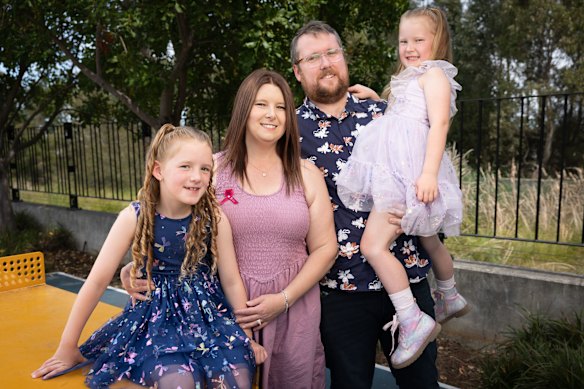
Before 33-year-old Chontaine Adair was diagnosed with stage 4 metastatic breast cancer in 2025, she had a very different perception of the disease.
“I just didn’t think it could happen at my age, and I had a mindset that it couldn’t happen to me,” says Adair, who is based in Sydney.
This misconception, says the mother of two, was partly shaped by age-specific cancer-screening advice. “I didn’t know anyone in their early thirties with breast cancer, and any ads regarding checks like mammograms, for example, show older women and even mention, ‘If you are [a certain] age, get tested’, and this age was always older. They were not directed to younger women,” Adair explains.
A new survey, funded by the National Breast Cancer Foundation (NBCF) as part of their Breast Cancer Awareness Month campaign, Unfinished Stories, has revealed that, as in Adair’s case, there is a disconnect between public perception and the reality of breast cancer today.
The survey, completed by 1003 respondents, found that 64 per cent underestimated the number of people diagnosed each year, 84 per cent underestimated the likelihood of recurrence and spread, and 51 per cent underestimated the number of Australians who die from breast cancer each day.
Additionally, it found that nearly two-thirds (64 per cent) now see breast cancer as more manageable than other cancers, and over half (53 per cent) believe treatment advances have fundamentally altered public perceptions of the disease.
Dr Cleola Anderiesz, chief executive of the NBCF, believes these findings reflect progress achieved through decades of research, including reducing Australia’s breast cancer death rate by more than 40 per cent over the past three decades, but also highlight a perception gap.
“Research has transformed breast cancer outcomes. Yet breast cancer remains one of our most significant health challenges,” she says.
“The biggest gaps we’re seeing are around the scale and ongoing impact of breast cancer. Many people underestimate how many people are diagnosed each year [approximately 20,000], how likely breast cancer is to return or spread, and how many lives are still lost to the disease every day [approximately nine].”
Specialist breast cancer surgeon Dr Chantel Thornton, who was not involved in the research, says that from her experience and among her patient cohort – predominantly premenopausal women – it’s very uncommon for them not to take the diagnosis seriously, but that some do underestimate the disease.
“Patients may underestimate the fact that breast cancer can metastasise to other organs, and therefore it is harder to treat them for a cure,” she says.
Additionally, Thornton says some “people don’t understand that all breast cancers are not the same and different subtypes can infer different survival”.
A lack of understanding, or incorrect perception, can pose a range of risks at the individual level.
“When people underestimate the seriousness of breast cancer, they may also underestimate the importance of breast awareness, screening and seeking medical advice about breast changes,” says Anderiesz.
It can also have a much broader effect, particularly in supporting ongoing research into the disease.
Breast cancer still remains the second leading cause of cancer death in Australian women, says Professor Belinda Parker, NBCF-funded researcher at the Peter MacCallum Cancer Centre.
“Breast cancer is not just one disease; it changes. Everyone has their own individual cancer, and so some people have a type of cancer that has a very poor survival rate, and we can’t forget about those women.”
Parker says continued investment in research is critical to build on the progress made and to investigate other areas of breast cancer that haven’t received as much attention.
“We haven’t really made a big dent in women who get metastatic cancer, so when their cancer has spread to other sites … we also haven’t really made a big difference for treating diseases that have spread to the bone,” she says.
“What we really need to do is focus on either preventing the deadly types of breast cancer or being able to target them head-on, and that’s where research is critical.”
Now, nearly a year after Adair’s diagnosis, following radiation and ongoing hormone-targeted treatment, her mindset and perception of breast cancer have changed.
“I know now that it can happen to anyone at any age, and I now know breast cancer looks different for everyone, and that different types require different treatments.”
Another key takeaway for Adair is that she now recognises the benefits of cancer research firsthand.
“My targeted therapy is the result of research, and hopefully more treatment options will be developed by research in the future to help me give me time to watch my girls grow up, and others live long, healthier lives.”
Make the most of your health, relationships, fitness and nutrition with our Live Well newsletter. Get it in your inbox every Monday.
From our partners
Disclaimer : This story is auto aggregated by a computer programme and has not been created or edited by DOWNTHENEWS. Publisher: www.smh.com.au