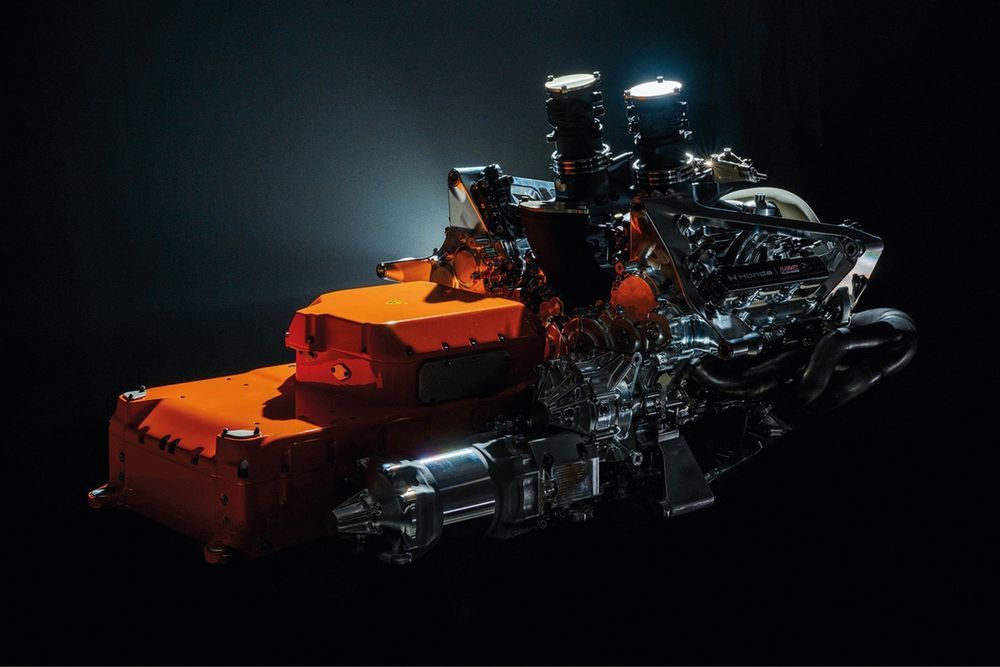
This week’s Formula 1 Commission meeting has not led to consensus on the proposed 60/40 split for next season, the idea of making the internal combustion engine slightly more prominent compared with the 2026 regulations.
Ahead of the Canadian Grand Prix, the FIA announced an “agreement in principle” regarding the engine changes for 2027, but in Montreal it became clear that the specific implementation is politically complex behind the scenes.
On the chassis side, several team principals indicated that potential concerns can be addressed, for example for teams that want to carry over their chassis into next year. There is sufficient support for shortening some grands prix by just a few laps, while also limiting the number of reconnaissance laps to the grid to one per driver. Such measures would prevent the need for larger fuel tanks that may warrant a chassis redesign.
On the power unit side, however, the situation is considerably more complex. Changes to the fuel flow first raise the question of what the exact route would look like – with multiple technical options. Secondly, it could require additional hardware changes, with Honda indicating that some of those changes would be related to reliability.
The topic remains sensitive for multiple power unit manufacturers for different reasons. Ferrari continues to focus heavily on ADUO – behind the scenes for several weeks already – while Audi and Honda are primarily concerned about the additional investments that potential tweaks would require.
Any changes require a supermajority among the power unit manufacturers – four of the six manufacturers must vote in favour, with General Motors also holding voting rights. It is reasonable to assume that the American giant would align with its current engine partner Ferrari.
Changes to the 2027 power unit regulations have been proposed
Photo by: Take Itoh
Several parties indicated in Canada that they want clarity on potential engine changes as soon as possible, but ahead of the Monaco Grand Prix no breakthrough has materialised yet, underlining the political complexity of the plan that multiple F1 drivers have publicly supported – including Max Verstappen.
Extra day of winter testing, TPC changes approved
Tuesday’s F1 Commission meeting produced only a handful of smaller changes, including minor amendments to aerodynamic and bodywork components.
In addition, the proposal to extend winter testing by one day – increasing it from three to four days – has been approved for next season. The location has not yet been confirmed. Bahrain appears the most likely venue based on recent years, although that will depend on developments in the Middle East.
This year, F1 held six official days of winter testing in Bahrain, in addition to an earlier shakedown week in Barcelona. That extensive programme was a one-off due to the major regulatory overhaul.
Finally, the commission approved changes to the Testing of Previous Cars (TPC) rules. These are linked to concerns that some teams could use TPC tests not only to provide additional mileage for young drivers, but also gather knowledge that may prove valuable in the future.
As a result, it was decided to impose restrictions on TPC tests at tracks that are scheduled to host a Grand Prix in the near future, ensuring that teams do not use such tests for purposes other than providing additional track time to young drivers.
We want your opinion!
What would you like to see on Motorsport.com?
– The Motorsport.com Team
Disclaimer : This story is auto aggregated by a computer programme and has not been created or edited by DOWNTHENEWS. Publisher: motorsport.com