At dawn in Zawar, the day begins with the sound of extraction.
Heavy trucks roll out of the zinc mines, carrying ore through narrow roads cut between stone and dust. For decades, this remote pocket of southern Rajasthan has been known for mining.
But just beyond the shafts and smelters, on a patch of green set against rocky hills, children gather in football boots. Some arrive from nearby villages. Some live in the academy hostel. A few are the first in their families to leave home for sport.
The training starts with passing drills. Sprints. Goalkeeping sessions.
In a town built on taking from the earth, Zawar is now building some ace footballers.
And over the last few years, it has built them at scale.
More than 5,000 children have passed through the Zinc Football programme since it began in 2017. Some have gone on to represent India. Others have signed for professional clubs: Ashish Chetry (South United FC), Rajrup Sarkar (NorthEast United FC), Prem Hansdak (Mohun Bagan), Mohammed Kaif (Hyderabad FC), Sahil Poonia (Bengaluru FC) and Akshat (NorthEast United FC).
Many are still climbing.
For a state where football barely enters the conversation, this small mining township, 40 kilometres from Udaipur, is changing what grassroots sport can look like.
The ground
To understand why football took root here, you have to go back.
Long before the Zinc Football Academy existed, Zawar already had a relationship with the game.
“The story of this academy cannot be understood without understanding Zawar itself,” says Ayonava Bagchi, a senior member of the club.
“Zawar is a mining area, but it’s also a very beautiful place, nestled among hills. And what many people don’t know is that it has a very rich footballing history.”
That history stretches back to the 1960s, when the town began hosting the MKM (Mohan Kumar Mangalam) football tournament, a competition that once brought some of India’s strongest clubs to rural Rajasthan.
“At one point, premier clubs from across India used to come and play here. The tournament still happens,” Bagchi says.
What stayed behind was the memory. On match days, football still pulls crowds.
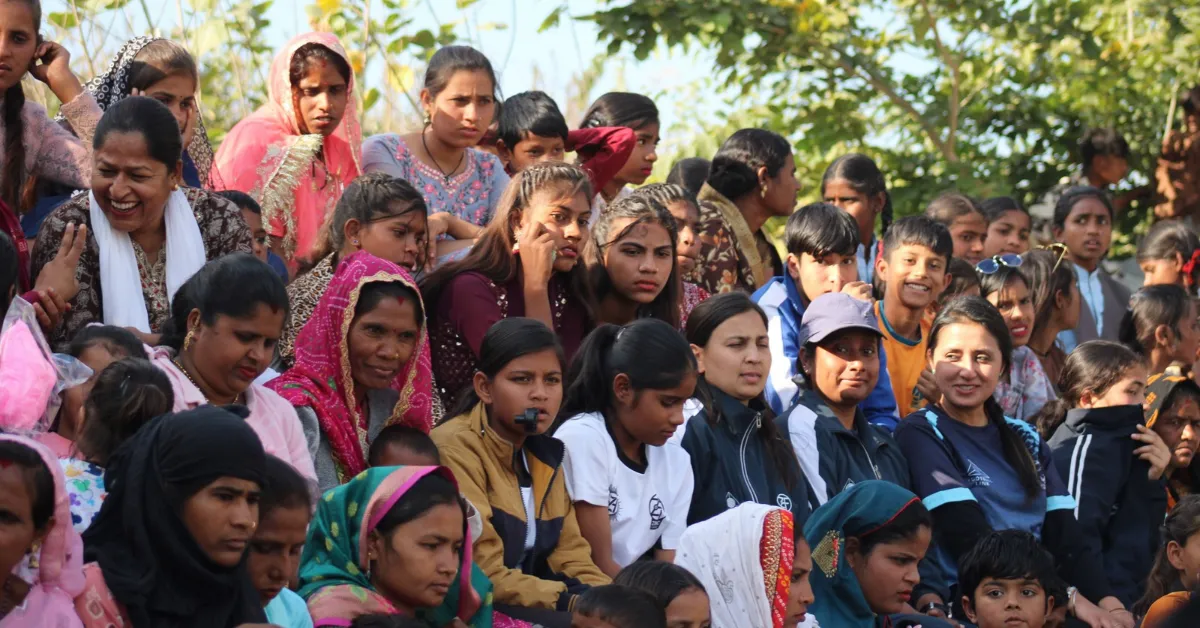
“There’s a sloping hill beside the ground,” he says. “And you’ll find women, children, entire families sitting there watching football. That’s not something people expect when they think of Rajasthan.”
That local appetite became the foundation for a bigger game.
When Hindustan Zinc began thinking about long-term community investment around its mines, Zawar stood out.
There was already a football culture here. What was missing was structure.
One campus, one route
The academy opened in 2017.
Its model was simple: remove every barrier that stops rural children from pursuing sport.
No fees. No equipment costs. No hostel costs. No food bills. Everything is covered.
“It was important that parents didn’t have to spend even one rupee,” Bagchi says. “Apparel, food, lodging, coaching, physiotherapy, mental conditioning, everything.”
That decision changed who could enter.
Most of the children here come from villages around Zawar, from farming households, tribal communities and low-income families where organised sport often feels out of reach.
For many, football had meant open grounds, uneven surfaces and bare feet.
At Zinc Football Academy, it means artificial turf, recovery rooms, performance analysis technology, licensed coaches and residential facilities.
But perhaps its strongest design is its link to education.
“The first thing they thought about was schooling,” says Bagchi. “There was already a school in Zawar, and the football campus was built right next to it.”
The result is an integrated system.
Train. Study. Recover. Repeat.
The academy now houses 70 players across three groups: Under-15 girls, Under-18 boys and Under-23 boys. Alongside it, Zinc Football Community Schools across Rajasthan train over 300 children every week.
It is not just a sports programme. It is a pipeline. And it is working.
The proof?
For years, Rajasthan has sat outside India’s football map. But Zawar is changing that.
Mohammed Kaif, one of the academy’s standout players, has already represented India at the Under-16 level, earning four international caps.
Before him came Sahil Poonia, the academy’s first player to wear the India jersey. He later won Best Goalkeeper at the SAFF U-17 Championship and signed with Bengaluru FC.
/filters:format(webp)/english-betterindia/media/media_files/2026/10/15/glowg-37-2026-10-15-15-03-12.png)
For Bagchi, those names matter not because they are exceptions, but because they prove the system works.
“When one child reaches that level, the whole village starts believing,” he says.
That belief is now visible in the girls’ programme too.
Mina runs first
For 14-year-old Mina Kumari Meena, football began close to home.
She grew up in Naka Bazaar, Zawar, in a joint family supported by small jobs. Her father runs a puncture repair shop. Her grandmother often speaks about the years when her late husband worked with Hindustan Zinc.
Mina first trained at the Zinc Football Community Centre in Singatwara.
She played with boys. It made her quicker.
“I always liked running at defenders,” she tells The Better India, laughing. “Playing with boys made me stronger and faster.”
A striker, Mina says she started because of her elder brother, who also trained there. Today, she is among the first scholarship holders at the residential girls’ academy.
She studies at a government school, trains daily and watches Cristiano Ronaldo whenever she can.
“One day I want to play for India,” she says. “And I want my family to watch.”
Sonam stayed
Fifteen-year-old Sonam Ghosh arrived in Zawar carrying another story. She is from Arambagh in West Bengal. Her father had once played football himself, until a knee injury ended that path.
She picked it up where he left it.
Leaving home for Rajasthan was her first real separation from family.
“There were days I wanted to go back,” Sonam says. “But I knew why I came.”
A goalkeeper, she recently missed selection for the India Under-16 national camp.
It hurt.
But she stayed.
This year, she anchored her academy team to the Rajasthan League Senior Women’s A-Division title, keeping five clean sheets in eight matches.
She was named Goalkeeper of the Tournament.
“That moment reminded me that setbacks don’t decide your story,” she says.
Bindiya kept going
Bindiya Kumari Meena’s route to football was less direct. She lives in a village outside Zawar. Her father and grandfather work as tractor drivers. Work is irregular. Her grandfather lost a hand in an accident.
To train, Bindiya often hitchhiked to the community school ground.
Sometimes her elder brother Sahil came with her. In 2025, she captained her team at the Asmita Khelo India Under-15 League in Udaipur, where they finished runners-up.
That performance earned her a scholarship to the girls’ residential academy.
Her goal is clear.
“I want football to become my work,” she says. “And I want to play for India.”
Beyond football
For Bagchi, the academy’s biggest impact is not in trophies. It is in changing what families think is possible.
“In many villages, sport used to feel uncertain,” he says. “Now parents are seeing that it can come with education, discipline and a future.”
That shift matters, especially for girls.
Priya Agarwal Hebbar, Chairperson of Hindustan Zinc, says, “The most rewarding part of this journey has been watching our champions, especially our girls, grow into confident role models who inspire the next generation to dream bigger. Their passion, discipline and determination give me every reason to believe that the dream of seeing India play in the World Cup is closer than ever.”
About a year ago, Zinc Football launched what it calls Rajasthan’s first fully residential girls’ football academy, a move aimed at addressing one of the country’s biggest gaps in grassroots sport.
“There is huge scope for girls’ football,” says Bagchi. “There are very few residential systems built for them.” In India’s football ecosystem, talent often exists far from where systems do.
Zawar offers a working answer to that gap.
And every morning, as mine sirens sound and drills begin, children in this old mining town continue running towards something their parents could not always imagine.
Maybe they’re running towards the football ground. Maybe they’re running towards a life shaped by possibility.
Disclaimer : This story is auto aggregated by a computer programme and has not been created or edited by DOWNTHENEWS. Publisher: thebetterindia.com