NWhat a clever takedown of our four political parties by Peter Hartcher (“Four horsemen of the apocalypse are coming, one for each party”, October 31). Their respective problems ring true. Labor’s delirium, the Coalition’s dementia, One Nation’s delinquency and the Greens’ relevance.
No such pithy criticism of the independents, however, who hold an advantage over the parties in that their political platforms can be flexible enough to adapt to changing political, economic environmental and cultural issues, without the necessity to adhere to rigid party dogma. If the major parties continue on their present paths and become increasingly unpopular with voters, it will be no surprise to find more and more independent members elected to parliament. Will this mean Australia may one day be governed by the “sensible middle”? How would that work in practice? Robert Hickey, Green Point
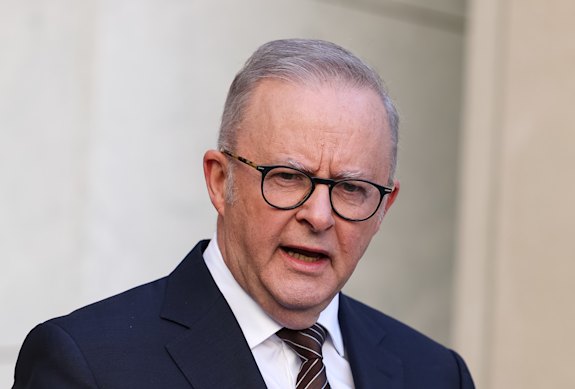
Instead of shooting the messenger, the prime minister should listen.
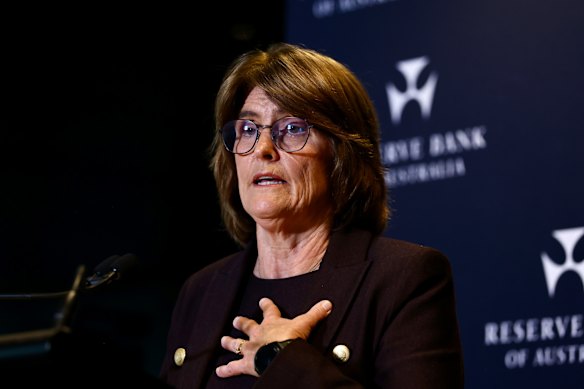
Last week, the RBA governor again said that after 13 rate rises under his government, and another likely next week, the RBA’s focus remains taking the heat out of aggregate demand. So, as Hartcher says, instead of taking a swipe at the RBA and its use of the “blunt instrument” of interest rates, the PM could use the tools at his disposal, cutting spending or raising taxes. He may want to look at AUKUS, overseen by his political ally Richard Marles. Last week the PM granted him another adviser, bringing his total to 20. Mike Kenneally, Manly
Hartcher’s colourful take on the current state of the major political parties to contest the next election shows a measure of justified exasperation.
I cannot disagree with him, so I offer the following prediction: come the election, if Labor and the Greens don’t secure 76 lower house seats, which I believe they won’t, the Coalition and One Nation will, Heaven forbid, unite to form government, despite anything they currently say against that.
What shape that government would take is anybody’s guess. The only other possibility I can see that could save Labor is a “surge” in the number of Labor-friendly independents. David Walker, Lindfield
In his perceptive survey of what faces the parties, Hartcher asks, in effect, whether Labor has the guts to tackle inflation by cutting expenditure and raising taxes. I believe it does. It has shown considerable courage in tackling negative gearing and capital gains and trusts concessions. In the field of human rights, it could enhance its reputation by passing the draft Human Rights Act that has been awaiting consideration for many months. Andrew Macintosh, Cromer
The Nationals’ tail has always wagged the Coalition dog because they have been essential to allow the Libs a parliamentary majority, and would brag that after each election they usually retained all or most of their seats.
I suspect this will change dramatically for them at the next election. Pauline Hanson and Co will struggle to win many city seats; they may gain a few on suburban fringes; but they will surely decimate the Nats in rural seats, where One Nation often garnered 70 per cent of rural primary votes. Whatever else happens at the next federal election, I’m sure the Horse of Death has his eyes on the Nats. Ian Morris, Strathfield
I was amazed when Greens leader David Shoebridge failed to address any environmental policy in his recent National Press Club speech. Thank you to the only journalist who seemed to notice – Peter Hartcher. It’s time for Bob Brown to stage an intervention or for a name change, at the very least. Lorraine Hickey, Green Point
PM shifts the blame
The Reserve Bank (“PM attacks RBA over rate rises”, October 31) does not create the problems it sees in the economy – it responds by the only means available to it by attempting to take out heat with higher interest rates.
Thus, the weasel words from the prime minister, trying to shift blame by the pejorative “blunt instrument” phrase, only serve to underline the abject inability of this crew of socialists to manage the situation by doing what responsible governments do, that is, stop feeding more heat by reducing government expenditure and wearing some of the damage themselves. But I won’t hang around waiting – it’s much easier for them to shift the blame. Ian Boydell, Mosman
Paul Sakkal and James Massola reflect on the prime minister’s concern that rate hikes are a blunt instrument. Our prime minister cites the Iran war, global social instability and a range of other externalities for our cost of living pressures. He likens it to wartime politics. How delusional can a leader be when his own government’s spending excesses are at the heart of the problem? He could increase the GST or fully reform our tax system. He could boost productivity with a considered focus on infrastructure, not a grants program focused on mates. He has survived because the opposition has shattered and now splintered. No prime minister before him had that given to him, and he still misses the point that he needs to have a vision beyond the next election and convince us it’s worth the pain to realise it. Brian Barrett, Padstow
The RBA seems to have a highly elevated reckoning of its clout. Suppose it increases the cash rate by one quarter of a percentage point and the mortgage rate goes up from 6 per cent to 6.25 per cent. For those with floating rate loans, such a move would increase repayments (principal plus interest) by less than 1 per cent for five-year maturities to a little over 2.5 per cent for loans with 30 years to run. The extra impost on borrowers would be very small given that a 1per cent cut in national expenditure would be more than $20 billion. Moreover, any dampening of aggregate national expenditure would be offset at least partly should borrowers finance their extra repayments from assets or, more importantly perhaps, because of increased spending by those receiving extra income from deposits and other assets. So, step up, fiscal policy. Mike Bush, Port Macquarie
Never mind the economy. What is Albo going to do about our men’s cricket team after the abject failure in Cape Town? Tim Overland, Castle Hill
Men’s missing morality
Thank you, Konrad Marshall, for an extraordinarily confronting article (“Secret men’s business”, October 31). It takes us far beyond consent into questions of culture, character and our shared humanity. Even where consent appears to be given, I struggle to comprehend how men can participate in the collective degradation of women, apparently without shame or discomfort, then return to their families and communities as respected husbands, fathers and neighbours. What disturbs me most is the apparent absence of any moral conflict. How does the humiliation of another human being become entertainment, something to celebrate and bond over? And what does it say about a culture that teaches men to leave their conscience at the door in order to belong? Lynne Strong, Jamberoo
” loading=”eager” src=”https://static.ffx.io/images/$zoom_0.126%2C$multiply_0.7725%2C$ratio_1.5%2C$width_756%2C$x_0%2C$y_0/t_crop_custom/q_86%2Cf_auto/123a794425875675691acbbfe8cd5497754f2efa” srcset=”https://static.ffx.io/images/$zoom_0.126%2C$multiply_0.7725%2C$ratio_1.5%2C$width_756%2C$x_0%2C$y_0/t_crop_custom/q_86%2Cf_auto/123a794425875675691acbbfe8cd5497754f2efa, https://static.ffx.io/images/$zoom_0.126%2C$multiply_1.545%2C$ratio_1.5%2C$width_756%2C$x_0%2C$y_0/t_crop_custom/q_62%2Cf_auto/123a794425875675691acbbfe8cd5497754f2efa 2x” class=”sc-d34e428-1 ldCIuB”>
Northern beaches metro, please
So much excitement for the new Metro line from Bankstown to the city (“Metro open triggers a carnival atmosphere”, October 31). We northern beaches residents have waited and waited to see if perhaps a state government of either political persuasion will take the big step of planning and actually building a light rail or metro from Dee Why into the city via Chatswood. In the 1980s, a serious review took place of the need for a rail line to Dee Why, but it was shelved and we continue to limp along with ferries, or privatised bus services that can’t get enough drivers due to the poor pay and conditions. Despite many workers facing huge queues each peak time morning and waiting for buses that don’t turn up, the state government cares little for the “insular peninsula” as we drive our cars over the Spit Bridge in a regular peak hour bottleneck and leave earlier and earlier to get to work on time. How we’d love to be able to get a metro with trains leaving every five minutes to wherever we need to go. Pipe dreams I suspect, whichever party wins the next state election, I doubt money will be allocated to such a form of transport. Eira Battaglia, Seaforth
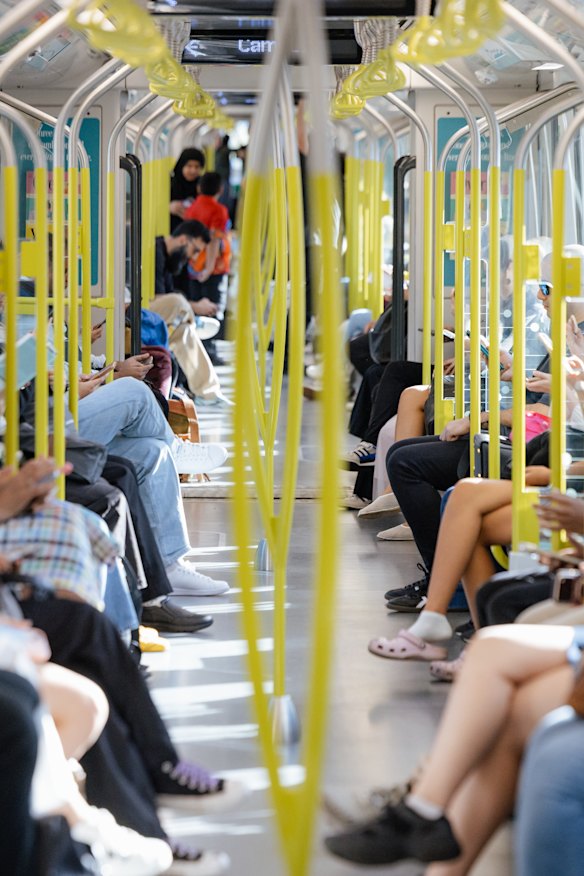
I am so envious of the wonderful train and new metro services being rolled out in the western Sydney areas, making travel easier and quicker for the masses. Here on the Central Coast, we almost need to take a packed lunch to sustain us when travelling by train to the city and beyond. Upgrades have been a topic for many, many years but they have never been realised. In this rapidly growing area, focus needs to be placed on us travelling disadvantaged lot. Dorothy Gliksman, Cedar Brush Creek
At last, the Metro is open. Congratulations to all who worked (and suffered) during its construction. A special mention must go to the Commonwealth Bank, which has marked the opening of the Metro by closing its Dulwich Hill branch. This was the last surviving bank in the suburb and it was always busy.
Without somewhere handy to deposit their cash, many small businesses, especially cafes, may find it easier to close. Joanna Mendelssohn, Dulwich Hill
As platform gaps are an issue for curved platforms on the new Metro line, someone at Transport for NSW should give attention to the western end of platform 2 at Narwee station on the T8 heavy rail line, where “Mind the Gap” should be signposted “Mind the Chasm”. Doug Walker, Baulkham Hills
Powerhouse blues
Unfortunately, I’m not as impressed as the preview day visitors were (“The $1b Powerhouse Parramatta just got its first test run. Here’s how it measured up”, smh.com.au, October 31). First, there are the exhibits. Why is a museum of applied arts and sciences spending taxpayer dollars on commissioned art when it already has an expansive collection of exhibit-quality objects to draw from, to tell relevant stories? Second, its location might be more accessible for western Sydney residents, but it’s far less accessible than the CBD for everyone else in NSW. For me, living along the north section of the Metro, it’s a minimum 80-minute public transport commute on multiple buses and/or trains – if I make the required connections. As Sydney buses often run late or early, connections could easily be missed, and one-way travel time would approach the two-hour mark. If even a fraction of the cost of this “no expenses spared” exercise had been spent to renew what we already had in Ultimo, we would have had a more accessible state-of-the-art museum telling stories about the evolution of design, technology, arts, and sciences, that showcased items acquired by the museum across the decades. Helen OBoyle, Macquarie Park
Policy on the run
As an official visitor in NSW correctional centres for 12 years, including at Long Bay Hospital, I can attest to the essential and important work done there by the dedicated and committed staff (Letters, October 31). Inmates from jails across the state are transferred to Long Bay Hospital for treatment, a fundamental human right for those who are incarcerated. As your correspondent says, a new hospital would have to be built if Long Bay Hospital is closed. The Coalition’s proposal to convert the Long Bay jail site into 12,000 homes is yet another example of making policy decisions on the run with no thought given to the consequences. Geoff Turnbull, Ashfield
Train safety
Despite the best planned safety measures, humans can still mess things up (“Leaked audio sheds light on crash”, October 31). Railways largely rely on network safety and reliability measures to ensure passenger safety. The number of deaths in this incident is very high. Spain has a variety of train body types that include Talgo models without a traditional bogie, to avoid the need for internal steps. The variety adds to the difficulty of writing safety rules. Passenger motor vehicles are designed such that a combination of body structure, seat belts and airbags are used to reduce injuries and deaths. In the light of this incident, we should review our train standards. Peter Egan, Adelaide (SA)
Hero husband
I have to brag – I won the husband lottery (“My ideal Wife Guy: Lived-in, appreciative, responsible”, October 31). He isn’t shy about telling one and all that he loves me; he praises my cooking, Darryl Kerrigan style; he puts up with my occasional clumsiness and directional dyslexia; he supports me in all the little and big stuff; he keeps me “amused”. He does a cracking Inspector Clouseau accent. And he is a silver fox to boot. The only fella who could give him a run for his money is Phil Haines. Sharon Howe, Centennial Park
- To submit a letter to the Sydney Morning Herald, email letters@smh.com.au. Click here for tips on how to submit letters.
- The Opinion newsletter is a weekly wrap of views that will challenge, champion and inform. Sign up here.
Disclaimer : This story is auto aggregated by a computer programme and has not been created or edited by DOWNTHENEWS. Publisher: www.smh.com.au