
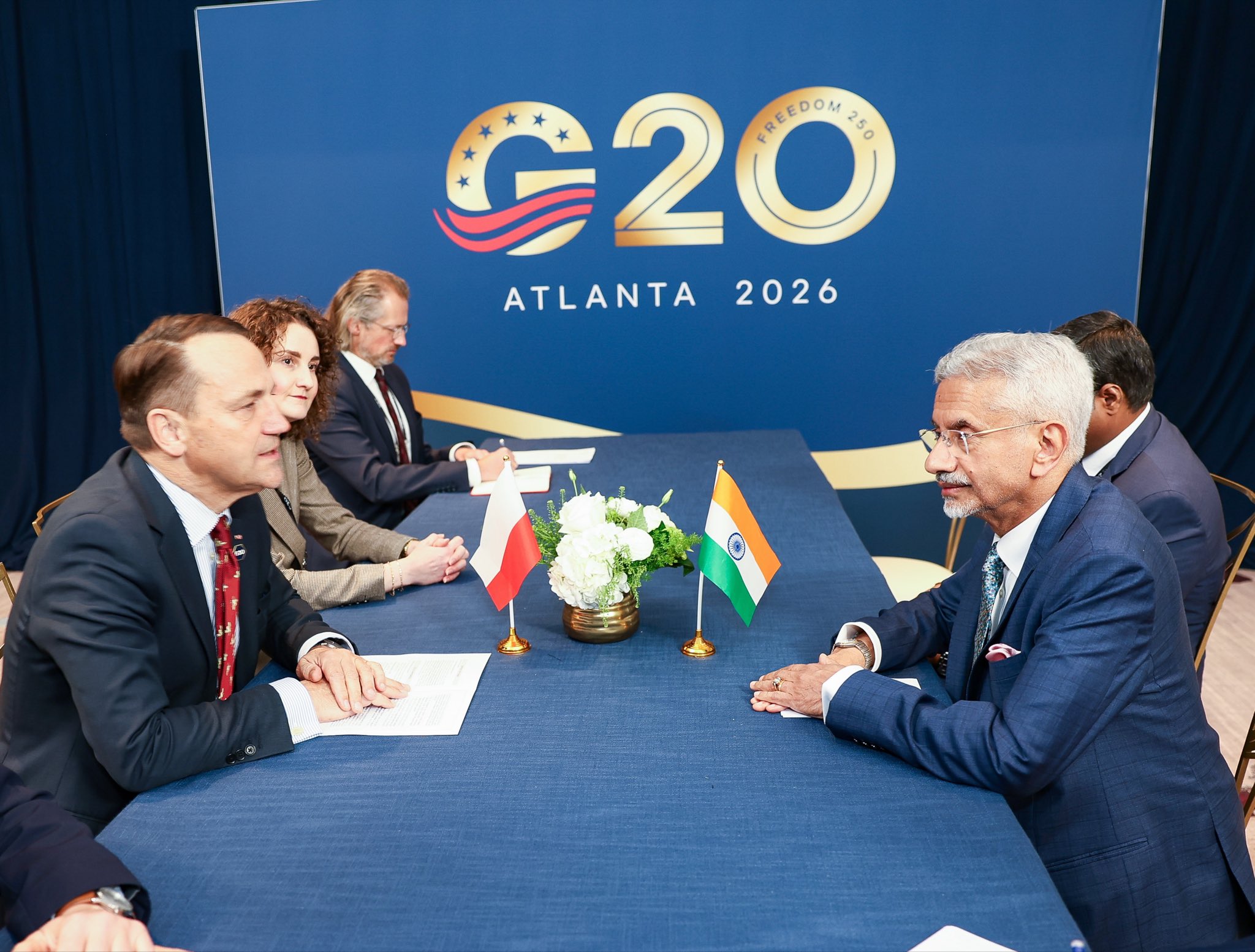
New Delhi:The G20 foreign ministers’ meeting in Atlanta ended without a joint statement on Saturday amid divisions over the Russia-Ukraine war and the West Asia conflict. However, the United States, which hosted the meeting, acknowledged in its Chair’s Statement that every country had the sovereign right to choose its energy sources.
“Every country is entitled to make its own sovereign choices,” the statement said, adding that “too often, misguided policies in one part of the world have stifled energy access in another part of the world”.
The US position is significant as Washington had imposed an additional 25 per cent tariff on India in August 2025 over its purchase of Russian oil before withdrawing it in February this year. The US also enacted legislation in September providing for sanctions and tariffs against major buyers of Russian energy.
The statement came against the backdrop of external affairs minister S. Jaishankar’s warning at the G20 meeting that the world faced an energy crisis caused not by inadequate production but by disruptions, unpredictable supplies, high costs and restricted access.
Jaishankar said deliberate attacks on energy trade and infrastructure were a “calculated strategy to hold energy prices hostage”. He criticised sanctions, trade obstacles and chokepoints that distorted energy markets, warning that poorer countries were bearing the brunt.
The minister also questioned selective exemptions in energy trade restrictions, saying “convenient distinctions” were being drawn between oil and gas.
Addressing the final plenary on Saturday, Jaishankar called for diversified global supply chains and urged the G20 to resist predatory trade practices.
“The G20 should work towards de-politicisation of markets,” he said, warning against the weaponisation of finance, resources, production and market share.
The US Chair’s Statement also stressed that affordable and abundant energy was essential for economic growth and that one country’s energy choices should not be constrained by another’s policies.
The meeting failed to produce a joint communique because of disagreements among members over major geopolitical issues, including Ukraine and West Asia
Disclaimer : This story is auto aggregated by a computer programme and has not been created or edited by DOWNTHENEWS. Publisher: deccanchronicle.com







