Authorities in Chongjin, North Hamgyong province, summoned three young people to a provincial youth league office this month over their use of the South Korean-style word “appa,” or “dad,” the latest sign of Pyongyang’s growing sensitivity to Southern cultural influence in 2026.
A source in North Hamgyong province told Daily NK on Tuesday that the incident happened in mid-July, when three young people were talking near a statue in Chongjin’s Pohang district and used the word “appa.” An official passing by overheard them and reported the group to the provincial branch of the Socialist Patriotic Youth League, a mass youth organization that monitors young North Koreans’ dress, hairstyles, behavior and speech for ideological compliance.
“They were scolded harshly,” the source said, adding that officials asked them, “Are you children? Don’t you even know how to properly address people?” and “Have you tossed etiquette and morals out the window?”
In North Korea, “appa” is generally understood as a word small children use for their fathers, and North Korean etiquette calls for adults to use “abeoji,” a more formal term. Officials view continued use of “appa” into adulthood as both age-inappropriate and disrespectful toward elders, and the provincial youth league told the group that adults should use “abeoji” instead and align their speech and conduct with their age.
Not just a matter of etiquette
The young people did not see the episode as a simple etiquette lesson. Having grown accustomed to the speech patterns and expressions common in South Korean dramas and other media, they concluded that authorities used a minor word choice as a pretext to crack down on Southern-influenced language more broadly.
“They grumbled that being scolded for saying ‘appa’ among friends amounted to nitpicking, since it wasn’t even an official setting, and said officials were really trying to stamp out expressions from South Korean video content,” the source said. Officials cited etiquette on the surface, but the young people took it as a bid to root out South Korean culture that has taken hold in how they speak.
The reaction points to how sensitive the North Korean public has become to the state’s crackdown on outside influence, where even a lecture on manners can read as language policing.
The sensitivity has intensified since North Korea enacted the Pyongyang Cultured Language Protection Law in January 2023, legislation that criminalizes the use of South Korean speech patterns, slang and mannerisms and reportedly carries penalties of up to 15 years in prison for serious violations. People say authorities now scrutinize not just banned words themselves, but who used them and in what context.
Despite the risk, South Korean-influenced speech remains widespread among young North Koreans, many of whom use “oppa,” a South Korean term for an older brother or male friend, along with South Korean-style abbreviations such as “yeochin” and “namchin,” for girlfriend and boyfriend. Expressions such as “gomawo,” for thank you, and “saranghae,” for I love you, have also grown more common in everyday speech.
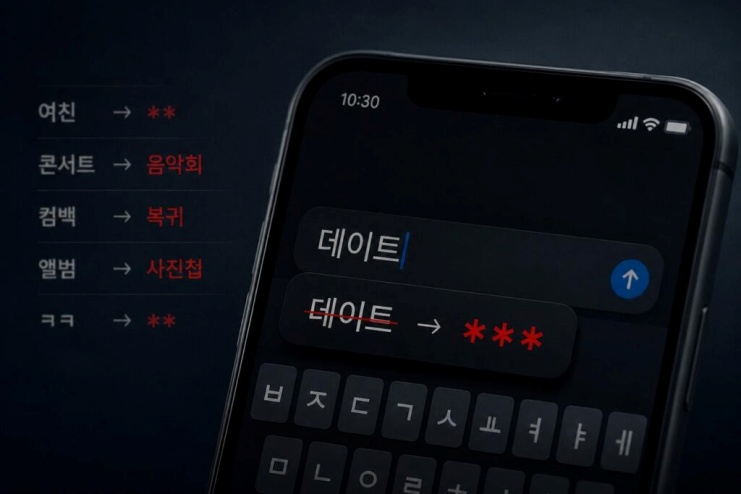
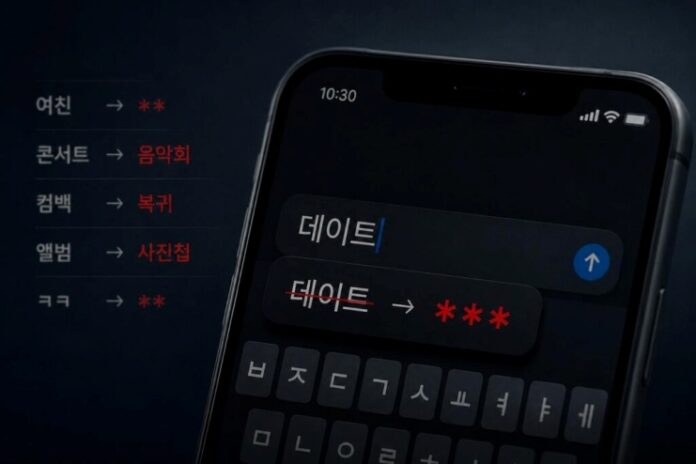
North Korean authorities have moved to suppress the trend through technology as well as public reprimands. Daily NK reviewed a North Korean smartphone model from 2023 and found that its predictive text system automatically corrects “yeochin” and “namchin,” changing them to their full, standard Korean forms, “yeojachingu” and “namjachingu.”
“Since the Pyongyang Cultured Language Protection Law came out, authorities now scrutinize who used a word, in what situation and with what intent, even if the word itself isn’t banned,” the source said. “Authorities cite etiquette when they make an issue of something, but young people are sensitive enough to language crackdowns that they assume it’s about South Korean speech, so people are conscious of who’s around them even during everyday conversation.”
South Korean word appaRead in Korean
Reporting from inside North Korea
Daily NK operates networks of sources inside North Korea who document events in real-time and transmit information through secure channels. Unlike reporting based on state media, satellite imagery, or defector accounts from years past, our journalism comes directly from people currently living under the regime. We verify reports through multiple independent sources and cross-reference details before publication.
Our sources remain anonymous because contact with foreign media is treated as a capital offense in North Korea — discovery means imprisonment or execution. This network-based approach allows Daily NK to report on developments other outlets cannot access: market trends, policy implementation, public sentiment, and daily realities that never appear in official narratives.
Maintaining these secure communication channels and protecting source identities requires specialized protocols and constant vigilance. Daily NK serves as a bridge between North Koreans and the outside world, documenting what’s happening inside one of the world’s most closed societies.
Disclaimer : This story is auto aggregated by a computer programme and has not been created or edited by DOWNTHENEWS. Publisher: dailynk.com