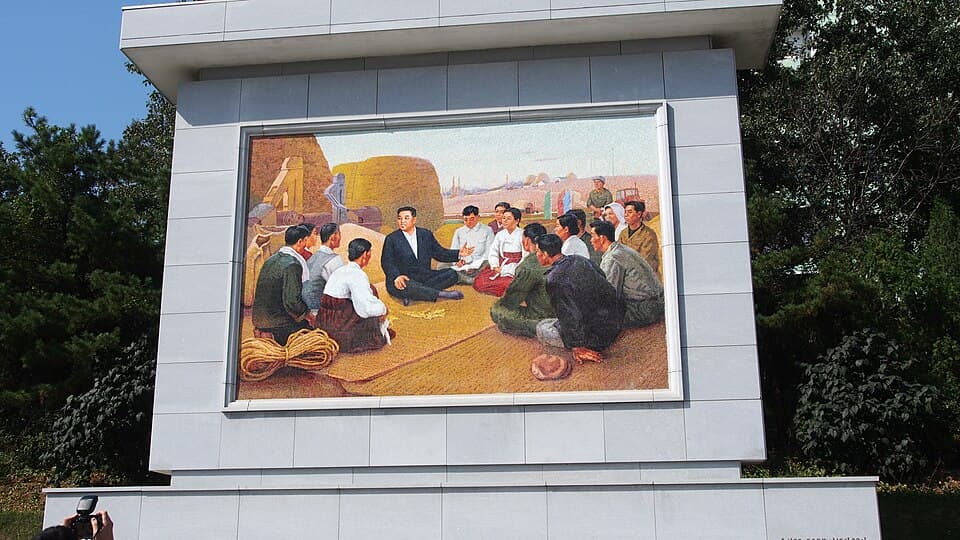
Parents across North Korea are being pressured to supply food for their children mobilized for rice planting season, bearing costs the state is unwilling to cover.
Every spring, North Korean schools dispatch students to rural areas to help with rice transplanting — a nationwide mobilization campaign that can last a month or more. To feed the students during their deployment, schools organize class-level cooking units that operate out of nearby farmhouses. The food for these makeshift kitchens is collected from parents, class by class.
A Daily NK source in North Hamgyong province said Monday that primary and secondary school students in Chongjin are currently deployed to farms in the area. “Every rice planting season, schools collect rice and side dish costs from parents,” the source said. “This year is no different — schools are again demanding that parents provide food and supplies under the pretext of ensuring the students’ meals.”
Farms do contribute some food for the students, but the quantities fall short when mobilizations stretch beyond a month. As a result, the class kitchens typically provide little more than rice and kimchi. Meat dishes or anything cooked in oil are rarely seen.
Students assigned to cooking duty have reportedly been going into the hills to forage for wild greens to supplement the meals. At one secondary school in Chongjin’s Pohang district, students currently deployed to a farm in Myongchon county are receiving meals consisting solely of rice, kimchi, and salted radish.
“Myongchon county has more rice paddies than most rural areas in North Hamgyong province and is relatively better off,” the source said, “yet the food being given to the students is still poor. Students sent to worse-off areas need their parents’ help even more.”
‘Why are we the ones feeding them?’
Many students bring side dishes from home — fermented soybeans, chili paste, pickled peppers — but these run out quickly in the early days of deployment. Parents end up having to send additional food and supplies throughout the mobilization period.
The financial pressure is generating open frustration. “Parents feel heavily burdened by having to prepare food and side dishes for children who were mobilized by the school in the first place,” the source said. “There is a lot of grumbling because the burden of providing rear-support supplies will continue until the rice planting is done.”
Students are also complaining about the workload itself. Most are in the fields from dawn until evening. The source said farm workers are largely giving orders rather than working alongside students, a dynamic the students have sarcastically labeled the farm workers “instruction farmers.”
“The students have a lot to say about how the farm workers just stand there giving directions,” the source said.
Reporting from inside North Korea
Daily NK operates networks of sources inside North Korea who document events in real-time and transmit information through secure channels. Unlike reporting based on state media, satellite imagery, or defector accounts from years past, our journalism comes directly from people currently living under the regime. We verify reports through multiple independent sources and cross-reference details before publication.
Our sources remain anonymous because contact with foreign media is treated as a capital offense in North Korea — discovery means imprisonment or execution. This network-based approach allows Daily NK to report on developments other outlets cannot access: market trends, policy implementation, public sentiment, and daily realities that never appear in official narratives.
Maintaining these secure communication channels and protecting source identities requires specialized protocols and constant vigilance. Daily NK serves as a bridge between North Koreans and the outside world, documenting what’s happening inside one of the world’s most closed societies.
Disclaimer : This story is auto aggregated by a computer programme and has not been created or edited by DOWNTHENEWS. Publisher: dailynk.com